Telephone: +86-0512-65028068
Content
License plate theft is one of those small crimes that creates a large amount of hassle. A stolen plate can lead to fines, toll violations, and even unwanted attention from law enforcement, all because someone removed two or four ordinary screws in a parking lot. Anti-theft license plate screws are a simple but effective answer. Instead of relying on a standard Phillips or flat-head fastener that almost anyone can remove with a pocket tool, these security screws require a matching specialized key or bit. The result is a low-cost upgrade that makes casual plate removal far more difficult.
As a manufacturer of precision screws and custom fasteners, we have seen how much difference the right hardware makes in real-world conditions. This guide explains how tamper-resistant license plate screws work, what sizes and materials are commonly used, and how to choose a set that stays secure through weather, vibration, and repeated car washes.
Standard license plate hardware is designed for speed of assembly, not security. A conventional pan-head or hex-head screw can be loosened with a common driver, and in some cases a determined person can simply twist it out by hand. That is why plate theft remains a recurring problem in cities, at trailheads, and in long-term parking areas. The thief is not looking for a challenge; they are looking for a fast, quiet removal that leaves no obvious damage.
Anti-theft license plate screws change that calculation. By using a non-standard drive shape, a captured washer, or a rounded head that grips a tool from only one angle, they remove the easy option. A thief without the correct key is likely to move on to an easier target. For fleet managers, dealerships, and individual vehicle owners, the upgrade is inexpensive compared with the cost of replacing plates, paying fines, or dealing with identity-related paperwork.
There is also a maintenance benefit. Security screws are often made from stainless steel or coated carbon steel, so they resist rust better than the basic zinc-plated fasteners that many vehicles leave the factory with. That means fewer broken or seized screws when you need to remove the plate for cleaning, repainting, or transferring it to another vehicle.
Tamper-resistant screws rely on geometry rather than brute force. The drive recess is shaped so that a normal screwdriver cannot gain purchase, while a matching security bit can apply full torque. Some designs use a pin in the center of a Torx or hex recess, and others use a five-lobe, snake-eye, tri-groove, or heptagon pattern. The common thread is that the tool required is not part of a standard household toolkit.
For license plates, the most practical profiles are those that are easy for the owner to use but uncommon enough to deter theft. Torx with a center pin, often called security Torx or plum blossom, is widely available and works well. Snake-eye, also known as spanner or pig-nose, is another familiar option. Five-lobe and six-lobe drives offer a different look and can be paired with a matching key. Tri-groove and other custom shapes are often used when a higher level of tamper resistance is needed, such as on commercial vehicles or equipment that is parked outdoors for long periods.
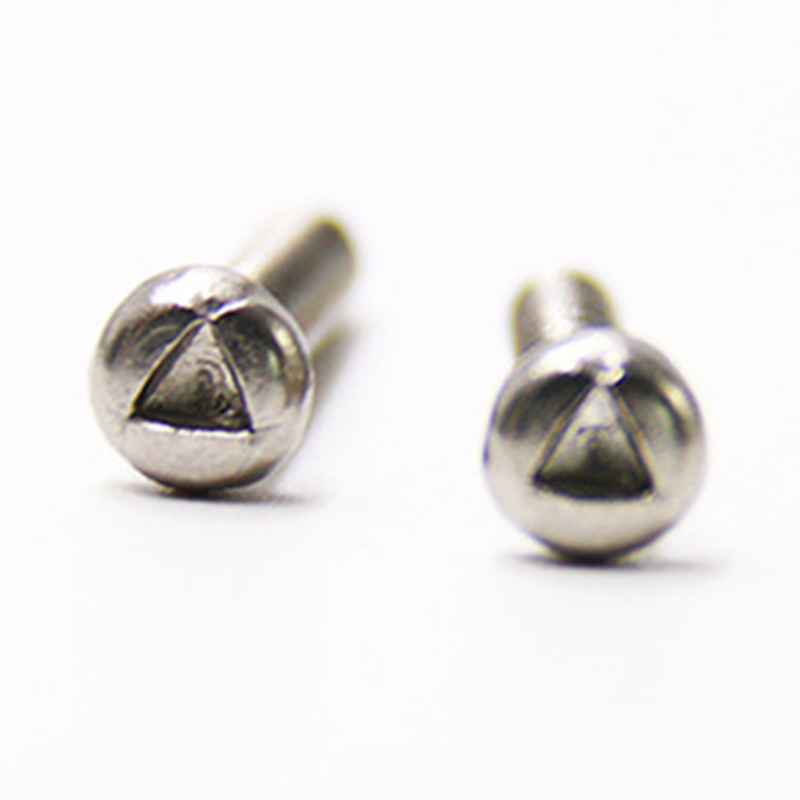 Customized m6 round head trigroove tamper proof screwWaterproof & Anti-Loosening Socket Head Cap ScrewsView Product →
A round-head tri-groove screw, for example, presents a smooth outer surface that cannot be gripped with pliers or a wrench. Only the correct tri-groove key can engage the recess. When paired with a stainless steel body and a corrosion-resistant finish, this type of screw is well suited to exposed license plate brackets on cars, trucks, trailers, and motorcycles.
License plate mounting holes vary by region, vehicle manufacturer, and bracket design. Using the wrong thread can strip the plastic insert, cross-thread the metal nut, or leave the screw loose enough to rattle. Before ordering, check the existing hardware or the vehicle manual. In many North American applications, the common sizes are #6-32, #14, and 1/4-20. Many European and Asian vehicles use M6 or M5 metric threads. Some brackets use a machine screw with a nut, while others rely on a self-tapping screw that cuts into a plastic boss.
| Size | Typical Use | Drive Options | Material Notes |
|---|---|---|---|
| #6-32 | Many U.S. and Japanese cars with small machine-thread inserts | Security Torx, snake-eye, Phillips | Stainless steel 304 or zinc-plated carbon steel |
| #14 | Older domestic trucks and some aftermarket brackets | Hex, security Torx, one-way | Coated carbon steel or 18-8 stainless |
| 1/4-20 | Heavy-duty brackets, trucks, and trailers | Security hex, tri-groove, five-lobe | Stainless steel or grade 8.8 steel |
| M6 | Many European and Asian vehicles | Security Torx, five-lobe, snake-eye | A2/A4 stainless steel or zinc-nickel plated steel |
| M5 | Smaller imported cars, motorcycles, and specialty brackets | Security Torx, snake-eye, custom heads | Stainless steel, brass, or aluminum |
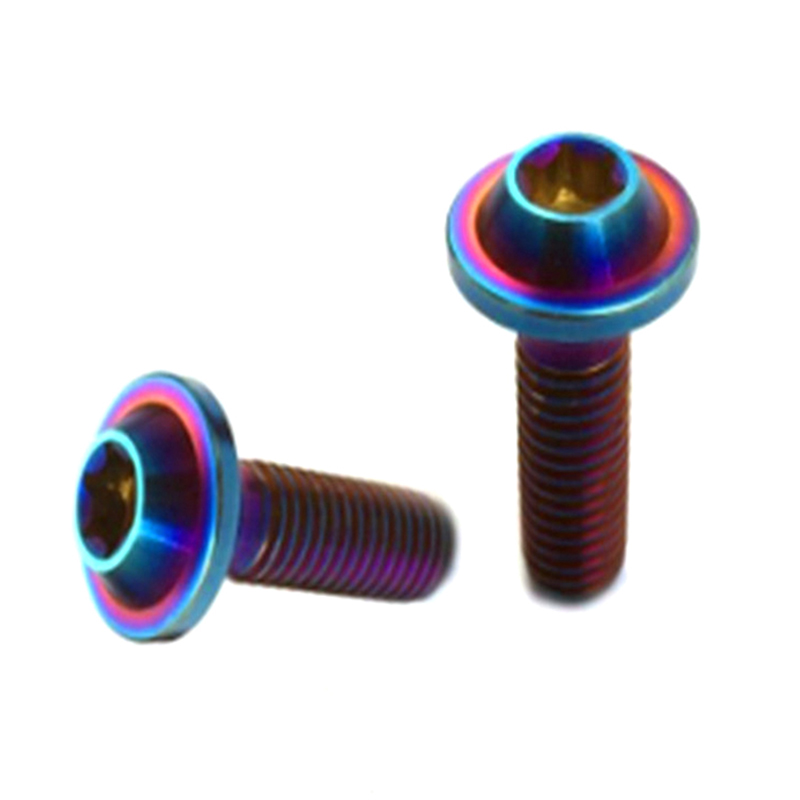
.jpg) #6-32 black torx pan head security screw with plum blossomStainless steel, Steel, Aluminum, Brass, etc.View Product →
#6-32 black torx pan head security screw with plum blossomStainless steel, Steel, Aluminum, Brass, etc.View Product →
A #6-32 security screw with a plum blossom drive is a good example of a direct-fit upgrade for many passenger cars. It installs like the original fastener but demands a matching bit for removal. For heavier brackets, a larger M6 or 1/4-20 screw provides more clamping force and less chance of vibration loosening the plate over time.
Length matters as well. A screw that is too short may not engage enough threads, while one that is too long can bottom out and damage the bracket. If you are unsure, measure the existing screw from under the head to the tip and match that length, then add a few millimeters only if there is room behind the mounting point.
License plate screws live in a harsh environment. They face rain, road salt, dust, UV exposure, and constant vibration. The material choice therefore matters as much as the drive shape. Stainless steel is the most common recommendation because it resists rust without an additional coating. Grade A2 or A4 stainless steel is suitable for most climates, while A4 offers better resistance to chlorides and coastal air.
Thread locking features can also help. A nylon patch on the threads creates friction that resists vibration, so the screw is less likely to back out even after thousands of miles. For plates mounted on vehicles that see a lot of rough road, a thread-locking element is a smart addition. Just remember that a locking patch does not replace the need for the correct security drive shape.
Fitting anti-theft license plate screws is usually a ten-minute job, but a few small steps make the result more reliable. Work on a clean surface and make sure the bracket threads are free of rust or debris. If the original screws are seized, apply a penetrating oil and wait a few minutes before turning them. Forcing a stuck screw can break the plastic insert or damage the bracket.
Removal follows the same logic in reverse. Use the correct security bit, apply steady pressure, and avoid angled force that can strip the recess. If a screw has been painted over, score the paint around the head first. A little care during removal preserves the screw for reuse and keeps the bracket threads in good condition.
Not every license plate bracket is standard. Fleet vehicles, trailers, motorcycles, and specialty equipment often use non-standard thread sizes, unusual head shapes, or custom lengths. In those cases, a stock security screw may not fit, and a custom solution is the better route. Working with a manufacturer that offers OEM fasteners allows you to specify the exact diameter, pitch, length, head style, drive profile, material, and finish.
-1.jpg) Customized stainless steel m5 special head security anti-theft screw for number plateWaterproof & Anti-Loosening Socket Head Cap ScrewsView Product →
Customized stainless steel m5 special head security anti-theft screw for number plateWaterproof & Anti-Loosening Socket Head Cap ScrewsView Product →
For example, a customized stainless steel M5 security screw with a special head can be designed specifically for a number plate application where the bracket depth and thread engagement are unusual. The special head can be shaped to accept only a dedicated key, while the stainless steel body resists weathering. This kind of tailored part is common in commercial fleets, where one key type can be issued to maintenance staff and the same screw can be used across many vehicles.
As a precision screw manufacturer, we produce security screws in small and large batches, including micro sizes and custom drive shapes. The same production process used for anti-theft fasteners also supports related components such as nylon-patch locking screws, sealing screws, and matching nuts and washers. That means a single supplier can provide the full mounting kit rather than forcing you to match parts from different sources.
In most cases, yes, provided you choose the correct thread and length. Measure the original screw or check the vehicle manual. If the bracket uses a common #6-32, M6, or 1/4-20 thread, a security version is usually available. For unusual threads, a custom screw may be needed.
No fastener is impossible to defeat, but a tamper-resistant screw raises the time, noise, and tool requirements enough that most opportunistic thieves will avoid it. Combining a security drive with a stainless steel body and a thread-locking patch gives a strong, practical deterrent.
Coated steel can work well in dry climates and for vehicles that are garaged. Stainless steel is the safer choice for coastal areas, snowy regions, and vehicles that are parked outdoors year-round. If appearance matters, black oxide or black zinc finishes blend nicely with dark plates and frames.
Store the key with the vehicle tools or in the glovebox. If you manage a fleet, consider keeping a master key at the maintenance desk and issuing duplicates only to authorized staff. Recording the key type and screw size in the vehicle file also makes future replacements easier.
Anti-theft license plate screws are a small investment with a clear return: fewer stolen plates, less paperwork, and more confidence every time you park. The key is to match the screw to your vehicle’s thread and bracket, choose a corrosion-resistant material, and use a tamper-resistant drive that you can still service when needed. Whether you are securing a single daily driver or specifying hardware for a fleet, the right security fastener is the one that fits properly, lasts through the seasons, and keeps your plate exactly where it belongs.
CONTACT DETAILS

Address:NO. 248-2 Changhongbei Road, Luzhi Town, Wu zhong District,Suzhou City, Jiangsu Province,China.
TEL:+86-13913588597
PRODUCTS
MOBILE TERMINAL




 English
 Español
.jpg "M3 polished stainless steel standoff for hard disk")
.jpg "M4 galvanized connecting bamboo shaped screw for door handle")
-1.jpg "High Quality Titanium screw M5x10 GR5 TC4 Ti-6al-4v for bicycle")
.jpg "Hot Sale M5 titanium self-tapping screw for wood furniture")