Industry knowledge
Why Thread Design Is the Most Critical Variable in Composite Decking Screws
Composite decking material behaves fundamentally differently from solid timber under fastener installation, and the thread geometry of a decking screw must be engineered specifically for this material rather than adapted from wood screw designs. Composite boards — whether wood-plastic composite (WPC) or capped polymer composite — consist of a matrix of wood fiber or cellulose filler bound in a thermoplastic resin such as polyethylene, polypropylene, or PVC. This matrix is viscoelastic: it deforms under load, recovers partially when load is removed, and responds to temperature changes by expanding and contracting at rates two to four times greater than the steel screw passing through it.
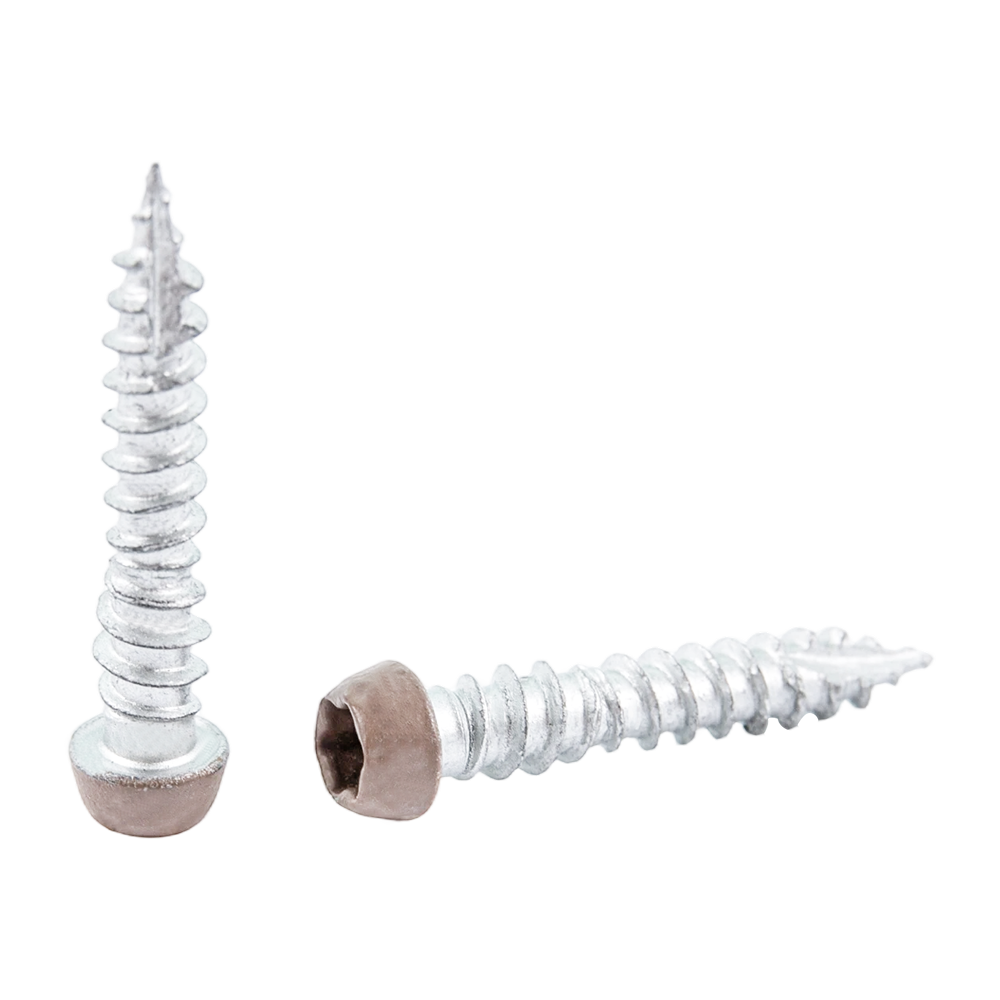
The thread designs that perform best in composite decking share several specific characteristics. A single-lead, coarse-pitch thread — typically with a pitch of 3.0mm to 3.8mm for a #10 diameter screw — provides wide spacing between thread flanks that allows the composite matrix to flow into and grip the thread profile without generating the lateral splitting pressure that finer pitches create. A dual-thread or twin-lead design offers faster drive speed with lower torque demand — important for reducing heat generation at the screw-material interface, which softens thermoplastic composite resins and degrades holding strength in the immediate installation zone. Reverse-thread or anti-back-out thread segments near the screw tip effectively eliminate the board lift that occurs when a standard thread is driven into a pre-drilled hole in warm composite material.
Corrosion Performance Standards for Deck Screws: What the Ratings Actually Mean in Practice
Deck screws are exposed to one of the most corrosively demanding environments a fastener encounters in residential or commercial construction: sustained outdoor moisture cycling, frequent wet-dry transitions, UV exposure, and — in coastal or pool-deck applications — chloride-laden air or direct chemical contact. The corrosion resistance rating of a decking screw determines not only how long the screw itself survives but also whether the corrosion byproducts stain the deck surface.
| Coating / Material |
Salt Spray Rating (ASTM B117) |
Suitable Environment |
Stain Risk |
| Bright zinc electroplate |
48–96 hours |
Interior / dry sheltered only |
High |
| Mechanically galvanized (Class 55) |
500–800 hours |
Standard outdoor decking |
Low to moderate |
| Hot-dip galvanized (HDG) |
1,000–1,500 hours |
Outdoor, high-humidity, treated lumber substructure |
Low |
| Type 316 stainless steel |
2,000+ hours |
Coastal, marine, pool-adjacent, ACQ-treated framing |
Negligible |
| Ceramic / polymer-coated steel |
800–1,200 hours (coating dependent) |
Standard to moderate outdoor decking |
Low when coating intact |
A critical compatibility issue is the reaction between zinc-coated deck screws and ACQ (Alkaline Copper Quaternary) or CA (Copper Azole) pressure-treated lumber. These preservative systems contain copper compounds that are highly corrosive to zinc and standard galvanized coatings, accelerating corrosion at a rate five to ten times higher than untreated lumber environments. Building codes in North America (IRC Section R317) require stainless steel or hot-dip galvanized fasteners when ACQ or CA treated framing is used — mechanically galvanized or electroplated screws are explicitly not compliant for this application.
Head Design and Countersinking Geometry: Getting a Flush Finish Without Board Cracking
The head geometry of a composite decking screw controls how the screw transitions from driving torque to seating force as the head contacts the board surface. Composite decking has a rigid outer shell or a dense polymer-fiber matrix that does not yield cleanly under impact — the head must be designed to shear or displace material in a controlled manner as it seats. Composite deck screws address this through several head design features that work together to achieve clean countersinking:
- Nibs or serrations beneath the head: Cutting nibs machined into the underside of the head countersink angle act as micro-cutting edges that shear the composite material cleanly as the head is driven flush. The number, depth, and angular orientation of these nibs must be matched to the composite density.
- Countersink angle: The standard 82° countersink angle used for wood screws is too aggressive for most composite materials. A shallower 90° to 100° countersink distributes the seating force over a larger contact area, reducing peak stress and producing a cleaner recess.
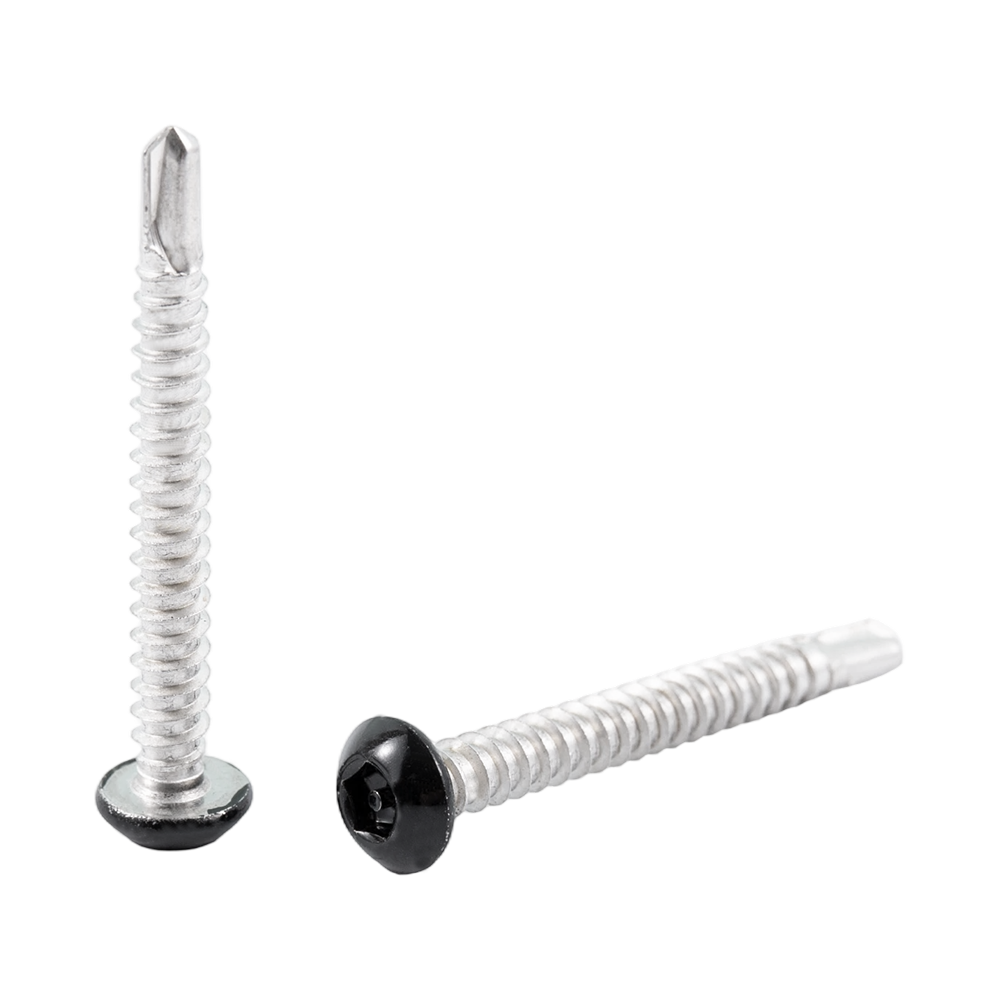
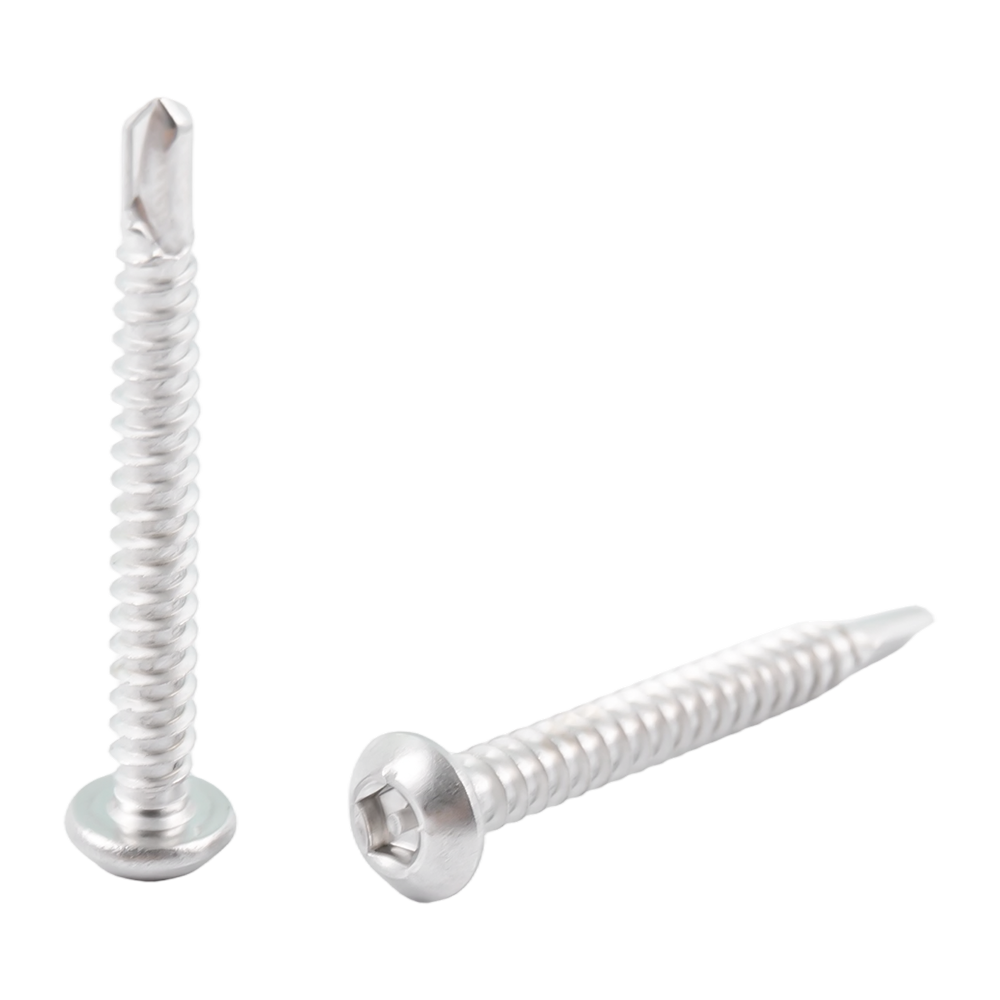
- Drill point geometry: A sharp, self-drilling point eliminates the need for pre-drilling in most composite densities and ensures that the hole is formed by cutting rather than displacement.
- Shank relief or reduced-diameter shank: A reduced-diameter smooth shank section between the threaded portion and the head prevents the upper board from being thread-engaged as the screw passes through, allowing the head to pull the board down against the joist cleanly.
Hidden Fastener Systems vs. Face-Screw Systems: Engineering Trade-offs Beyond Aesthetics
The choice between hidden fastener clip systems and face-screw installation for composite decking has significantly different structural and thermal performance characteristics that should drive the decision based on the specific deck geometry, climate, and composite product being installed. Face-screwed composite decking creates a fixed-point restraint at each fastener location that restricts the board's longitudinal thermal movement. Composite boards expand and contract by approximately 3mm to 6mm per linear meter across a temperature range of 50°C. When face screws are installed with a tight countersink that clamps the board firmly to the joist, the board is effectively pinned at every fastener point — in boards longer than 3 to 4 meters, this restraint builds sufficient thermal stress to cause board buckling between fixings or fastener pull-through.
Hidden fastener clip systems constrain the board vertically at the board edge groove while allowing full longitudinal movement — the primary structural advantage of hidden fastener systems, not the clean surface appearance. The trade-off is that the clip-to-groove connection provides less resistance to board lift under wind uplift loading than a face screw through the board face, which matters on elevated decks in high-wind zones where building codes may specify face-screw fixing at perimeter boards and stair stringers regardless of the hidden fastener specification for the field boards.
Drive System Selection for Composite Deck Screws: Reducing Cam-Out on Long Runs
A full composite deck installation involves driving thousands of screws into material that provides consistent resistance throughout the drive cycle. The drive system — the recess geometry in the screw head and the matching driver bit — is therefore a practical productivity and quality consideration, not merely a technical specification.
Phillips vs. Square vs. Torx Drive Performance Comparison
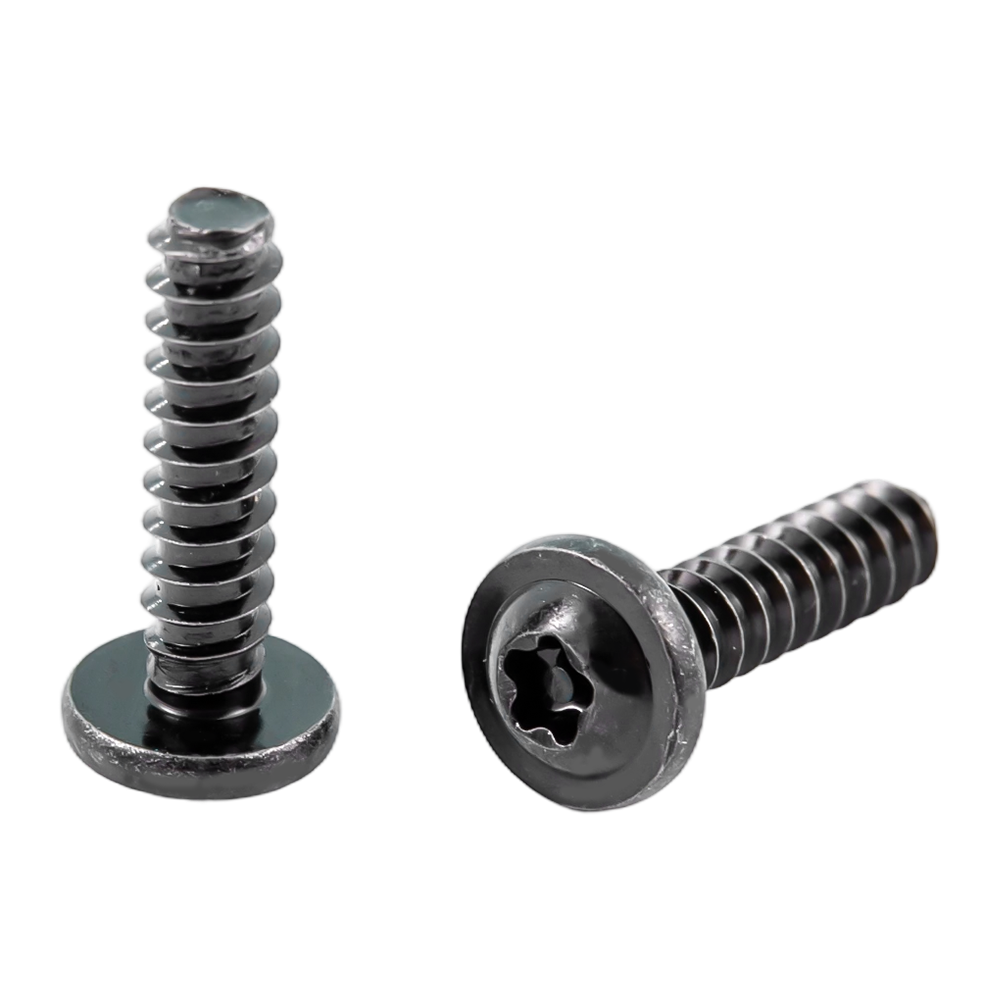
Phillips drive performs poorly on composite decking installations specifically because it is designed with intentional cam-out as a torque-limiting feature — the angled flanks are engineered to eject the driver bit when torque exceeds a threshold. In composite decking, this cam-out threshold is reached before the screw is fully seated. Square (Robertson) drive eliminates cam-out through its straight-walled recess geometry and is significantly preferred over Phillips. Torx (star drive) provides the highest torque transfer efficiency of any standard drive system, with six contact lobes that distribute load uniformly and resist both cam-out and socket wear through the longest installation runs. For professional installers driving 500 or more screws per day, the switch from Phillips to Torx drive screws typically reduces driver bit consumption by 60% to 80% and eliminates virtually all surface marking from cam-out events.
Pre-Drilling Requirements for Composite Decking Screws at Board Ends and Edges
The most vulnerable location for composite board cracking during screw installation is within 50mm of the board end or within 25mm of the board edge — zones where the contained volume of material around the fastener hole is insufficient to resist the hoop stress generated by thread engagement and head countersinking. The correct pre-drilling procedure requires attention to both the drill bit diameter and the drill point geometry. The recommended pilot hole diameter for end and edge pre-drilling is typically 70% to 80% of the screw shank diameter — large enough to relieve hoop stress during thread engagement but small enough to maintain adequate thread pull-out resistance in the composite matrix.
Using a standard twist drill bit is not ideal because the chisel point pushes material laterally before cutting, partially recreating the displacement stress the pre-drilling is intended to eliminate. A brad-point or pilot-point drill bit that severs the composite fiber matrix cleanly from the center outward is the correct tool. At elevated ambient temperatures — above 30°C — pre-drilling at all end and edge locations becomes necessary regardless of the screw specification, because the composite material is softer and more prone to stress fracture as the thermoplastic binder approaches its softening range.
Screw Length and Embedment Depth: Calculating Adequate Holding Strength for Composite-to-Joist Connections
The pull-through and pull-out strength of a composite decking screw depends on two independent thread engagement zones: the thread embedded in the composite board above, and the thread embedded in the joist framing below. The minimum recommended thread penetration depths into common substructure materials for composite deck screw installations are:
- Softwood joists (pine, spruce, fir): Minimum 32mm thread penetration into the joist for standard residential foot traffic loads; 40mm or more for elevated decks subject to wind uplift loading in exposed locations.
- Hardwood joists (treated hardwood, merbau, ipe): Minimum 25mm thread penetration is sufficient due to higher wood density and greater thread-to-fiber engagement force per unit length.
- Steel joists (light gauge, 1.5mm–3.0mm): Full thread penetration through the steel flange plus 3–5 full thread turns of engagement beyond the far face is required. Composite deck screws used on steel substructures must be specifically rated for metal engagement.
- Aluminium joists: Minimum 35mm thread penetration due to aluminum's lower shear strength. Thread-cutting (self-tapping) point geometry is preferred over standard sharp point to form a clean thread profile in aluminum without chip generation that reduces holding strength.
For the most common residential composite deck configuration — 25mm thick composite board over 45mm wide softwood joists — a screw of 65mm to 70mm total length provides the correct balance of composite engagement and joist penetration. Custom screw lengths to match specific composite board thicknesses and substructure depths — including non-standard lengths not available in catalog stock — are a routine capability for precision screw manufacturers supplying the composite decking hardware market.

 English
 Español