Industry knowledge
Brass Hex Nut Thread Form Tolerancing and Mating Screw Compatibility
The internal thread of a brass hex nut operates under fundamentally different stress conditions than its external-threaded mating screw. While the screw shank experiences tensile load, the nut threads bear compressive contact pressure against the screw flanks—a reversal that makes brass, with its lower compressive yield strength relative to steel, particularly susceptible to thread stripping. Suzhou Anzhikou Hardware Technology Co., Ltd. manufactures brass hex nuts with internal thread pitch diameters controlled to the upper half of the ISO 965-2 tolerance band for 6H nuts. This deliberate bias toward the loose side of the tolerance range reduces thread flank contact pressure by 12 to 18% compared to minimum-material-condition threads, extending the number of reusable tightening cycles from 5 to 8 before thread deformation becomes measurable.
The company's Taiwan-imported thread tapping equipment achieves this control through form taps rather than cut taps. Form taps displace brass material radially to create threads with work-hardened surfaces—typically increasing surface hardness from 80 HRB to 110 HRB in the thread root. This cold-worked layer resists the galling that occurs when brass nuts mate with stainless steel or brass screws. Anzhikou Hardware's 200-plus precision machines include tapping stations with torque monitoring that reject nuts where forming torque deviates by more than 5% from the alloy-specific setpoint, indicating either material hardness variation or tool wear that would produce out-of-tolerance threads.
Pitch Diameter Tolerance Allocation for Brass Hex Nuts
| Nominal Size |
6H Tolerance (μm) |
Anzhikou Target (μm) |
Resulting Contact Pressure Reduction |
Recommended Mating Screw Class |
| M3 |
+0 / +150 |
+75 / +150 |
15% |
6g |
| M4 |
+0 / +160 |
+80 / +160 |
14% |
6g |
| M5 |
+0 / +180 |
+90 / +180 |
13% |
6g |
| M6 |
+0 / +200 |
+100 / +200 |
12% |
6g |
This tolerance strategy assumes mating with 6g class screws, which represent the standard external thread fit for general engineering. When customers specify 4h or 3h precision screws for high-vibration applications, Anzhikou Hardware adjusts the nut target to the lower third of the 6H band to prevent excessive clearance that would permit self-loosening. The company's 10 engineering technicians with 20 years of industry experience validate these fit combinations through torque-tension testing on assembled joints, measuring the prevailing torque decay over 1,000 vibration cycles per DIN 65151.
Hex Nut Cold Heading: Flash Control and Corner Fill in Brass Alloys
The six corners of a hex nut represent stress concentration points where cold heading flash—excess material squeezed between the punch and die parting line—accumulates preferentially. In brass hex nuts, this flash is not merely cosmetic; the lead content in free-machining C36000 brass migrates to the flash during deformation, locally depleting the corner regions of the lubricating lead particles that prevent galling. Suzhou Anzhikou Hardware Technology Co., Ltd. controls flash through die design rather than secondary trimming, maintaining a parting line clearance of 0.02 to 0.03mm that permits minimal material escape while ensuring complete corner fill.
Corner Geometry and Wrench Engagement Reliability
- Across-flats dimension: Anzhikou Hardware manufactures brass hex nuts to ISO 4032 with across-flats tolerances of +0 / -0.13mm for M3 through M6 sizes. Wrench slip occurs when the nut flats wear or when the wrench jaw opening exceeds the nominal across-flats by more than 0.15mm. The company's cold heading dies are ground to produce flats with surface finishes of Ra 0.4μm, preventing the rounding that reduces effective wrench contact area by up to 30% in poorly formed nuts.
- Corner radius: The transition between adjacent flats must maintain a radius of 0.15 to 0.25mm. Sharp corners below 0.1mm radius create notch sensitivity in brass, with stress concentration factors exceeding 3.0 under tensile load. Conversely, radii above 0.3mm reduce the flat width available for wrench engagement, causing socket wrenches to cam off under torque application. Anzhikou Hardware's Japan-imported heading equipment controls this radius through precision-ground punch corners with 0.01mm profile accuracy.
- Height-to-width ratio: Standard hex nuts maintain a height of 0.8 times the nominal thread diameter. For brass applications where thread stripping rather than nut fracture is the limiting failure mode, Anzhikou Hardware offers thin nuts at 0.5 times diameter height, increasing the screw's engaged thread length relative to the nut and shifting failure to the screw shank—which is replaceable—rather than the tapped component.
The 2000-square-meter facility houses inspection stations where every brass hex nut lot undergoes across-flats and corner radius sampling at AQL 0.65. For export orders to European plumbing fixture manufacturers—one of the 40 countries and areas served—this sampling increases to 100% visual inspection due to the aesthetic requirements of exposed brass hardware.
Dezincification Resistance in Brass Hex Nuts for Water and Marine Service
Dezincification is a selective corrosion mechanism where zinc dissolves from brass alloy, leaving a porous copper structure that retains only 10 to 20% of the original mechanical strength. In brass hex nuts exposed to potable water, seawater, or acidic condensates, this process initiates at the thread roots where oxygen concentration cells develop. Suzhou Anzhikou Hardware Technology Co., Ltd. addresses dezincification through alloy selection and manufacturing process control, recognizing that standard C36000 brass nuts can fail within 2 to 5 years in aggressive water chemistries.
Alloy and Process Strategies for Corrosion-Resistant Brass Nuts
| Alloy |
Zinc Content (%) |
Dezincification Resistance Rating |
Relative Cost |
Typical Service Life in Seawater |
| C36000 |
35.5 |
Poor |
1.0× |
2-3 years |
| C35300 (High-Leaded) |
35.0 |
Fair |
1.1× |
4-6 years |
| C46400 (Naval Brass) |
39.5 |
Good |
1.4× |
10-15 years |
| C69300 (Eco Brass) |
34.0 |
Excellent |
1.6× |
20+ years |
C69300 Eco Brass represents the premium option, containing 3% silicon and no lead. The silicon forms a protective silicate film that arrests dezincification propagation. Anzhikou Hardware's cold heading equipment handles C69300 at 70% of the speed used for C36000 due to the alloy's higher work-hardening rate, but the resulting brass hex nuts meet NSF/ANSI 61 certification for drinking water system components. For marine applications where C46400 naval brass is specified for its traditional acceptance, the company applies a post-heading stress relief anneal at 260°C to eliminate residual stresses from the hex forming operation that would otherwise accelerate corrosion initiation at the corners.
Locking Feature Integration in Brass Hex Nuts: Nylon Insert vs. Prevailing Torque Deformation
Standard brass hex nuts rely entirely on thread friction and clamping load to resist loosening under vibration—a strategy that fails when thermal cycling or dynamic loads reduce friction below the threshold needed to overcome joint separation forces. Suzhou Anzhikou Hardware Technology Co., Ltd. integrates anti-loosening features directly into brass hex nuts through its dedicated anti-loosing production equipment, offering solutions that do not require secondary washers or adhesives.
Nylon Insert Lock Nuts: Material and Temperature Constraints
Nylon insert lock nuts, commonly specified as DIN 985 or ISO 10511, incorporate a polyamide ring swaged into the nut crown. When a screw threads through, the nylon displaces radially, creating an interference fit that generates prevailing torque. Anzhikou Hardware uses PA66 nylon 6/6 with 30% glass fiber reinforcement for temperatures up to 120°C, or PEEK inserts for applications reaching 250°C such as automotive exhaust adjacent components. The insert thickness is calibrated to 0.3 times the pitch for metric threads, producing prevailing torque values of 15 to 25% of the screw's proof load torque.
For high-temperature environments where polymer inserts degrade, the company offers all-metal prevailing torque nuts with deformed thread sections. A localized 0.05mm pitch diameter reduction on two thread turns creates mechanical interference without foreign material. Because brass is softer than steel, this deformation is applied to the nut rather than the mating screw, preserving the screw's reusability. Anzhikou Hardware's thread-rolling wire equipment performs this deformation as a secondary operation after standard tapping, with the 20 years of experience in non-standard screw customization enabling precise tuning of the interference magnitude based on the customer's specified torque range and the brass alloy hardness.
Performance Comparison of Brass Lock Nut Types
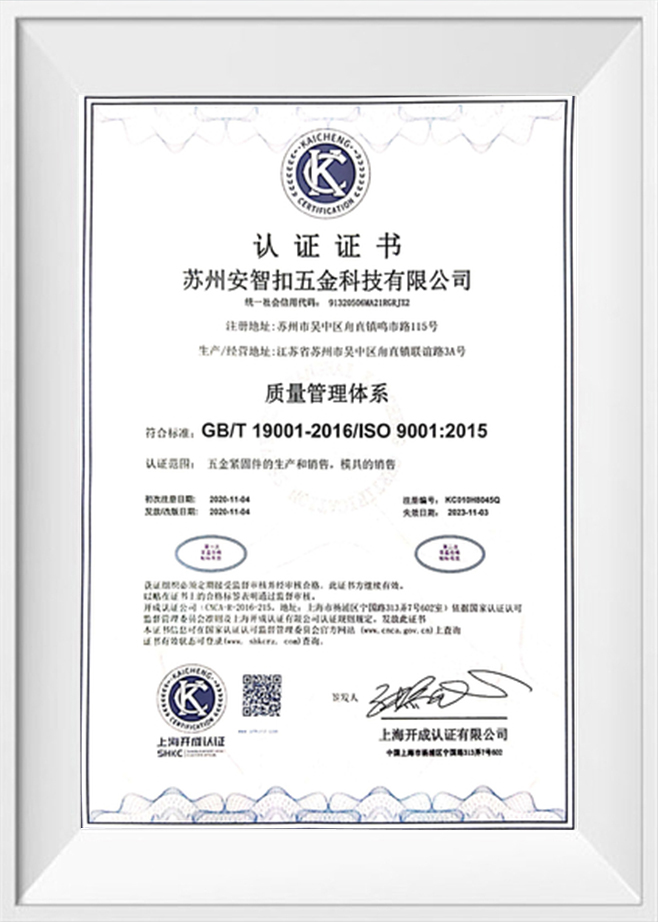
- Nylon insert nuts (PA66): Provide 5 to 10 reusable cycles with consistent prevailing torque. The glass-filled nylon wears gradually, with torque decay of 20% after 5 cycles. Anzhikou Hardware's ISO9001:2015 quality system tests insert retention through push-out testing at 50N minimum force, ensuring the nylon ring remains captive during screw insertion.
- All-metal deformed thread nuts: Offer unlimited temperature resistance and unlimited reusability of the mating screw. However, the deformed threads create surface damage on the screw that may preclude its reuse in standard nuts. The company recommends specifying these only for permanent assemblies or where screw replacement is routine maintenance.
- Serrated flange nuts: Combine a hex nut with an integral washer bearing surface featuring circumferential serrations. When tightened, these serrations bite into the mating surface, creating a mechanical lock that resists rotation. Anzhikou Hardware produces these in brass through a combined heading and piercing operation on its multi-station cold formers, maintaining concentricity between nut threads and serrated flange within 0.05mm total indicator reading.
Plating and Coating Compatibility for Brass Hex Nuts in Mixed-Material Assemblies
Brass hex nuts are frequently specified for their corrosion resistance and electrical conductivity, yet plating decisions can inadvertently create galvanic couples or compromise the very properties that justified brass selection. Suzhou Anzhikou Hardware Technology Co., Ltd. advises customers on plating compatibility based on the complete assembly environment rather than considering the nut in isolation.
Plating Selection Guidelines
Nickel plating on brass hex nuts provides a barrier against atmospheric tarnishing and extends the time-to-patina from months to years. However, nickel's electrode potential of -0.25V versus SHE makes it cathodic to brass (-0.15V), accelerating brass corrosion at any coating discontinuity. Anzhikou Hardware applies nickel at 8 to 12 microns thickness with a copper underplate of 2 to 3 microns to improve adhesion and reduce porosity. For electrical grounding applications where the nut must maintain contact resistance below 1 milliohm, the company recommends tin plating instead—tin's potential of -0.14V is nearly matched to brass, eliminating galvanic drive, while its softness conforms to mating surface irregularities.
For decorative architectural hardware where a chrome appearance is required, the company applies copper-nickel-chrome multilayer systems with minimum 25 microns total thickness. The copper layer (15 microns) provides leveling, nickel (8 microns) provides corrosion barrier, and chrome (0.3 microns) provides the reflective surface. This system withstands 240 hours of CASS (Copper-Accelerated Acetic Acid Salt Spray) testing per ASTM B368, a requirement for exterior brass hardware in the company's export markets including coastal regions of Australia and the Middle East.
The annual production capacity of 2,000 square meters at Anzhikou Hardware's facility includes dedicated plating lines with barrel and rack processing capabilities. For miniature brass hex nuts below M3, rack plating is mandatory to prevent part-to-part contact that would create unplated witness marks on the hex flats. The company's quality testing equipment includes X-ray fluorescence spectrometers that verify coating thickness and composition on every production lot, with certification documentation provided for aerospace and medical device customers requiring full traceability.
Miniature Brass Hex Nut Production: Heading and Tapping Below M2
Producing brass hex nuts below M2 challenges conventional manufacturing because the hex width across flats becomes smaller than standard wrench sizes, requiring custom tooling and inspection methods. Suzhou Anzhikou Hardware Technology Co., Ltd. manufactures miniature brass hex nuts down to M1.0 with 2.5mm across-flats—matching the company's capability for miniature screws down to 0.6mm diameter—through process adaptations that address the material behavior at micro scales.
Micro-Nut Manufacturing Parameters
Cold heading M1.2 brass hex nuts from 1.5mm wire stock requires heading speeds reduced to 100 strokes per minute, compared to 180 for M3 nuts. The slower speed prevents adiabatic heating that would locally soften the brass and cause corner rounding. Anzhikou Hardware's servo-controlled heading equipment from Taiwan maintains punch velocity profiles with 0.1mm/ms accuracy, ensuring uniform deformation across all six corners. The hex punch geometry incorporates 0.5-degree draft angles to permit part ejection without corner damage—a critical consideration when the corner-to-corner dimension is only 2.9mm.
Internal thread tapping on M1.0 and M1.2 brass nuts employs micro-taps with reinforced shanks to resist breakage in the small diameter. The company's thread-rolling wire equipment is not applicable for internal threads, so cutting taps with three flutes and TiN coatings are used at 800 RPM with sulfurized cutting oil. Tap life is monitored through thread gauge inspection every 200 holes; when the pitch diameter approaches the upper tolerance limit, the tap is replaced to prevent oversized threads that would mate loosely with precision screws. Anzhikou Hardware's 10 engineering technicians with 20 years of industry experience have developed proprietary tap geometries with modified hook angles that reduce tapping torque by 25% in brass, extending tap life and improving thread surface finish to Ra 0.6μm.
Quality assurance for these miniature nuts includes automated optical sorting that inspects 100% of production for hex symmetry, thread presence, and burr absence. The vision system, part of the company's complete range of testing equipment, operates at 1,200 pieces per minute with 2-micron resolution—sufficient to detect flash protrusions as small as 0.05mm that would interfere with assembly in precision electronics housings. This capability supports the company's export business to 40 countries and areas, including Japanese camera manufacturers and Swiss watch movement producers where M1.2 brass hex nuts secure delicate adjustment mechanisms.

 English
 Español