Telephone: +86-0512-65028068
Content
When most people think about repairing a smartphone, they picture cracked screens or dead batteries. But behind every successful repair lies a surprisingly complex world of tiny fasteners. Mobile phone screws are among the smallest and most precisely engineered components in consumer electronics. They hold together display assemblies, logic boards, battery brackets, and camera modules — and stripping or losing even one can compromise the structural integrity of the entire device. Understanding these screws is essential for anyone attempting a DIY repair, working in a phone repair shop, or simply curious about what holds modern smartphones together.
Smartphone manufacturers use a variety of screw types, and identifying the correct one before disassembly is critical. Using the wrong screwdriver bit — even one that looks close — can round off the head and make removal nearly impossible. Here are the most frequently encountered types:
Pentalobe screws are Apple's signature fastener, used on the exterior of iPhones since the iPhone 4. They feature a five-pointed star-shaped recess designed specifically to prevent users from opening devices with standard tools. Apple uses two primary pentalobe sizes: the P2 (0.8mm) for iPhones and the P5 (1.2mm) for MacBooks. These screws are typically found at the bottom edge of the phone, flanking the Lightning or USB-C port.
The Phillips head is the most widely used screw type in mobile devices. Its cross-shaped recess allows for high torque without slipping, making it ideal for internal components. In smartphones, Phillips screws most commonly appear in sizes #000 and #00 — extremely fine variants of the standard Phillips design. Android devices from brands like Samsung, OnePlus, and Xiaomi frequently use Phillips screws for securing the motherboard, battery connector, and display brackets.
Torx screws feature a six-pointed star shape and are increasingly common in modern smartphones and tablets. They offer superior torque transfer and are less prone to cam-out (slipping under pressure) compared to Phillips screws. The T2, T3, T4, and T5 sizes are the most relevant for mobile repair work. Samsung devices, in particular, have transitioned heavily to Torx screws in recent generations.
Apple introduced tri-point (Y-type) screws in newer iPhone models, particularly for internal battery connectors and certain bracket screws. The Y000 tri-point is among the tiniest screws used in any consumer device. Tri-wing screws, with three asymmetrical wings, are another proprietary type occasionally found in older Nintendo and some Apple accessories. Both types require dedicated bits and cannot be substituted with common tools.
Although rare in contemporary smartphones, flathead screws do appear in some budget Android devices and older feature phones. They are straightforward in design — a single horizontal slot — but are prone to slipping, which is why most manufacturers have moved away from them in precision assemblies.
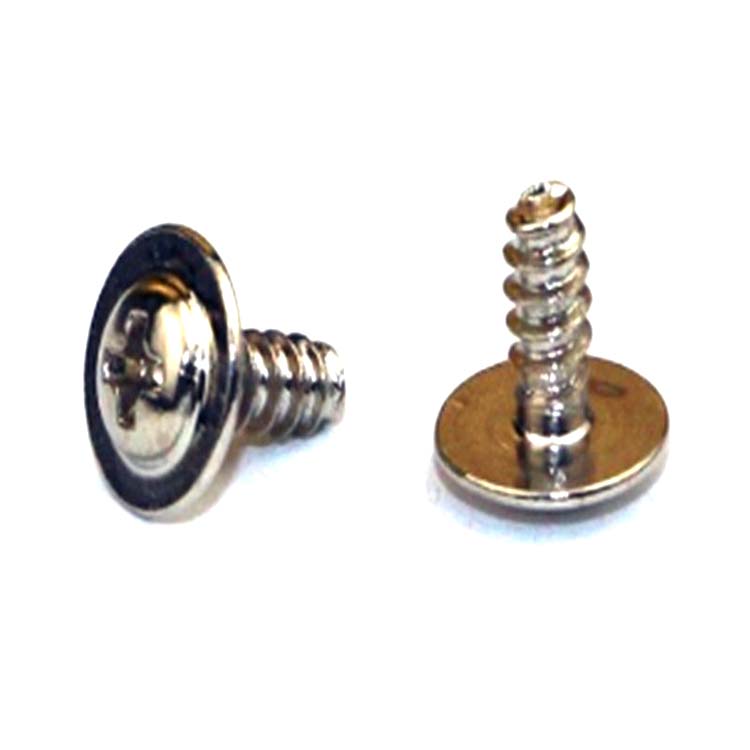
Size matters enormously with phone screws. Even fractions of a millimeter in length can mean the difference between a secure fit and a punctured battery. The table below outlines common screw sizes and their typical applications across popular devices:
| Screw Type | Common Size | Typical Location | Common Devices |
| Pentalobe | P2 (0.8mm) | Exterior bottom edge | iPhone 4 and later |
| Phillips | #000, #00 | Motherboard, brackets | Samsung, Xiaomi, OnePlus |
| Torx | T3, T4, T5 | Display assembly, logic board | Samsung Galaxy series |
| Tri-Point (Y000) | 0.6mm | Battery connector | iPhone 7 and later |
| Torx Security | T4, T5 | Internal chassis | Various Android flagships |
One frequently overlooked detail is screw length. In iPhones especially, screws of the same head type but different lengths are used in adjacent positions. Swapping a 1.5mm screw for a 2.5mm screw in the wrong location — such as near the logic board — can cause permanent damage by piercing internal layers. Always use screw mats or labeled compartments during disassembly.
Having the right tools is non-negotiable. A quality screwdriver set designed for electronics repair will protect both the screws and the surrounding components. Here is what a well-equipped repair toolkit should include:
Stripped screws are one of the most frustrating obstacles in phone repair. They occur when too much force is applied, the wrong bit is used, or the screw head is already worn. Fortunately, several techniques can recover a stripped screw without destroying the device.
Place a wide rubber band between the screwdriver bit and the screw head. The added friction can provide enough grip to turn a slightly stripped screw. Apply firm downward pressure while turning slowly — this technique works surprisingly well on lightly damaged heads.
Screw extractor bits are specially designed with reverse-spiral flutes that bite into damaged screw heads as they turn counterclockwise. These are available in micro sizes suitable for phone screws and are an essential part of any advanced repair toolkit.
For screws that are stuck due to adhesive or corrosion rather than stripping, a tiny drop of penetrating oil or isopropyl alcohol applied carefully around the head can help loosen the bond. Wait 30–60 seconds before attempting removal, and avoid getting any liquid on surrounding components.
If nothing else works, a rotary tool with a micro cutting disc can cut a new slot into a completely stripped screw head, converting it into a flathead for removal. This requires extreme precision and steady hands to avoid damaging the surrounding chassis or PCB.
Lost or damaged screws need to be replaced with exact matches — both in type and length. Using a screw that is even 0.5mm too long can cause internal damage when tightened. Here is how to find the right replacements:
Even experienced technicians can run into trouble if they rush a repair. Following these best practices reduces the risk of stripped screws, lost fasteners, and reassembly errors:
Mobile phone screws are precision-manufactured components with tolerances measured in hundredths of a millimeter. Most use self-tapping threads designed to cut into soft metal bosses (small raised cylinders in the phone chassis), which means they do not use a traditional nut on the other side. Because of this, the thread is formed during the first installation. Repeated removal and reinsertion can gradually wear down these bosses, making it harder for the screw to hold securely over time. This is particularly noticeable in budget phones with plastic chassis. High-end devices often use metal-reinforced standoffs to extend the lifespan of screw holes through multiple repair cycles. Stainless steel screws are preferred for their corrosion resistance and hardness, while some manufacturers use titanium for flagship internal screws where weight reduction is a priority.
Mobile phone screws may be the smallest components in a repair job, but they demand the greatest attention to detail. From identifying the correct head type to sourcing an exact size replacement, every step matters. Whether you are tackling your first battery swap or running a professional repair bench, investing in quality tools, keeping screws organized, and taking the time to understand what each fastener does will save you time, money, and frustration. The more familiar you become with the screw types used by different manufacturers, the faster and more confidently you will be able to work through any phone repair.
CONTACT DETAILS

Address:NO. 248-2 Changhongbei Road, Luzhi Town, Wu zhong District,Suzhou City, Jiangsu Province,China.
TEL:+86-13913588597
PRODUCTS
MOBILE TERMINAL




 English
 Español
.jpg "New design customized 12mm metal rivet grommets for handbag")
.jpg "New design brass double side rivets for bag and suitcase")
.jpg "6mm Double side brass Rivet with hanging enamel for clothes&bag")
.jpg "Rainbow color flat type metal D ring for hand bag&luggage")
.jpg "New design hardware accessories 25mm metal D ring for handbag")