Industry knowledge
Material Selection for Thread Rolling Dies
The performance and service life of Thread rolling dies are fundamentally determined by tool steel selection. High-speed steel (M2, M42) and cold-work tool steel (D2, DC53) remain the industry standards, but the critical differentiator often lies in the carbide grade and coating architecture applied to the substrate. For high-volume production of miniature fasteners, dies made from micro-grain carbide can deliver 3 to 5 times longer tool life compared to conventional HSS when forming stainless steel or titanium alloys. At Suzhou Anzhikou Hardware Technology Co., Ltd., we rely on Japanese-grade carbide dies to maintain consistent thread geometry across millions of parts, which directly supports our commitment to quality and on-time delivery for our global partners.
Coatings and Surface Engineering
Modern Thread rolling dies frequently incorporate PVD coatings such as TiCN, AlCrN, or multilayer nanocomposite structures. These coatings reduce galling and adhesive wear, which is especially crucial when rolling duplex stainless steel or aluminum alloys prone to cold welding. Cryogenic treatment prior to coating further refines the martensitic structure, stabilizing dimensional integrity. This technical expertise allows our engineering team to customize non-standard screw solutions that meet rigorous quality requirements down to external diameters of 0.6mm.
Root Radius and Stress Concentration in Thread Forming
The root radius design of Thread rolling dies directly governs the fatigue resistance of the finished fastener. Unlike cut threads, rolled threads produced with optimized die geometry displace material fibers into a continuous flow line, creating compressive residual stress at the root. However, if the die's root radius is too sharp, micro-cracking can initiate during service. Industry fatigue testing consistently shows that fasteners produced with properly radiused dies exhibit up to 40% higher endurance limits under cyclic loading.
Pitch Diameter Conformity
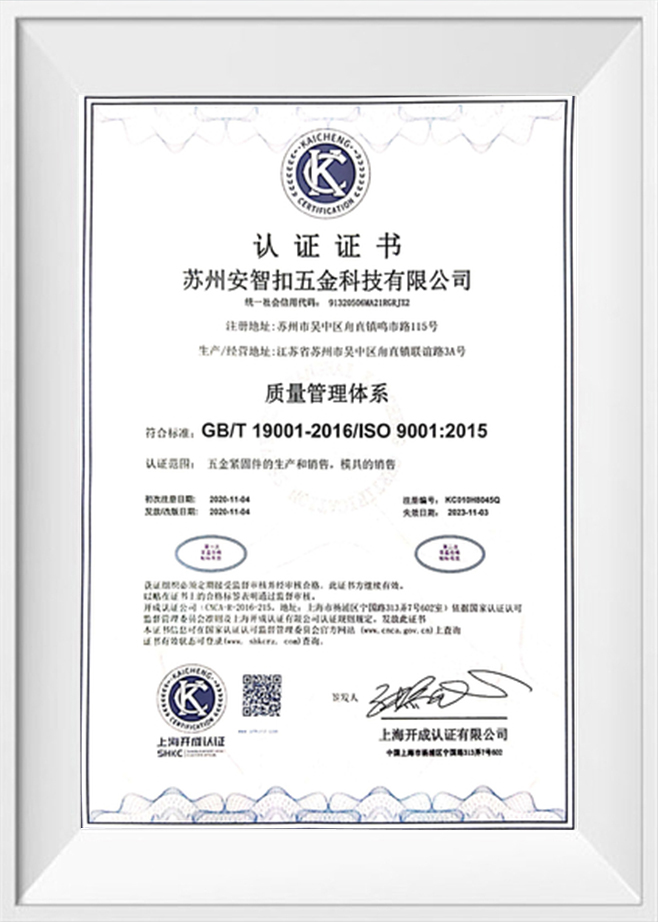
Achieving consistent pitch diameter across long production runs requires precise control of die penetration force. Variations in wire diameter tolerance necessitate real-time adjustments. With 20 years of industrial production experience, our team understands the nuanced interplay between blank diameter, material springback, and die geometry, ensuring our precision screws consistently meet ISO 9001:2015 certified standards for customers in over 40 countries.
Troubleshooting Common Thread Rolling Defects
When Thread rolling dies produce out-of-specification threads, the root cause can typically be traced to a handful of mechanical or material factors. The table below outlines frequent failure modes observed in precision fastener manufacturing, particularly relevant for micro-scale parts where tolerances are measured in microns.
Common Die-Related Defects and Corrective Actions
| Defect Type |
Typical Appearance |
Primary Die-Related Cause |
Recommended Correction |
| Seam Opening |
Visible axial crack at thread crest |
Excessive blank diameter or insufficient die chamfer relief |
Reduce blank diameter by 0.02-0.05mm; verify chamfer angle |
| Flaking |
Small metal scales on crest flanks |
Inadequate lubrication or substrate adhesion failure |
Upgrade EP additives; evaluate TiCN-coating for Thread rolling dies |
| Thread Misalignment |
Wavy or drunken thread form |
Die mismatch or guide rail wear in planetary system |
Re-align stationary/rotary dies; inspect lead error on master gage |
For miniature screws with an external diameter as small as 0.6mm, even microscopic die wear translates to rejection-level defects. Anzhikou Hardware utilizes precision equipment from Taiwan and Japan to maintain process capability indices that far exceed standard commercial requirements, consistently delivering the high-precision fasteners our international clientele expects.
Feed Mechanism Optimization for Planetary Die Systems
The efficiency of Thread rolling dies in planetary machines hinges significantly on the orbital feed angle and the synchronization between the stationary segment and rotary die. An incorrect feed angle induces skidding rather than rolling, causing crescent-shaped lapping on the blank and premature die ridge breakdown. The optimal helix angle of the feed channel must correspond precisely to the thread lead angle being formed. For high-volume production of custom non-standard parts, our engineering staff, who possess 20 years of industry experience, configure these parameters to optimize production speed without sacrificing the dimensional stability mandated by ISO quality certification.
Lubrication Delivery at the Deformation Zone
Boundary lubrication during thread rolling is not merely about reducing friction; it is essential for heat dissipation. When forming complex thread profiles, localized temperatures at the die-workpiece interface can exceed 600°C in milliseconds. Properly directed high-pressure lubricant mist prevents thermal softening of the die crest. This attention to process detail is what allows Suzhou Anzhikou Hardware to promise product quality and provide professional service while continuously innovating to optimize costs for our mutual benefit.

 English
 Español
.jpg "High quality Standard and non-standard Thread Rolling Dies")
.jpg "M2 high quality customized thread rolling dies")
.jpg "Self-tapping screws Thread Rolling Die With High Hardness test")
.jpg "Tungsten Carbide Flat Thread Rolling Die Screw Making Molds")
.jpg "Tungsten Carbide Thread Rolling Die Screw Screw Forming Mould")
.jpg "Various Thread Forming Screw Knurling Dies Flat Thread Rolling Dies")