Telephone: +86-0512-65028068
Content
A bolt O-ring is a small detail that often decides whether a joint stays dry, clean, and reliable. In simple terms, it is an elastomeric ring fitted to a bolt or screw, usually under the head or in a groove on the shank, so that tightening the fastener compresses the ring against a mating surface. The result is a face seal or radial seal that keeps water, dust, oil, or air from moving through the joint. People also call this type of part an O-ring bolt, sealing screw, or waterproof screw. The names vary, but the purpose is consistent: combine fastening and sealing in one component.
From our experience in precision screw manufacturing, the O-ring itself is only one part of the story. Groove geometry, surface finish, material compatibility, and installation torque all influence whether the seal works in the field. A bolt that looks correct on a drawing can still leak if the O-ring is stretched during assembly or if the mating surface is too rough. This guide walks through the practical points we discuss with engineers and buyers when they specify sealing fasteners.
An O-ring works by controlled compression. When the bolt is tightened, the elastomer deforms and fills the microscopic gap between the fastener and the mating part. The seal is not created by the ring pressing hard against the surface in a passive way; it depends on squeeze, groove fill, and the ability of the rubber to recover. That is why an O-ring bolt needs a proper seat, not just a ring slipped under a standard head.
There are two broad sealing arrangements. In a face seal, the O-ring sits in a groove under the bolt head or under an integrated washer, and it is compressed against a flat mating face. This is common in enclosures, electronic housings, pumps, and outdoor fixtures. In a radial seal, the O-ring sits in a groove on the shank and seals against a bore or through-hole. The second arrangement is more sensitive to bore tolerance and insertion alignment, but it can be useful when the bolt also acts as a plug or access point.
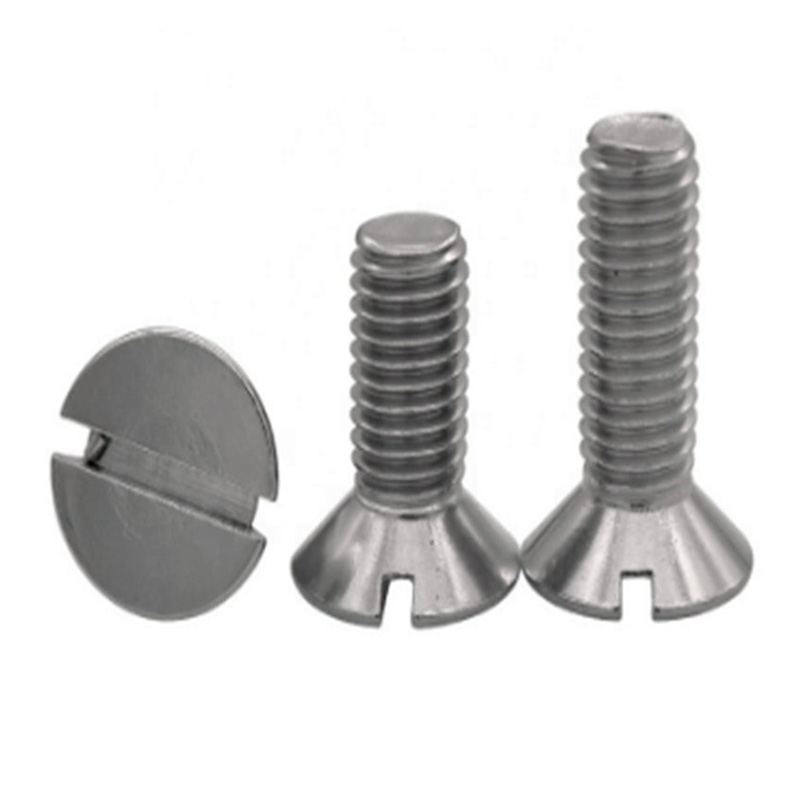
Most sealing screws we see fall into a few practical families. The choice depends on the housing design, the direction of pressure, and whether the fastener needs to be removed for service. A countersunk sealing screw, for example, gives a low-profile head but requires a matching countersink and careful control of the sealing face. A pan head or button head sealing screw is easier to use with a flat housing surface and an under-head O-ring groove.
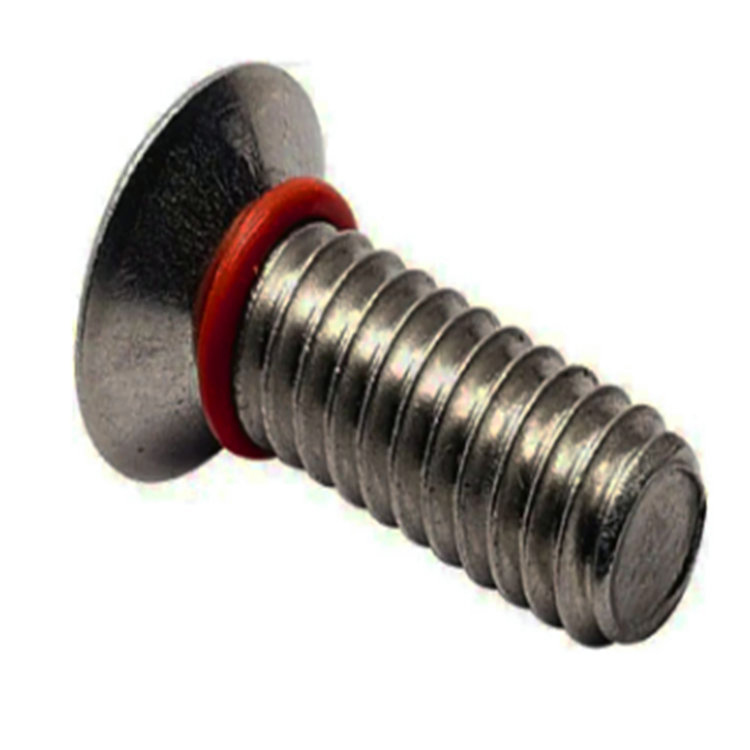 Countersunk Head Cross-Drive Waterproof O-Ring Sealing ScrewCountersunk, cross-drive self-sealing screw with an O-ring for waterproof fastening; offered in multiple materials, standards, and surface colors.View Product →
This is the most common design for a bolt with an O-ring. The groove is machined or formed under the head, and the O-ring sits slightly proud of the surface before tightening. When the screw is driven, the ring compresses against the panel. The groove should support the ring without pinching it, and the head should not bottom out before the O-ring reaches its intended squeeze.
A shank groove is useful when the fastener passes through a plain hole and the seal must act against the bore. This design can provide a radial seal along the screw body, but it needs a smoother bore and a more controlled lead-in. If the hole has a sharp edge or a rough break, the O-ring may be cut during installation.
Not every sealing solution needs a visible O-ring. A bonded sealing washer, a molded sealing ring, or a sealing coating can achieve a similar result in lower-pressure applications. These options are often easier to assemble, but they may not recover as well after repeated tightening. For a true O-ring bolt, the elastomer is usually the primary sealing element, so the groove and material remain central to performance.
Material selection starts with the fluid, the temperature, and the expected service life. A ring that swells in oil or hardens in sunlight will fail even if the bolt geometry is perfect. The table below gives a practical starting point, but the final choice should always be checked against the actual media and operating conditions.
| Material | Good for | Keep in mind |
|---|---|---|
| NBR | General oils, water, air, and common sealing screws | Limited ozone and weather resistance; avoid polar solvents |
| EPDM | Water, steam, outdoor weather, and brake fluid | Poor resistance to mineral oils and fuels |
| Silicone | Wide temperature range and static seals | Lower mechanical strength; not ideal for abrasion |
| FKM | Fuels, oils, chemicals, and higher temperatures | Higher cost; confirm compatibility with the specific chemical |
| PU | Abrasion-resistant static or light dynamic seals | Limited high-temperature performance |
Groove design matters just as much. A groove that is too shallow will under-compress the ring; one that is too deep or too wide may let the ring move or extrude. The surface finish on the sealing face should be smooth enough to let the elastomer flow into contact, but not so polished that the ring cannot grip. In production, we usually verify the groove dimensions together with a sample ring, because the nominal cross-section can vary by material and hardness.
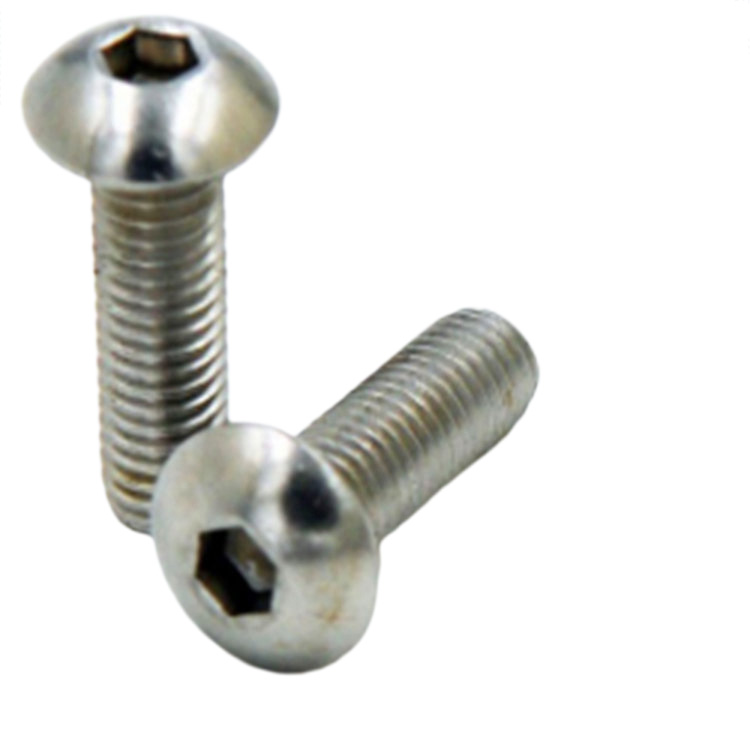
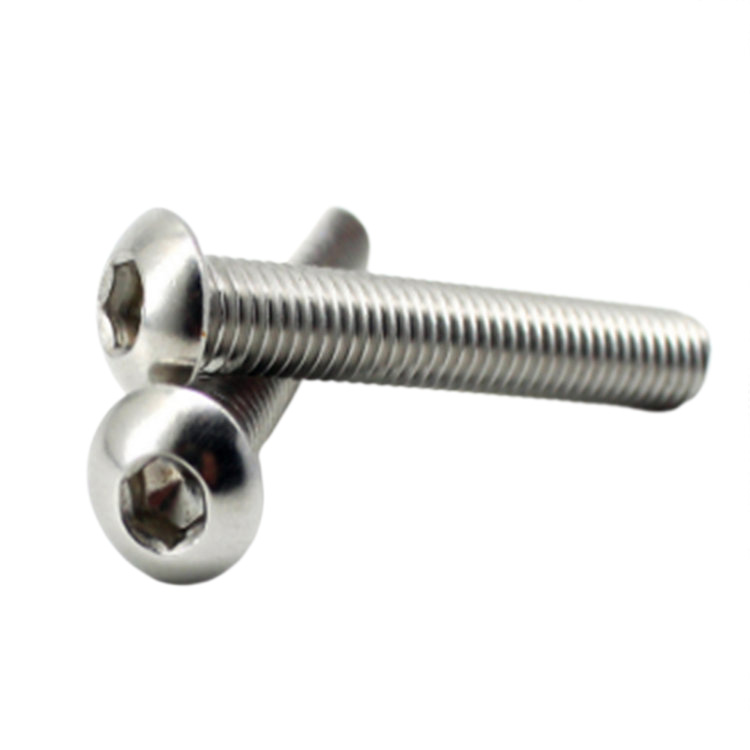
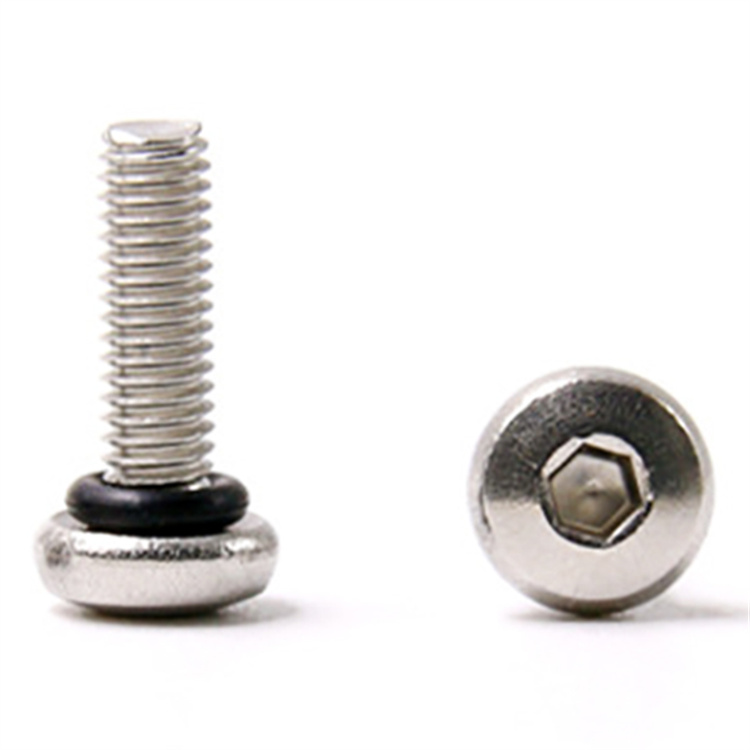 Stainless Steel M3 Button Head Hex Socket O-Ring ScrewStainless steel M3 button-head screw with hex socket drive and O-ring for self-sealing fastening in compact electronic housings.View Product →
For small electronic housings, stainless steel sealing screws are often preferred because they resist corrosion while keeping the head profile compact. A button head hex socket screw with an O-ring can be a good fit when the housing has a flat sealing face and the installer needs a reliable, repeatable drive.
An O-ring bolt is not a “tighten until it feels right” part. Torque should be high enough to compress the ring, but not so high that the elastomer is crushed, extruded, or cut. The mating surface should be flat, clean, and free of burrs. A scratched panel or a chip under the head can create a leak path that no O-ring can close.
Repeated disassembly is another consideration. If a housing is opened often, the O-ring may need replacement or a more robust captured design. A sealing screw that stays installed for years has different requirements from one that is opened weekly for service.
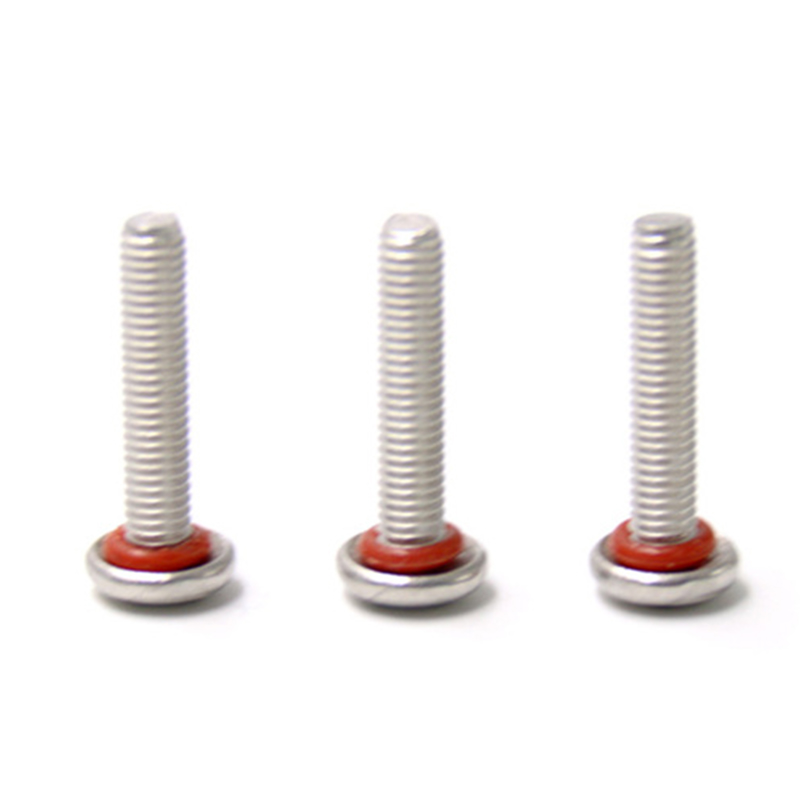 Pan Head Stainless Steel M3 O-Ring Groove Sealing ScrewPan-head stainless steel M3 machine sealing screw with an O-ring groove, suited to waterproof fastening where a defined sealing seat is needed.View Product →
A pan head stainless steel screw with an O-ring groove is a practical example of a design that balances a low profile with a defined sealing seat. The groove should be machined consistently so that the ring sits at the same height from part to part.
Sealing fasteners appear in more places than many buyers expect. Outdoor enclosures use them to keep rain and dust out of electrical compartments. Consumer electronics use miniature sealing screws to protect internal components from moisture and cleaning fluids. Pumps, valves, and fluid-handling equipment use them to stop oil or water from creeping along a threaded joint. Automotive and motorcycle accessories use sealing bolts where splash and road spray are constant.
In each case, the seal is not automatically successful because an O-ring is present. The housing material, screw material, plating, and thermal expansion all interact. A stainless steel screw in an aluminum housing, for example, may need attention to galvanic corrosion and thread lubrication. A plastic housing may need a lower torque to avoid cracking or creep.
When a customer sends us a drawing for an O-ring bolt, we usually confirm a short list before quoting. This saves time later and reduces the chance of a sample that seals on the bench but fails in the field.
If the application is unusual, a standard catalog part may not be the best answer. Custom groove dimensions, special head shapes, and material changes are often needed. Our OEM fastening page outlines how drawings and samples can be reviewed for custom production, including miniature sealing screws and non-standard head designs.
It also helps to test the complete joint, not just the fastener. A leak can come from the housing seam, the thread, or the panel surface. A pressure test or a simple water-spray test on a prototype can reveal problems early, when changes are still inexpensive.
Suzhou Anzhikou Hardware Technology works as a precision screw manufacturer, and our product range includes waterproof self-sealing screws with O-ring grooves, sealing washers, and sealing coatings. Our shop floor is organized around cold heading, thread rolling, CNC machining, and anti-loosening processes, with a focus on small and miniature fasteners. You can read more about our background and equipment on the about page. We prefer to discuss the sealing face, the O-ring material, and the assembly method at the same time, because those three factors decide whether a bolt O-ring performs as expected.
If you are choosing an O-ring bolt for a new enclosure, start with a sample and a clear test condition. Tighten it, measure it, expose it to the real fluid, and inspect the ring after disassembly. That practical feedback is more valuable than a catalog shortcut. With the right groove, elastomer, and installation torque, a small O-ring can turn an ordinary fastener into a dependable seal.
CONTACT DETAILS

Address:NO. 248-2 Changhongbei Road, Luzhi Town, Wu zhong District,Suzhou City, Jiangsu Province,China.
TEL:+86-13913588597
PRODUCTS
MOBILE TERMINAL




 English
 Español