Industry knowledge
Flat Head Thumb Screw Countersink Angles — Why 82° and 90° Are Not Interchangeable
The countersink angle of a flat head thumb screw is one of the most frequently misspecified dimensions in panel fastener assemblies, yet its consequences are immediate and measurable. Inch-series flat head screws follow the 82° included angle standard (ASME B18.6.3), while metric flat head screws conform to 90° (ISO 7046 / DIN 965). When a screw and its mating countersink are cut to different angles, the bearing contact shifts from a full-surface engagement to a narrow annular line — either at the outer rim or the inner throat of the head, depending on the direction of mismatch.
Line contact instead of surface contact has two direct consequences. First, the effective clamping area is reduced by as much as 70%, meaning the panel can shift laterally under loads that a correctly matched assembly would hold stationary. Second, the concentrated stress at the contact line accelerates local deformation of both the screw head and the countersunk panel material — particularly problematic in aluminum, plastic, or die-cast zinc panels where the material is softer than the screw. In thumb screw applications that are opened and reclosed repeatedly, this deformation progresses with each cycle, eventually causing the head to sit visibly proud of the panel surface even when fully tightened. Specifying the countersink angle explicitly on procurement drawings — rather than relying on "standard" assumptions — eliminates this failure mode entirely.
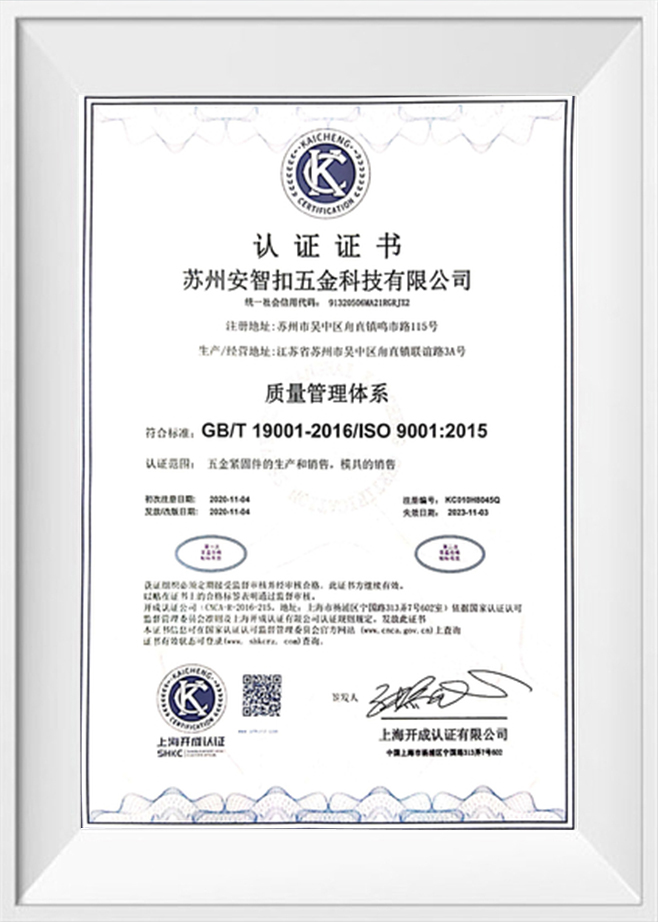
Suzhou Anzhikou Hardware Technology Co., Ltd. machines flat head thumb screw countersinks using CNC turning centers that hold the included angle to within ±0.5°, with in-process optical measurement confirming conformance. For customers supplying panels manufactured to a specific standard, Anzhikou's engineering team will cross-reference the panel countersink specification before production to ensure full angular compatibility.
How Head-to-Shank Transition Geometry Affects Thumb Screw Performance Under Lateral Load
In most hand-fastening applications, thumb screws are assumed to carry only axial clamping loads. In practice, panel assemblies frequently experience lateral forces from handling, thermal expansion differential between panel and chassis, or vibration-induced rocking. The geometry of the head-to-shank transition — the fillet radius or undercut at the junction — determines how the screw distributes these lateral bending stresses and whether fatigue cracking initiates at that zone.
A sharp undercut at the head-shank junction concentrates bending stress at a single cross-section and is a known fatigue initiation site, particularly in stainless steel screws subjected to cyclic loading. A generous fillet radius — typically 0.1× to 0.15× the shank diameter — redistributes the stress gradient over a larger material volume and extends fatigue life significantly. For flat head thumb screws, this fillet is partially concealed within the countersunk panel, which means visual inspection cannot confirm its presence; it must be verified dimensionally during incoming inspection using a profile projector or CMM.
The underhead bearing surface width also plays a role in lateral load resistance. A wider bearing surface — the flat annular area between the countersink wall and the shank — increases the moment arm available to resist rocking, effectively stiffening the joint against angular displacement. For small-diameter flat head thumb screws (M3 and below, or #6 and below in inch sizes), this bearing surface can be extremely narrow, and specifying a minimum bearing width in addition to the head angle becomes important for high-cycle or vibration-exposed applications.
Torque Limits for Hand-Driven Thumb Screws — Setting Realistic Clamping Force Expectations
A persistent design error in assemblies that use thumb screws is assuming that finger-applied torque will achieve a meaningful clamping preload comparable to tool-driven fasteners. Ergonomic studies place the average adult thumb-and-forefinger pinch torque between 0.3 and 0.9 N·m for sustained operation, with peaks up to 1.4 N·m for brief efforts on knurled heads. For reference, a standard M4 bolt tightened to 70% proof load requires approximately 2.8 N·m. This gap has direct implications for joint design.
Thumb screws should not be the primary clamping element in joints that rely on friction to transfer shear loads between panels. Their appropriate role is positional retention — holding a cover panel against its mating surface to prevent rattling, maintain EMI gasket compression within its working range, or keep a hinged door from swinging open — not structural load transfer. When designers specify thumb screws expecting them to clamp with the same reliability as a torqued machine screw, the result is field reports of panels vibrating loose, gaskets failing to seal, or covers that can be displaced by hand pressure.
The following reference values help set realistic design parameters when specifying flat head thumb screws in panel assemblies:
| Screw Size |
Achievable Hand Torque (N·m) |
Estimated Clamp Load (N) |
Suitable Joint Function |
| M2 / #2-56 |
0.05 – 0.15 |
30 – 90 |
Dust cover retention, light panel alignment |
| M3 / #4-40 |
0.10 – 0.30 |
60 – 180 |
EMI gasket compression, access panel seating |
| M4 / #8-32 |
0.25 – 0.70 |
120 – 340 |
Rack panel retention, instrument cover fastening |
| M5 / #10-32 |
0.40 – 1.00 |
170 – 430 |
Enclosure door closure, hinged access retention |
Typical hand torque and clamping load ranges for common thumb screw sizes under normal finger-drive conditions
These values assume a knurled head with adequate grip surface. A smooth or worn head reduces achievable torque by 30–50%, which shifts many applications out of their functional torque window entirely. This is why knurl condition is a maintenance-relevant specification, not just an aesthetic one, for thumb screws that are used frequently over their service life.
Non-Standard Flat Head Thumb Screw Configurations and When Custom Tooling Is Justified
Standard catalogue flat head thumb screws cover a well-defined range of sizes, thread pitches, and head diameters, but product design constraints frequently push applications outside that range. Extended head diameters for larger grip area, reduced-profile heads for thin panel clearance, hybrid knurl-plus-slot heads for both hand and tool drive, and custom shank lengths for specific panel stack-up thicknesses are all common requirements that catalogue products cannot satisfy. Understanding when custom tooling is economically justified versus when a catalogue item with design adaptation is sufficient is a practical procurement decision that affects both unit cost and lead time.
Custom tooling for cold-headed flat head thumb screws becomes cost-justified when the following conditions are met:
- Annual volume exceeds approximately 5,000–10,000 pieces — below this threshold, the tooling amortization cost per piece typically exceeds the premium of a modified catalogue item or CNC-machined alternative
- The non-standard dimension is in the cold-headed geometry (head diameter, head height, knurl OD) rather than in secondary features — cold heading tooling adds relatively modest cost compared to the per-piece savings at volume, while secondary CNC features can be added to a standard blank without new heading dies
- The application has a defined multi-year production horizon — thumb screw designs in rack equipment, test instrumentation, and industrial enclosures are typically stable for 5–10 years, giving sufficient time to amortize tooling investment
- Functional requirements cannot be met by post-processing a standard blank — if the head diameter is the constraint, secondary turning can open it to a larger diameter but cannot increase material in a cold-headed blank; a new die is the only option
Suzhou Anzhikou Hardware Technology Co., Ltd. has accumulated over 20 years of non-standard screw customization experience, with an engineering team of 10 specialists who evaluate customer drawings to identify the most cost-effective production route — whether that is a modified standard blank, a new cold-heading die, or a CNC-turned part from bar stock. For customers exporting to markets across Asia, Europe, and North America, Anzhikou also provides dimensional compliance documentation aligned to the relevant regional standards, reducing the burden on customers' own incoming inspection processes.

 English
 Español
.jpg "Customized stainless steel star type m3 plastic head thumb screw")
.jpg "High quality m3 stainless steel nylon tip thumb screw")
-3.jpg "High quality m3 stainless steel nylon tip thumb screw")
.jpg "M3 m4 color anodized aluminum knurled thumb screw for computer")
.jpg "New design flat head m8 brass knurled thumb screw")
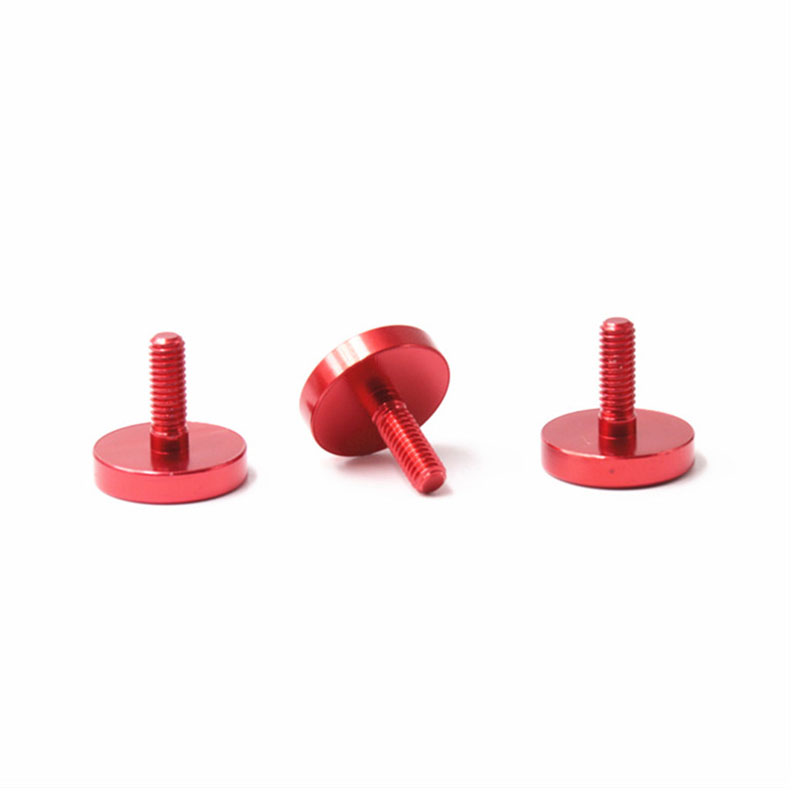
.jpg "Non-standard special head m4 machine stainless steel thumb screw")
.jpg "#2-20 Hand Screw Round Knurled Cylinder Flat Head Thumb Screw")
.jpg "#8-32 x 0.5 Flat Head Knurled Thumb Screw")
.jpg "#8-32 x 0.5 Flat Head Knurled Thumb Screw Tooling Components")