Industry knowledge
Countersunk Head Hex Socket Screws: Countersink Angle Tolerancing and Seating Integrity
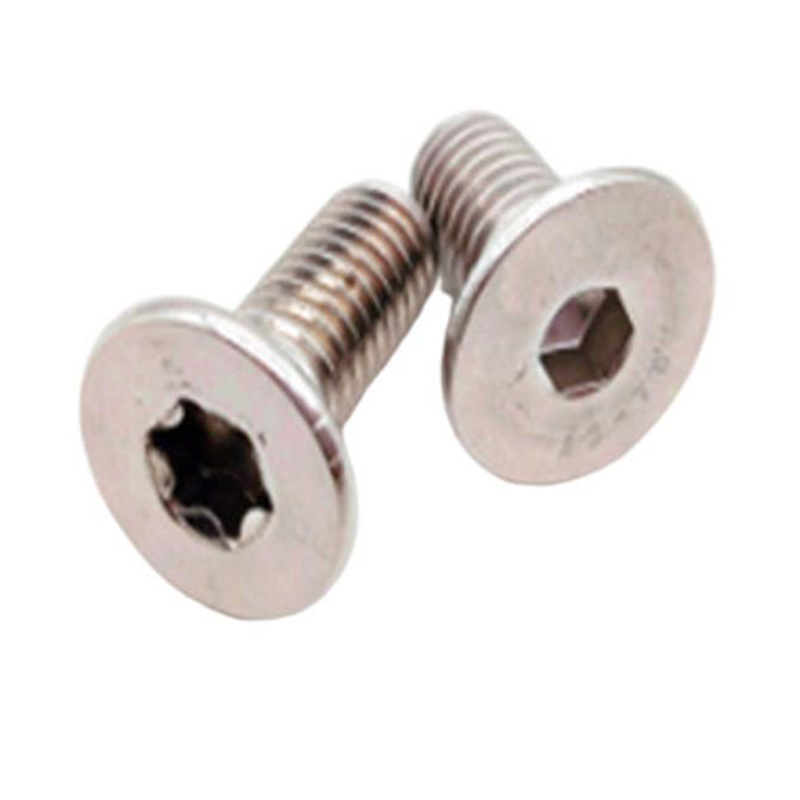
The 90-degree countersink angle specified for metric countersunk head hex socket screws tolerates a manufacturing variation of ±1 degree under ISO 10642, yet this narrow band determines whether the screw head seats flush, protrudes above the surface, or sinks below it. Suzhou Anzhikou Hardware Technology Co., Ltd. controls the head underside angle on its countersunk head hex socket screws to ±0.5 degrees using CNC-machined heading dies, recognizing that a 1.5-degree mismatch between screw head and countersunk hole creates a circumferential line contact rather than the intended surface contact. This line contact concentrates clamping load into a narrow band that plastically deforms aluminum mating surfaces at torques 30% below the rated seating value, leading to permanent loosening after the first thermal cycle.
For aluminum assemblies where the countersunk hole is machined rather than molded, Anzhikou Hardware's engineering team of 10 technicians with 20 years of industry experience recommends specifying a 92-degree countersink on the screw head when the mating material is 6061-T6 aluminum. The slightly obtuse angle compensates for elastic recovery in the aluminum after machining, ensuring that the screw pulls the head into full surface contact as torque is applied. This geometric compensation is particularly critical for aerospace interior panels and racing vehicle bodywork, where flush surfaces are mandatory for aerodynamic and aesthetic reasons. The company's cold heading equipment from Taiwan and Japan achieves this angle control through servo-electric punch positioning with 0.01mm repeatability, monitored in real time by optical sensors integrated into the 200-plus machine production line.
Head Height and Recess Depth Trade-offs in Low-Profile Designs
| Screw Size |
Standard Head Height (mm) |
Minimum Recess Depth (mm) |
Maximum Torque with Standard Recess (N·m) |
Torque Loss at 20% Reduced Recess (%) |
| M3 |
1.86 |
1.40 |
2.0 |
35 |
| M4 |
2.48 |
1.95 |
4.6 |
28 |
| M5 |
3.10 |
2.50 |
9.3 |
22 |
| M6 |
3.72 |
3.05 |
15.8 |
18 |
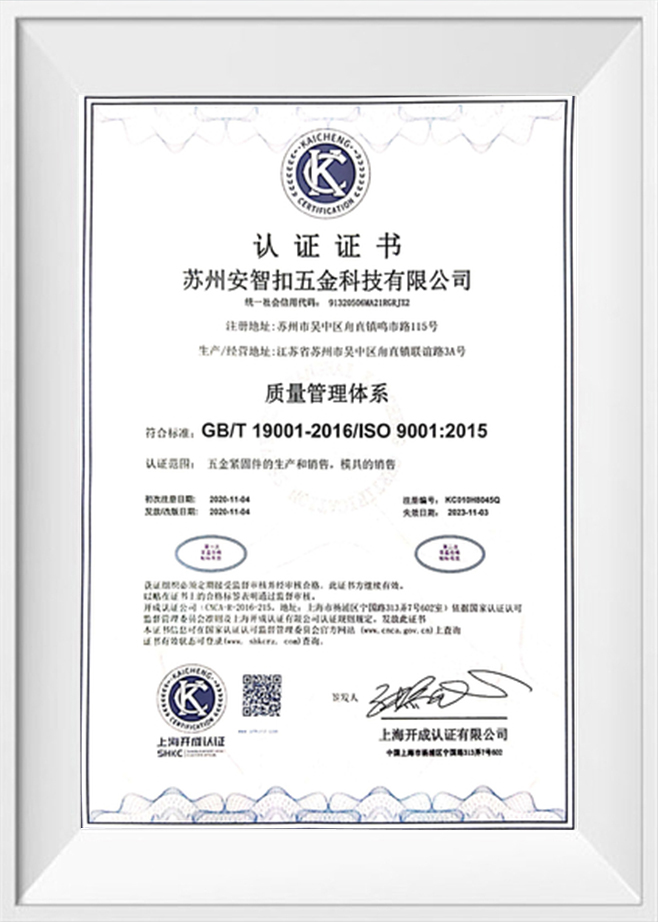
The torque loss data reveals that smaller countersunk head hex socket screws are disproportionately affected by recess depth reductions. Anzhikou Hardware's ISO9001:2015 certified quality system enforces 100% recess depth inspection on M3 and smaller sizes using confocal laser measurement, rejecting screws where the hex socket bottom falls within 0.2mm of the head underside. This prevents the cam-out failures that occur when the Allen key contacts the socket bottom before full torque transmission.
Aluminum Screw Manufacturing: Cold Heading 6061-T6 vs. 7075-T6
Aluminum screws offer a density of 2.70 g/cm³—one-third that of steel—but the alloy selection determines whether the fastener can be cold headed at all. Suzhou Anzhikou Hardware Technology Co., Ltd. produces aluminum screws primarily from 6061-T6 and 7075-T6, with the T6 temper indicating solution heat treatment followed by artificial aging. The 6061 alloy, containing 0.8% magnesium and 0.4% silicon, forms Mg₂Si precipitates during aging that strengthen the matrix while maintaining sufficient ductility for cold heading head height ratios up to 0.75 times the shank diameter. In contrast, 7075-T6 with its 5.6% zinc and 2.5% magnesium content achieves tensile strengths of 570 MPa—40% higher than 6061-T6—but its limited ductility restricts cold heading to head height ratios below 0.55 without intermediate annealing.
Anzhikou Hardware's 2000-square-meter facility addresses this limitation through a two-stage heading process for 7075-T6 screws. The first stage forms the head at 250°C, exploiting the reduced flow stress of aluminum at elevated temperature while remaining below the aging temperature that would overage the T6 temper. The second stage, at ambient temperature, cold sizes the head to final dimensions and work-hardens the surface to improve wear resistance. This hybrid approach, developed over 20 years of industrial production experience, produces 7075-T6 countersunk head hex socket screws with head hardness of 95 HRB—sufficient to prevent hex socket rounding under standard torque—while maintaining the core toughness that resists shear fracture in structural joints.
Alloy Selection Matrix for Aluminum Screw Applications
- 6061-T6 for general machinery and electronics housings: The balanced strength-to-formability ratio permits complex head geometries including deep hex sockets and knurled bearing surfaces. Anzhikou Hardware's thread-rolling wire equipment generates machine threads on 6061-T6 screws with surface finishes of Ra 0.8μm, reducing friction during assembly into aluminum castings or extrusions.
- 7075-T6 for aerospace and high-performance sporting equipment: The superior strength permits smaller diameter screws in weight-critical applications, such as M4 countersunk head hex socket screws replacing M5 steel equivalents in bicycle components. The company's CNC equipment can machine 7075-T6 to tight tolerances (±0.02mm) for shoulder screws and stepped shank designs that cold heading alone cannot achieve.
- 2024-T4 for rivet-style screws in aircraft skin applications: This alloy's high copper content (4.4%) provides exceptional shear strength but poor corrosion resistance. Anzhikou Hardware applies Alodine 1200 conversion coatings to 2024-T4 screws, creating a gold-colored chromate layer that extends salt spray resistance from 24 hours (bare) to 336 hours while maintaining electrical conductivity for lightning strike protection.
Galling and Seizure Prevention in Aluminum-to-Aluminum Threaded Joints
When an aluminum screw threads into an aluminum nut or tapped hole, the absence of a hardness differential between mating surfaces creates ideal conditions for adhesive wear. The aluminum oxide film (Al₂O₃, 2 to 5 nanometers thick) that normally protects the metal fractures under thread flank contact pressure, exposing bare aluminum that cold-welds across the interface. Suzhou Anzhikou Hardware Technology Co., Ltd. has quantified this behavior through torque-tension testing: unlubricated aluminum M5 screws reach seizure torque at 60% of their yield torque, meaning that a screw tightened to its full rated clamping load has already exceeded the galling threshold.
Surface Treatments for Aluminum Screw Anti-Galling
| Treatment |
Layer Thickness (μm) |
Hardness (HV) |
Seizure Torque Improvement (%) |
Electrical Conductivity Impact |
| Hard Anodize (Type III) |
25-50 |
300-500 |
180 |
Insulating |
| PTFE-Impregnated Anodize |
15-25 |
250-400 |
220 |
Insulating |
| Dacromet (Zinc-Aluminum Flake) |
6-12 |
150-200 |
140 |
Conductive |
| MoS₂ Solid Film Lubricant |
2-5 |
N/A |
160 |
Conductive |
For electrical grounding applications where hard anodize's insulating properties are unacceptable, Anzhikou Hardware recommends Dacromet-coated aluminum countersunk head hex socket screws. The zinc-aluminum flake matrix provides sacrificial corrosion protection while the embedded lubricant particles reduce thread friction coefficient from 0.45 (dry aluminum) to 0.18. This permits full torque application without seizure risk, maintaining joint conductivity below 1 milliohm. The company's anti-loosing production line can apply Dacromet to miniature aluminum screws down to 0.6mm diameter through centrifugal barrel processing that prevents part nesting and ensures coating uniformity on thread flanks.
Thermal Expansion Management in Mixed-Material Assemblies with Aluminum Screws
Aluminum's coefficient of thermal expansion (23.6 × 10⁻⁶/°C) exceeds that of steel (11.7 × 10⁻⁶/°C) by a factor of two, creating differential expansion stresses when aluminum screws secure steel or cast iron components across temperature swings. Suzhou Anzhikou Hardware Technology Co., Ltd. encounters this issue frequently in automotive and industrial applications where aluminum screws are chosen for weight reduction but must maintain clamping force from -40°C winter operation to 150°C underhood temperatures. The differential expansion causes the aluminum screw to elongate 0.012mm more than a steel equivalent per 10mm of engaged length across a 100°C temperature rise, effectively reducing clamping load by 15 to 20% if the joint is rigid.
Compensatory Design Strategies for Temperature-Cycled Aluminum Joints
Anzhikou Hardware's engineering team addresses this through joint compliance design rather than simply accepting clamping loss. For aluminum countersunk head hex socket screws in steel flanges, the company recommends specifying a reduced shank diameter—typically 0.9 times the thread minor diameter—between the head and the first engaged thread. This reduced section acts as an elastic element, stretching to accommodate thermal differential while maintaining minimum clamping load. The CNC equipment in the 2000-square-meter facility machines these reduced shanks with surface finishes of Ra 0.4μm to prevent fatigue crack initiation at the diameter transition.
- Belleville washer stacks under the countersunk head provide an alternative compliance mechanism. A single M5-size Belleville washer with 0.3mm deflection capacity absorbs the thermal expansion differential for engaged lengths up to 15mm. Anzhikou Hardware offers countersunk head hex socket screws with pre-assembled conical spring washers through its non-standard screw customization service, eliminating the handling challenges of separate washer installation on automated assembly lines.
- For joints where both clamping maintenance and electrical continuity are required, the company specifies aluminum screws with silver-plated bearing surfaces. The silver layer (2 to 3 microns thick) maintains contact resistance below 0.5 milliohm across thermal cycles by preventing aluminum oxide buildup at the screw-head interface. This approach is standard for busbar connections in electric vehicle battery packs, where Anzhikou Hardware exports to European and North American automotive suppliers.
The company's 20 years of experience in non-standard screw customization includes finite element analysis of thermal expansion effects for customer-specific joint geometries. This predictive capability, supported by the complete range of testing equipment at the facility, allows Anzhikou Hardware to recommend screw specifications that maintain clamping force across the full operating temperature range rather than relying on empirical safety factors.
Corrosion Behavior of Aluminum Screws in Galvanic Couples
Aluminum's position as the most anodic common structural metal makes it the sacrificial element in virtually every galvanic couple. When an aluminum screw contacts stainless steel, copper, or nickel-plated surfaces in the presence of an electrolyte, the aluminum corrodes preferentially to protect the cathodic material. Suzhou Anzhikou Hardware Technology Co., Ltd. quantifies this risk through galvanic series analysis and provides mitigation strategies tailored to the specific dissimilar metal pairing identified during the customization process.
Galvanic Compatibility and Protection Strategies
In marine environments where aluminum screws secure stainless steel hardware, the galvanic current density at the interface can reach 50 μA/cm² in seawater, consuming 0.5mm of aluminum per year. Anzhikou Hardware recommends three levels of protection based on service life requirements:
- Primary isolation: Applying a 50-micron layer of epoxy-based thread sealant to the screw threads before installation creates a dielectric barrier that eliminates galvanic contact. The company's anti-loosing production line can pre-apply anaerobic sealants to aluminum countersunk head hex socket screws, with cure times of 10 to 30 minutes depending on ambient temperature.
- Cathodic protection: For permanent subsea installations, specifying aluminum screws in 5052-H32 alloy—which contains 2.5% magnesium—shifts the corrosion potential 100mV more negative than 6061-T6. This makes the screw itself a sacrificial anode for the entire assembly, corroding uniformly rather than pitting locally. Anzhikou Hardware's material certification includes potentiodynamic polarization curves that verify this behavior.
- Design modification: Transitioning from direct contact to an intermediate polymer bushing eliminates the galvanic couple entirely. The company produces aluminum screws with integral polymer collars molded onto the shank, maintaining clamping force while providing 0.5mm of dielectric separation from the cathodic component.
For the 40 countries and areas in Anzhikou Hardware's export portfolio, galvanic compatibility requirements vary significantly. Middle Eastern markets prioritize resistance to chloride-induced galvanic corrosion in coastal infrastructure, while European markets emphasize RoHS-compliant coatings that avoid hexavalent chromium. The company's ISO9001:2015 quality system manages these regional variations through controlled process documentation, ensuring that aluminum screws shipped to German automotive customers meet VW 60446 specifications while those destined for UAE construction projects conform to BS EN 1999-1-4 durability requirements.
Miniature Aluminum Screw Production: Heading and Threading Below M1.5
Producing aluminum screws below M1.5 challenges conventional cold heading wisdom because the material's low yield strength causes excessive flash at parting lines and the high thermal conductivity rapidly dissipates the deformation heat that aids formability. Suzhou Anzhikou Hardware Technology Co., Ltd. manufactures miniature aluminum screws down to 0.6mm external diameter—matching the company's capability for steel and titanium—through process adaptations developed specifically for aluminum's metallurgical characteristics.
Process Parameters for Sub-Millimeter Aluminum Screws
The heading speed for M1.0 aluminum screws is reduced to 80 strokes per minute versus 150 for equivalent steel screws, extending the dwell time under punch pressure to compensate for aluminum's strain rate sensitivity. Anzhikou Hardware's Taiwan-imported cold heading equipment achieves this through variable frequency drive control without mechanical modification. The punch-to-die clearance is tightened to 0.005mm—half the steel standard—to prevent aluminum flash formation that would require secondary trimming and risk damaging the miniature screw geometry.
Thread rolling on sub-millimeter aluminum screws requires dies with 30% larger root radii than steel equivalents. The larger radius distributes thread forming stress across a greater material volume, preventing the circumferential cracking that occurs when standard die geometry shears the soft aluminum at the thread crest. Anzhikou Hardware's thread-rolling wire equipment, part of the more than 200 sets of precision machinery at the facility, stores aluminum-specific die profiles in the CNC controller and automatically selects the correct geometry based on the production order alloy specification.
Quality inspection of these miniature aluminum screws employs automated optical sorting rather than manual gauging. The company's testing equipment includes vision systems with 5-micron resolution that inspect 100% of production for head diameter, shank concentricity, thread pitch diameter, and hex socket presence. Defective parts are pneumatically ejected at rates up to 600 pieces per minute, maintaining the throughput necessary for the annual production capacity of 2,000 square meters while ensuring zero-defect delivery to customers in electronics and medical device sectors where a single missing thread could cause assembly failure.

 English
 Español
.jpg "Colorful Anodized Aluminum DIN7991 Hex Socket Countersunk Head Screw")
.jpg "OEM Colorful Aluminum 6061 Hexagon socket cup head screw")
.jpg "OEM Colorful Aluminum Hexagon socket countersunk head screw")
.jpg "Customized color m4 aluminum round head machine screws")
.jpg "M2 aluminum button head machine thread small black anodized screw")