Telephone: +86-0512-65028068
Content
Composite decking has become a popular alternative to traditional wood because of its resistance to rot, splintering, and fading. However, the material's density and composition mean that the fasteners used to install it matter just as much as the boards themselves. Using the wrong screws can lead to mushrooming, cracking, or premature loosening, undermining the durability that composite decking is known for. Choosing the correct composite decking screws — and installing them properly — is essential for a deck that stays secure and looks clean for decades.
Composite boards are made from a blend of wood fibers and plastic polymers, which behave differently from solid wood when a fastener is driven into them. Standard wood screws are designed to bite into fibrous material and often have sharp, coarse threads that push composite material upward as they are driven in. This creates a raised ring around the screw head, commonly called mushrooming, which looks unattractive and can catch on shoes or bare feet.
In addition, many general-purpose screws are not treated for the specific corrosion risks associated with composite decking, particularly boards that retain more moisture than natural wood in humid climates. Over time, untreated or improperly coated screws can rust, staining the surrounding material and weakening the connection. Composite decking screws are engineered specifically to address these issues, with features that reduce surface disruption and resist long-term corrosion.
Not all composite decking screws are built the same way. Understanding the core features helps in selecting a product suited to the specific decking brand and climate conditions.
Quality composite decking screws typically use coatings such as ceramic, epoxy, or specialized polymer finishes designed to resist rust even in coastal or high-humidity environments. Stainless steel options, particularly 305 or 316 grade, offer the highest corrosion resistance and are recommended for decks near saltwater or in areas with frequent rain.
Many composite decking screws feature a self-countersinking head with small cutting wings beneath the head that shave away material as the screw is driven, allowing it to sit flush without pushing composite fibers upward. This design significantly reduces mushrooming and creates a smoother surface finish.
Composite-specific screws often use a dual-thread or reverse-thread pattern, with coarser threads near the tip for grip into the joist and finer threads near the head to prevent the board from being pulled too tightly, which can cause bulging around the screw.
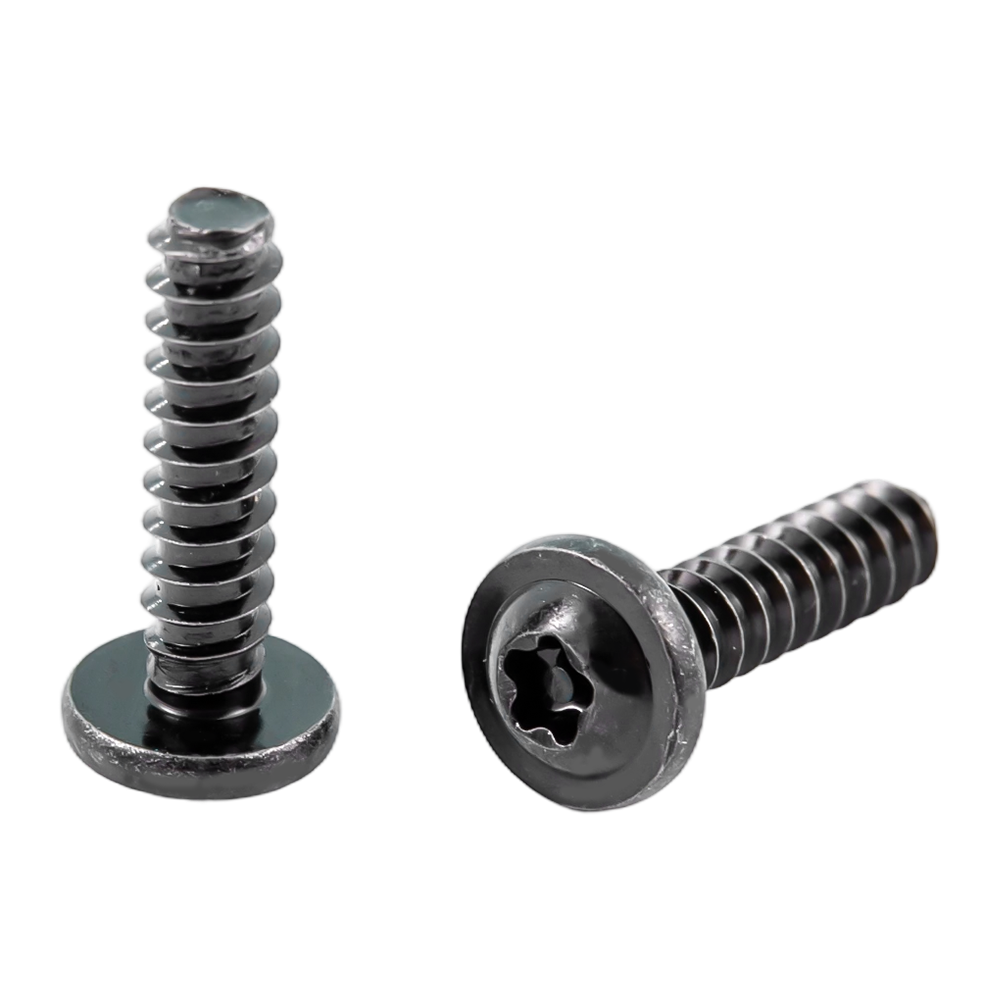
Screw length should be selected based on the thickness of the composite board and the type of joist beneath it. As a general guideline, the screw should penetrate at least one inch into the joist material to ensure a secure hold, without extending so far that it risks splitting the joist or poking through the bottom.
| Board Thickness | Recommended Screw Length | Typical Diameter |
| 3/4 inch | 2 to 2.25 inches | #8 |
| 1 inch | 2.5 inches | #8 to #9 |
| 1.25 inches | 2.75 to 3 inches | #9 to #10 |
Diameter also affects holding strength. Thicker screws provide a stronger grip but require larger pilot holes in denser composite boards to avoid cracking, particularly near board edges.
Most composite decking manufacturers offer color-matched screw heads designed to blend with specific board colors, from warm browns to gray and driftwood tones. Using color-matched screws creates a cleaner, more finished appearance compared to standard silver or bronze screws, which can stand out against the board surface. For decks using hidden fastener systems, screws are installed at an angle through the board's edge groove, eliminating visible fasteners entirely and providing the most seamless look.
Proper installation technique has as much impact on the final result as the screws themselves. The following practices help ensure a secure and attractive deck surface.
One of the most frequent errors is using screws designed for natural wood, which often lack the countersinking design needed for composite material and can cause visible mushrooming around every screw head. Another common mistake is overtightening, where the screw is driven too deep, crushing the board fibers and creating a weak connection that can loosen over time as the material expands and contracts with temperature changes.
Skipping pilot holes near board edges is another issue that frequently leads to cracking, especially in colder installation conditions when composite material is more rigid. Finally, mixing screw types across a single deck — for example, using standard screws for repairs after running out of composite-specific fasteners — can create inconsistent appearance and uneven corrosion resistance across the structure.
Quality composite decking screws generally require little maintenance beyond periodic visual inspection. Checking screws once or twice a year for any signs of loosening, discoloration, or corrosion helps catch problems before they affect the board's structural integrity. In regions with significant seasonal temperature swings, it is worth inspecting screws near board ends more closely, since these areas experience the greatest movement from expansion and contraction.
Choosing screws specifically engineered for composite material, matching the correct length and diameter to the board and joist, and following proper installation techniques together create a deck surface that remains secure, visually consistent, and low-maintenance for many years. The relatively small cost difference between generic screws and composite-specific fasteners is a worthwhile investment given the protection it provides against cracking, corrosion, and unsightly mushrooming.
CONTACT DETAILS

Address:NO. 248-2 Changhongbei Road, Luzhi Town, Wu zhong District,Suzhou City, Jiangsu Province,China.
TEL:+86-13913588597
PRODUCTS
MOBILE TERMINAL




 English
 Español
-1.jpg "High Quality Titanium screw M5x10 GR5 TC4 Ti-6al-4v for bicycle")
.jpg "Wholesale electrogalvanizing 6X40mm metal D Ring for luggage")
.jpg "Gr5 Titanium Ti6AL4V bolts screws fasteners for motorcycles")
.jpg "DIN912 hex socket cup head with washer titanium screws for bicycle")
.jpg "Thin flat head solid brass double side rivets for leather")
.jpg "New design customized 12mm metal rivet grommets for handbag")