Telephone: +86-0512-65028068
Content
The term "waterproof screws" is widely used in trade and retail contexts, but it is worth being precise about what it actually means. No screw is impervious to water in an absolute sense — what differentiates a waterproof or water-resistant screw from a standard one is its ability to resist corrosion when exposed to moisture, humidity, rain, or submersion over time. A standard mild steel screw will begin to rust within days when left outdoors in wet conditions. A properly specified waterproof screw, by contrast, can maintain structural integrity and a clean appearance for years or even decades in the same environment.
The resistance comes from two sources: the base material from which the screw is made, and any surface treatment or coating applied to it. Understanding both factors is essential for selecting the right fastener for any wet or outdoor application — whether that is decking, marine hardware, roofing, bathroom fittings, or exterior cladding.
Material selection is the single most important factor in determining how well a screw will perform in wet conditions. Several base materials are commonly used, each with different performance characteristics and price points.
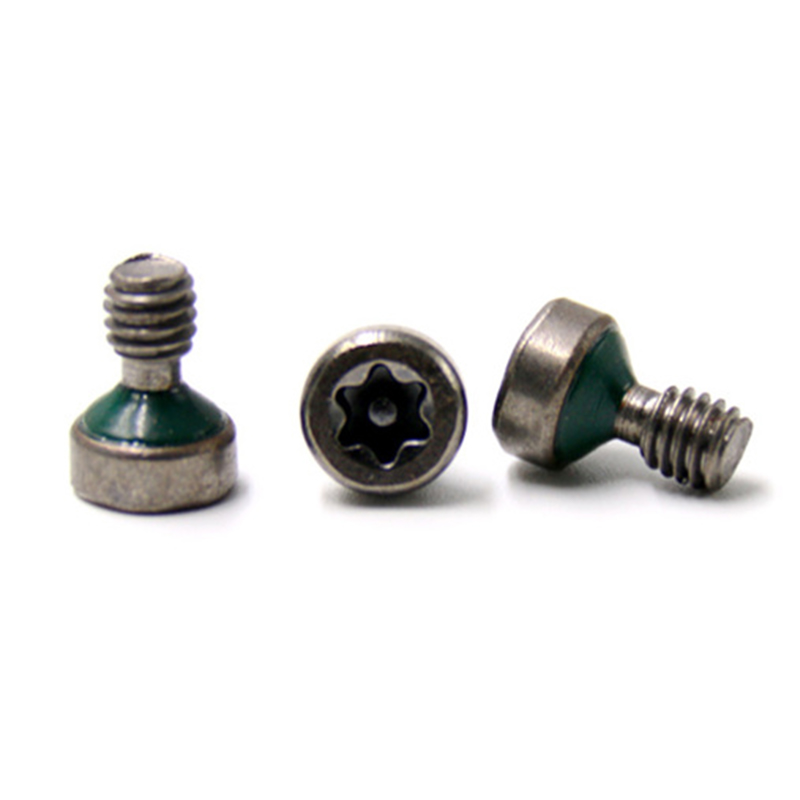
Stainless steel is the most widely specified material for waterproof screws across construction, marine, and food-grade applications. Its corrosion resistance comes from a chromium oxide layer that forms naturally on the surface and self-repairs when scratched. The two grades most relevant to fastener applications are 304 and 316. Grade 304 stainless steel performs well in most outdoor and freshwater environments and is the standard choice for decking, garden structures, and general exterior joinery. Grade 316 adds molybdenum to the alloy, which significantly improves resistance to chloride attack — making it the correct choice for coastal environments, salt-spray exposure, swimming pool surrounds, and marine hardware.
Silicon bronze screws offer excellent corrosion resistance in marine environments and are particularly valued in traditional boat-building because they are compatible with wooden hulls without causing galvanic corrosion issues. They are softer than stainless steel, which makes them easier to drive without snapping in hardwoods, and they develop an attractive patina over time. Silicon bronze is not appropriate for use with aluminium or carbon fibre components due to galvanic incompatibility.
Galvanised screws are made from carbon steel with a zinc coating applied either by hot-dip galvanising or electroplating. Hot-dip galvanised screws have a thicker, more durable zinc layer and are suitable for treated timber, fencing, and structural outdoor applications. Electroplated (bright zinc) screws have a thinner coating and are better suited to sheltered or semi-exposed conditions rather than prolonged direct weathering. Galvanised screws are more cost-effective than stainless steel but have a finite service life in aggressive environments as the zinc coating gradually sacrifices itself to protect the steel beneath.
A range of proprietary polymer and ceramic coatings are applied to carbon steel screws to enhance corrosion resistance. Products such as Dacromet, Geomet, and various epoxy powder coatings provide meaningful improvement over bare steel and can outperform standard electroplated zinc in salt-spray testing. These coatings are particularly common on roofing screws and decking screws where a specific colour match or ACQ timber treatment compatibility is required. The limitation is that the coating can be damaged at the drive recess during installation, exposing bare steel at the most vulnerable point.
The table below summarises the key differences between common waterproof screw materials to help with selection:
| Material | Corrosion Resistance | Best For | Relative Cost |
| Stainless Steel 304 | Very High | General outdoor, decking, joinery | Medium–High |
| Stainless Steel 316 | Excellent | Marine, coastal, pool areas | High |
| Silicon Bronze | Excellent | Boat-building, wooden marine structures | High |
| Hot-Dip Galvanised | Good | Structural timber, fencing, framing | Low–Medium |
| Coated Carbon Steel | Moderate–Good | Roofing, ACQ-treated timber decking | Low–Medium |
The right material is only part of the selection process. Head type, drive recess, thread form, and point style all affect performance in wet-environment applications. Here is how to approach the most common scenarios:
Even the best waterproof screw can underperform if installed incorrectly. A few practical habits during installation make a significant difference to long-term performance.
Over-driving is one of the most common installation errors. When a screw is driven too deep into a surface, the head pulls below the material face and creates a water-collecting depression around the fastener. In roofing applications, over-driving also compresses the EPDM washer to the point of distortion, reducing its sealing effectiveness. Set your driver clutch correctly and test on a scrap piece before working on the final surface.
For applications where the screw hole itself must be sealed — such as through-bolting into a boat hull or penetrating a waterproof membrane — apply a marine-grade sealant or bedding compound around the fastener before driving it home. Products such as polysulfide or polyurethane marine sealants remain flexible after curing, accommodating the movement that occurs with thermal expansion and vibration without cracking the seal.
When using stainless steel screws in stainless steel nuts or threaded inserts, apply an anti-seize compound to the threads before assembly. Stainless-on-stainless contact under load causes galling — a form of cold welding where the threads fuse together, making the fastener impossible to remove without drilling out. This is a particularly costly problem in marine hardware where periodic disassembly for maintenance is necessary.
Waterproof screws are not entirely maintenance-free, particularly in harsh coastal or industrial environments. Stainless steel, despite its corrosion resistance, can develop surface staining or localised pitting if organic matter, salt deposits, or certain chemicals are allowed to accumulate on it. Periodic cleaning with a mild detergent and fresh water rinse removes these deposits and maintains the passive oxide layer that gives stainless its resistance. In marine settings, an annual inspection of all exposed fasteners for signs of crevice corrosion — particularly at the interface between the screw head and the substrate — is good practice.
Galvanised screws used in structural timber applications should be checked periodically if the assembly is accessible, particularly if the timber has been re-treated or exposed to repeated wetting and drying cycles. When any fastener shows visible rust bleeding, pitting, or weakening of the surrounding material, replacement with the appropriate-grade stainless or upgraded coated fastener is the correct course of action — not simply painting over the affected area. Addressing fastener corrosion early prevents the far more expensive problem of structural timber decay driven by persistent moisture ingress around a failing screw.
CONTACT DETAILS

Address:NO. 248-2 Changhongbei Road, Luzhi Town, Wu zhong District,Suzhou City, Jiangsu Province,China.
TEL:+86-13913588597
PRODUCTS
MOBILE TERMINAL




 English
 Español
.jpg "6mm Double side brass Rivet with hanging enamel for clothes&bag")
.jpg "Stainless steel 304 Countersunk Head Slotted Machine Screw")
.jpg "New design golden color metal handbag logo plate bag logo chain")
.jpg "ISO7380 Stainless Steel Button Head Hex Socket Allen Screw")