Industry knowledge
Button Head Hex Socket Screws: Design Logic and Torque Management
Button head hex socket screws, often referred to as ISO 7380 or DIN 9427 compliant fasteners, feature a low-profile domed head with an internal hexagonal drive. Suzhou Anzhikou Hardware Technology Co., Ltd. produces these components with head diameters typically ranging from M1.6 to M12, utilizing cold heading equipment imported from Taiwan and Japan to maintain consistent head roundness within ±0.05mm. The button head design distributes clamping load across a wider surface area compared to flat countersunk alternatives, making them particularly suitable for sheet metal assemblies where surface deformation must be minimized.
Torque Specifications for Common Sizes
| Size |
Class 8.8 (N·m) |
Class 10.9 (N·m) |
Class 12.9 (N·m) |
| M3 |
1.4 |
2.0 |
2.4 |
| M4 |
3.2 |
4.6 |
5.5 |
| M5 |
6.5 |
9.3 |
11.1 |
| M6 |
11.0 |
15.8 |
18.9 |
Exceeding these torque values risks stripping the hex socket or fracturing the screw shank. Anzhikou Hardware's 2000-square-meter facility includes thread-rolling wire equipment that achieves surface roughness Ra 0.8μm on threads, reducing friction variance during torque application. For applications requiring repeated assembly, consider specifying a thread-locking patch or nylon pellet—services available through the company's anti-loosening production line.
Material Selection: When to Choose Stainless Steel Over Alloy Steel
Suzhou Anzhikou Hardware Technology Co., Ltd. manufactures hex socket screws in A2-70 (304 stainless), A4-80 (316 stainless), and alloy steel grades 8.8 through 12.9. The decision between stainless and alloy steel extends beyond corrosion resistance. A2-70 stainless button head screws provide approximately 700 MPa tensile strength but exhibit galling tendencies when mated with stainless nuts under dry conditions. This phenomenon, where surface material cold-welds under pressure, can seize fasteners permanently.
Practical Recommendations by Environment
- Marine or chemical exposure: Specify A4-80 (316) with molybdenum content of 2-3% to resist chloride pitting. Anzhikou Hardware exports these grades to over 40 countries, including coastal markets where salt spray testing per ASTM B117 exceeds 1000 hours.
- High-vibration machinery: Alloy steel 12.9 with zinc flake coating (Geomet or DACROMET) provides 1200 MPa tensile strength while offering 480-hour salt spray resistance, outperforming standard zinc plating by a factor of three.
- Food processing equipment: A2-70 with passivation treatment meets FDA requirements, though thread lubrication with PTFE-coated variants is recommended to prevent galling during maintenance cycles.
The company's CNC equipment enables production of miniature hex socket screws down to 0.6mm external diameter, allowing material selection even in constrained medical device or electronics housings where standard fasteners cannot fit.
Hex Socket Drive Geometry: Avoiding Cam-Out and Tool Wear
The internal hex drive of a button head screw relies on precise angular tolerances—typically 120° between opposite flats for metric sizes. Suzhou Anzhikou Hardware Technology Co., Ltd. employs CNC machining centers to maintain socket depth at 1.25-1.5 times the nominal thread diameter, ensuring full engagement of the Allen key. Shallow sockets, common in low-cost imports, cause the tool to ride out under torque (cam-out), rounding the drive corners and rendering the fastener unusable.
Key Dimensional Checks for Quality Assurance
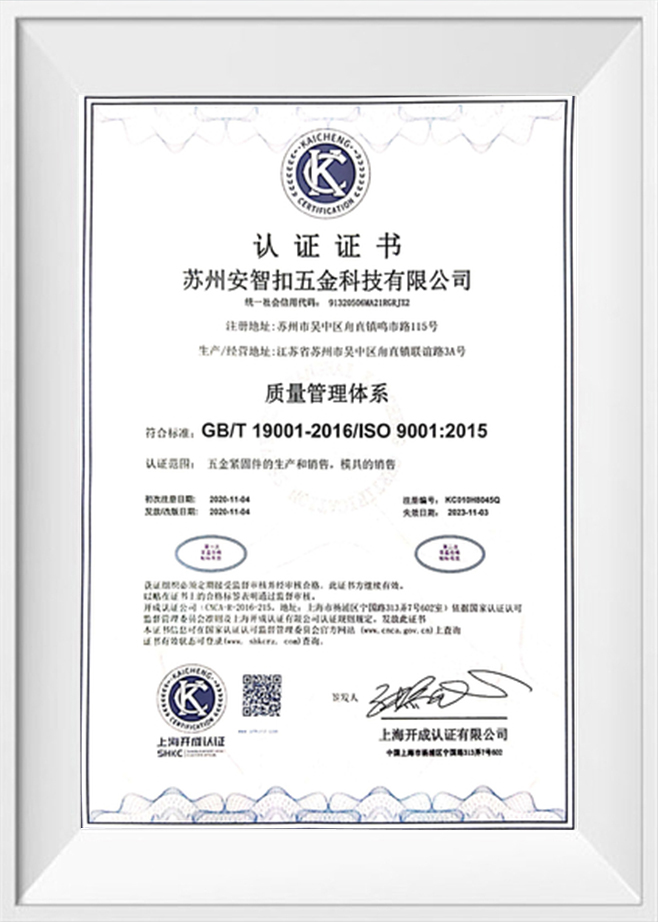
Anzhikou Hardware's ISO9001:2015 certified quality lab conducts 100% inspection on critical dimensions using profile projectors and go/no-go gauges. For hex socket screws, the following parameters directly impact drive performance:
- Socket width across flats: Tolerance of +0.02mm / -0.00mm to match standard Allen keys (e.g., 2.5mm hex key for M3 screws).
- Socket bottom radius: Must not exceed 0.1mm to prevent key tip interference; excessive radius reduces contact area by up to 15%.
- Head diameter runout: Controlled within 0.03mm TIR (Total Indicator Reading) to ensure uniform load distribution when the button head bears against the mating surface.
For high-volume assembly lines, specify ball-end Allen keys rather than straight-shaft tools. The ball end permits angled entry up to 25°, reducing cycle time in confined spaces where vertical tool access is impossible.
Anti-Loosening Strategies for Button Head Applications
Vibration-induced loosening remains the primary failure mode for hex socket screws in industrial equipment. Suzhou Anzhikou Hardware Technology Co., Ltd. integrates anti-loosening capabilities directly into its production lines, offering three distinct approaches based on the application's disassembly requirements and operating temperature.
Comparison of Anti-Loosening Methods
| Method |
Temperature Range |
Reusability |
Best Application |
| Nylon Insert Pellet |
-40°C to 120°C |
3-5 cycles |
General machinery, appliances |
| Precote Micro-encapsulated Adhesive |
-55°C to 150°C |
1-2 cycles |
Automotive underhood, pumps |
| Double-Thread Deformation |
-60°C to 300°C |
Unlimited |
Aerospace, exhaust systems |
The double-thread deformation method, available on Anzhikou Hardware's thread-rolling equipment, creates a slight interference fit along the thread flank without adding foreign material. This preserves the fastener's temperature resistance while providing prevailing torque equivalent to a nylon pellet. For miniature screws below M2, this method is often the only viable anti-loosening solution due to space constraints for inserts or coatings.
Custom Non-Standard Screws: From Drawing to Production
With 20 years of industrial experience and a team of 10 engineering technicians, Suzhou Anzhikou Hardware Technology Co., Ltd. specializes in translating atypical requirements into manufacturable designs. Non-standard hex socket screws often involve modified head heights, reduced shank diameters, or combined drive types (e.g., hex socket with a Torx backup drive for security applications).
Critical Considerations for Custom Orders
- Head height reduction below ISO 7380 minimums requires cold heading die redesign. Anzhikou Hardware's Taiwan-imported headers can accommodate head heights down to 0.4 times the thread diameter, though this reduces socket depth and may necessitate a smaller drive size.
- Shoulder screws with unthreaded shanks between head and threads demand precise concentricity control. The company's CNC lathes maintain 0.01mm runout on shoulder diameters, critical for bearing retention or pivot applications.
- Material certification for aerospace or medical sectors is supported through mill test reports (MTRs) and batch traceability, with annual production capacity of 2,000 square meters enabling both prototype and volume orders.
When submitting custom inquiries, provide the mating component's material and hardness. A hex socket screw threading into cast aluminum (HB 60-80) requires different thread engagement lengths than one threading into hardened steel (HRC 40+). Anzhikou Hardware's engineering team uses this data to recommend optimal thread lengths and pitch diameters, preventing galling in soft materials or thread stripping in hard substrates.

 English
 Español
.jpg "ISO7380 Stainless Steel Button Head Hex Socket Allen Screw")
.jpg "M8 Stainless Steel ISO7380 Hex Socket Button Head Screw")
.jpg "Stainless steel 18-8 Hex Socket button head machine screw")
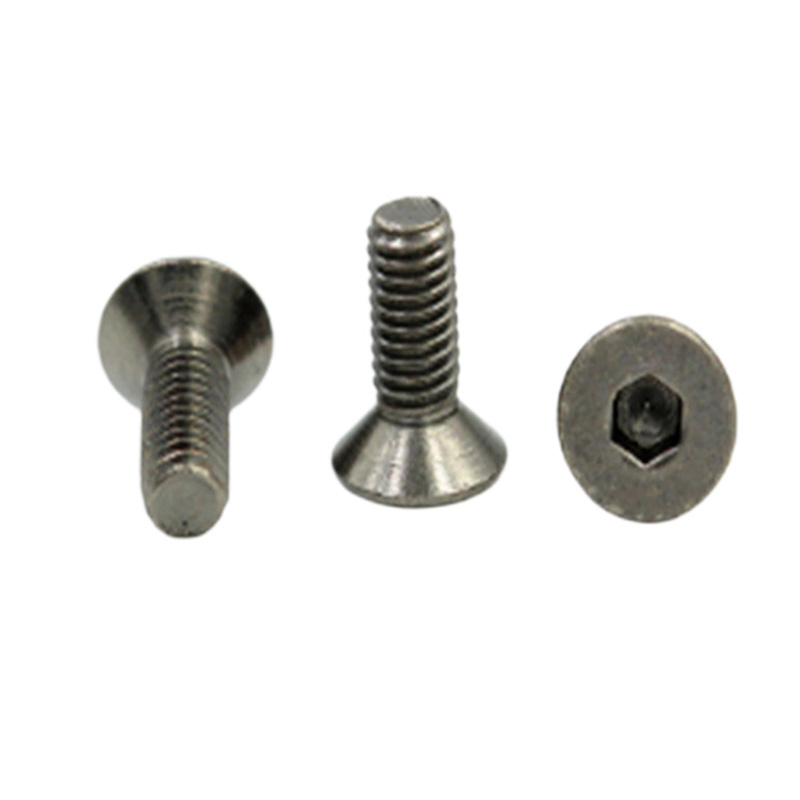
.jpg "Metric stainless steel m4 truss head hex socket screws")
.jpg "Stainless steel countersunk head m1 allen screw for furniture")
.jpg "Stainless steel m8 hex socket pan head furniture connecting screw")
.jpg "Black color button head hex socket screw")
.jpg "Black oxide button head hexagon socket screw")
.jpg "Hot Sale stainless steel 18-8 Hex Socket pan button head machine screw")