Industry knowledge
Titanium Alloy Grade Selection: Ti-6Al-4V vs. Commercially Pure Titanium for Precision Screws
The distinction between alpha-beta titanium alloys and commercially pure (CP) titanium grades determines whether a screw survives cyclic loading in an aircraft turbine or corrodes prematurely in a seawater heat exchanger. Suzhou Anzhikou Hardware Technology Co., Ltd. manufactures titanium screws in Ti-6Al-4V (Grade 5), Ti-6Al-4V ELI (Grade 23), CP Grade 2, and CP Grade 4, with each alloy demanding fundamentally different cold heading parameters. Ti-6Al-4V achieves tensile strengths of 950 MPa in the annealed condition—roughly double that of CP Grade 2—but its 6% aluminum and 4% vanadium content creates a two-phase microstructure that work-hardens aggressively during deformation. Anzhikou Hardware's Taiwan-imported cold heading equipment mitigates this through multi-station progressive forming: the first station upsets the blank at 650°C to 40% of final head height, a second station completes the head at ambient temperature with intermediate annealing, and thread rolling occurs only after a full stress-relief cycle at 480°C for two hours.
CP Grade 2 titanium screws, while limited to 345 MPa tensile strength, offer superior formability and corrosion resistance in reducing acid environments. The absence of alloying elements eliminates the galvanic corrosion cells that can develop in Ti-6Al-4V when the alpha and beta phases create microscopic potential differences. For medical implant applications—one of the key markets in Anzhikou Hardware's export portfolio across 40 countries and areas—CP Grade 2 is often specified for bone screws in non-load-bearing applications where osseointegration takes priority over mechanical strength. The company's 2000-square-meter facility houses vacuum annealing furnaces that maintain oxygen levels below 50 ppm during heat treatment, preventing the alpha case formation that would compromise fatigue life.
Mechanical Properties and Application Mapping
| Titanium Grade |
Tensile Strength (MPa) |
Yield Strength (MPa) |
Density (g/cm³) |
Primary Application Sector |
| CP Grade 2 |
345 |
275 |
4.51 |
Chemical processing, marine |
| CP Grade 4 |
550 |
483 |
4.51 |
Medical implants, aerospace |
| Ti-6Al-4V (Grade 5) |
950 |
880 |
4.43 |
Aerospace structures, racing |
| Ti-6Al-4V ELI (Grade 23) |
900 |
830 |
4.43 |
Medical implants, cryogenics |
The ELI designation in Grade 23 indicates Extra Low Interstitial content—specifically oxygen held below 0.13% and iron below 0.25%. This interstitial control improves fracture toughness by 15% compared to standard Grade 5, making it the default choice for spinal fixation screws where a single fatigue crack could have catastrophic consequences. Anzhikou Hardware's material certification process includes glow discharge mass spectrometry to verify interstitial levels, with full traceability from titanium sponge source to finished screw batch.
Thread Rolling Titanium: Die Wear and Lubrication Chemistry
Thread rolling titanium alloy screws generates tool wear rates 8 to 12 times higher than equivalent carbon steel operations, not because of titanium's hardness—which remains modest at 36 HRC for annealed Ti-6Al-4V—but due to its chemical reactivity at the die-workpiece interface. At the 400°C to 600°C flash temperatures generated during thread forming, titanium actively dissolves tool steel constituents, transferring carbide particles from the die into the screw thread surface. Suzhou Anzhikou Hardware Technology Co., Ltd. combats this through a combination of die material selection and lubrication strategies refined over 20 years of industrial production experience.
Die Material Hierarchy for Titanium Thread Rolling
- M2 high-speed steel dies provide 2,000 to 3,000 pieces per sharpening when rolling CP Grade 2 titanium screws at 15 meters per minute surface speed. The 6% tungsten and 5% molybdenum content resists dissolution better than standard D2 tool steel, though die life remains uneconomical for high-volume aerospace contracts.
- Powder metallurgy ASP2030 dies, with 8.5% cobalt and advanced carbide distribution, extend life to 15,000 pieces per sharpening for Ti-6Al-4V. Anzhikou Hardware specifies these for production runs exceeding 50,000 pieces, amortizing the 4× higher die cost across the extended service interval.
- Polycrystalline diamond (PCD) dies represent the premium tier, achieving 80,000 to 120,000 pieces between maintenance cycles. The diamond's carbon structure is thermodynamically stable against titanium dissolution, though PCD dies require rigid machine setups—available on the company's Japan-imported thread rolling wire equipment—to prevent chipping of the brittle diamond layer.
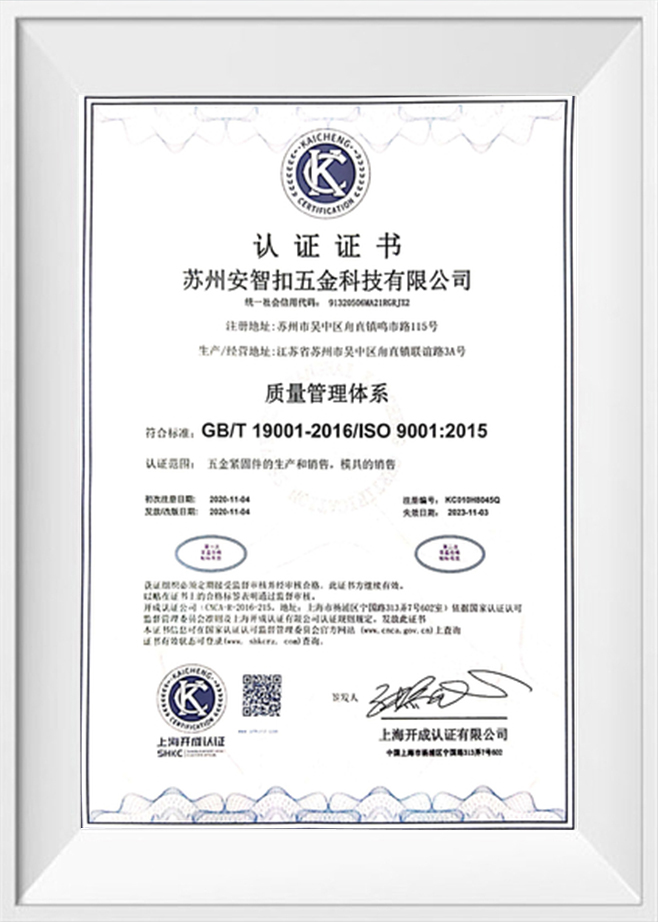
Lubrication chemistry proves equally critical. Standard mineral oil-based cutting fluids decompose at titanium thread rolling temperatures, leaving carbonaceous residues that gall the thread flanks. Anzhikou Hardware employs synthetic ester-based lubricants with extreme pressure additives containing chlorine and sulfur compounds. These form protective tribofilms at the die interface, reducing the coefficient of friction from 0.6 (dry) to 0.15 and correspondingly decreasing thread surface roughness from Ra 1.6μm to Ra 0.4μm. The company's ISO9001:2015 quality system monitors lubricant degradation through acid number titration, replacing the fluid before oxidation products could contaminate thread surfaces.
Galling Mechanisms in Titanium-to-Titanium and Titanium-to-Stainless Joints
Titanium exhibits the highest galling susceptibility of any common structural metal, with adhesive wear initiating at contact pressures as low as 100 MPa—well below the seating pressures generated by standard torque values. When a titanium alloy screw threads into a titanium or stainless steel nut, the protective oxide film (TiO₂, 2 to 10 nanometers thick) fractures under localized contact, exposing bare titanium that cold-welds to the mating surface. Suzhou Anzhikou Hardware Technology Co., Ltd. addresses this through surface modification rather than simply advising torque reduction, recognizing that insufficient clamping load creates its own failure modes through joint separation.
Anti-Galling Surface Treatments for Titanium Screws
| Treatment |
Coating Thickness (μm) |
Friction Coefficient |
Temperature Limit (°C) |
Suitable Mating Material |
| PVD TiN |
2-4 |
0.35 |
500 |
Stainless steel, titanium |
| PVD CrN |
3-5 |
0.30 |
700 |
Titanium, Inconel |
| MoS₂ Sputter |
1-2 |
0.12 |
350 |
Aluminum, magnesium |
| Silver Plate |
5-10 |
0.18 |
650 |
Stainless steel, superalloys |
For aerospace turbine applications where titanium screws secure Inconel shrouds, Anzhikou Hardware recommends CrN coating applied through cathodic arc PVD. The coating's 700°C temperature limit accommodates transient overtemperature events during engine surge conditions, while its 0.30 friction coefficient permits standard torque tables to be applied without the 30% reduction typically required for uncoated titanium. The company's anti-loosing production line can apply these coatings selectively—covering only the threaded portion while leaving the screw head uncoated for electrical grounding continuity.
Miniature Titanium Screw Production: Challenges Below M1.0
Producing titanium screws with external diameters below 1.0mm pushes cold heading technology to its metallurgical limits. The titanium's hexagonal close-packed crystal structure provides only three independent slip systems at room temperature, compared to twelve in face-centered-cubic metals like copper or austenitic stainless steel. This limited deformability means that head forming on micro titanium blanks requires strain distribution across multiple forming stages with intermediate recrystallization anneals. Suzhou Anzhikou Hardware Technology Co., Ltd. leverages its capability to manufacture miniature screws down to 0.6mm external diameter through a proprietary four-stage heading sequence developed by the company's 10 engineering technicians.
Process Parameters for Sub-Millimeter Titanium Screws
The first stage extrudes a cylindrical preform from 0.8mm wire stock at a reduction ratio of 15%, generating sufficient heat through plastic deformation to activate additional slip systems. The second stage, performed after a 10-minute anneal at 600°C in argon, upsets the preform to 50% of final head diameter. The third stage completes head profiling with a dwell period of 0.3 seconds at maximum punch pressure, allowing stress relaxation to prevent springback. The fourth stage pierces the drive recess—typically Phillips or hexalobular for micro titanium screws—using carbide punches with 5-degree draft angles to compensate for titanium's 8.6 × 10⁻⁶/°C thermal contraction from forming temperature to ambient.
Thread rolling on these micro screws presents additional complications. Standard thread rolling dies generate root radii of 0.1mm for M0.8 threads, but titanium's notch sensitivity means that any surface irregularity at this scale acts as a fatigue crack initiator. Anzhikou Hardware's Japan-imported thread rolling wire equipment employs dies polished to mirror finishes (Ra 0.05μm) and rolling forces monitored through piezoelectric load cells with 0.1N resolution. Deviations exceeding 2% from the programmed force profile trigger automatic rejection, preventing under-rolled threads with incomplete root fill from entering the inspection stream.
The annual production capacity of 2,000 square meters at Anzhikou Hardware's facility accommodates both prototype batches of 500 pieces for medical device development and volume orders of 500,000 pieces for consumer electronics. For sub-millimeter titanium screws, the company maintains a dedicated cleanroom section within the 2000-square-meter factory, preventing airborne particle contamination that would embed in the soft titanium surface and create stress risers.
Corrosion Performance in Chloride Environments: Pitting and Crevice Attack
Titanium's reputation for exceptional corrosion resistance holds true in oxidizing environments where the protective TiO₂ film thickens and self-heals. However, in reducing chloride solutions—particularly hydrochloric acid, ferric chloride, or seawater at temperatures above 70°C—this film breaks down locally, initiating pitting corrosion that penetrates at rates exceeding 1mm per year. Suzhou Anzhikou Hardware Technology Co., Ltd. advises customers on titanium alloy screw selection based on the specific chloride concentration and temperature, rather than assuming universal corrosion immunity.
Environmental Thresholds for Titanium Screw Deployment
- Seawater at ambient temperature: CP Grade 2 and Ti-6Al-4V perform indefinitely with corrosion rates below 0.002mm per year. However, crevice corrosion initiates in gasketed joints where oxygen depletion creates reducing conditions. Anzhikou Hardware recommends specifying Pt-Ir coated screws or cathodic protection for fasteners in continuously submerged crevices.
- Hydrochloric acid below 5% concentration at 25°C: CP Grade 2 tolerates brief exposure but suffers general corrosion at 0.1mm per year. For permanent installations in dilute HCl, the company produces Grade 7 titanium screws containing 0.15% palladium, which shifts the corrosion potential into the passive region and reduces attack rates by two orders of magnitude.
- Swimming pool environments: The combination of chlorine (1-3 ppm free Cl₂) and periodic pH excursions below 7.0 creates conditions where standard Ti-6Al-4V exhibits stress corrosion cracking when simultaneously loaded to 75% of yield strength. Anzhikou Hardware's 20 years of experience in non-standard screw customization includes specifying Grade 23 ELI for diving equipment fasteners, where the reduced oxygen content improves SCC resistance.
For chemical processing applications where titanium screws must resist both corrosion and mechanical loading, Anzhikou Hardware offers dual-certification testing: ASTM F1472 for mechanical properties and ASTM G48 Method A for pitting resistance in 6% ferric chloride solution. This combined approach, supported by the company's complete range of testing equipment, ensures that fasteners do not fail through corrosion mechanisms that mechanical testing alone would not reveal.
Weight Reduction Economics: Titanium Screws in Transportation Applications
At 4.43 g/cm³, titanium alloys provide a density 44% lower than steel and only 60% higher than aluminum, while delivering strength-to-weight ratios that exceed all common structural metals except advanced carbon fiber composites. In transportation applications where every gram translates to fuel consumption or payload capacity, titanium screws offer targeted weight savings without the galvanic compatibility issues that arise when aluminum fasteners contact carbon fiber. Suzhou Anzhikou Hardware Technology Co., Ltd. has supplied titanium alloy screws to racing teams and aerospace subcontractors where the replacement of steel fasteners with titanium equivalents reduces vehicle mass by 0.5 to 2.0 kilograms per assembly.
Cost-Benefit Analysis for Titanium Fastener Conversion
| Application |
Steel Screw Mass (kg/1000 pcs) |
Titanium Equivalent Mass (kg/1000 pcs) |
Weight Savings (%) |
Payback Period (Racing) |
| M6×20 engine cover |
3.85 |
2.15 |
44% |
2-3 race weekends |
| M8×30 suspension link |
10.20 |
5.70 |
44% |
1 race season |
| M10×40 frame joint |
21.50 |
12.00 |
44% |
2 race seasons |
The payback calculation assumes a racing context where each kilogram of weight reduction improves lap times by 0.03 seconds per kilometer of track length, translating to championship points and sponsorship value. For commercial aviation, the economics differ: a single kilogram removed from an airframe saves approximately 4,000 liters of jet fuel annually, making titanium fastener premiums economically justified over the 25-year service life of the aircraft. Anzhikou Hardware's export business to 40 countries and areas includes direct supply to aerospace Tier 2 manufacturers, with full material certification and lot traceability meeting AS9100D requirements through the company's ISO9001:2015 quality foundation.
The company's business philosophy of "quality first, continuous innovation, optimize costs, improve speed" directly supports titanium screw production optimization. Recent process innovations include the adoption of near-net-shape titanium wire with controlled oxygen profiles, reducing heading scrap rates from 12% to 4% and shortening lead times for custom titanium alloy screw orders from 8 weeks to 5 weeks. This operational efficiency enables Anzhikou Hardware to offer competitive pricing despite titanium's raw material cost premium, expanding access to titanium fastener technology beyond traditional aerospace and medical markets into high-performance cycling, marine racing, and premium consumer electronics.

 English
 Español
.jpg "Button head torx titanium alloy screw")
-1.jpg "Colorful Titanium Gr2 Gr5 Nut Hex socket cup head Bolt")
.jpg "Custom Various Head Shapes And Colors Titanium Bolts")
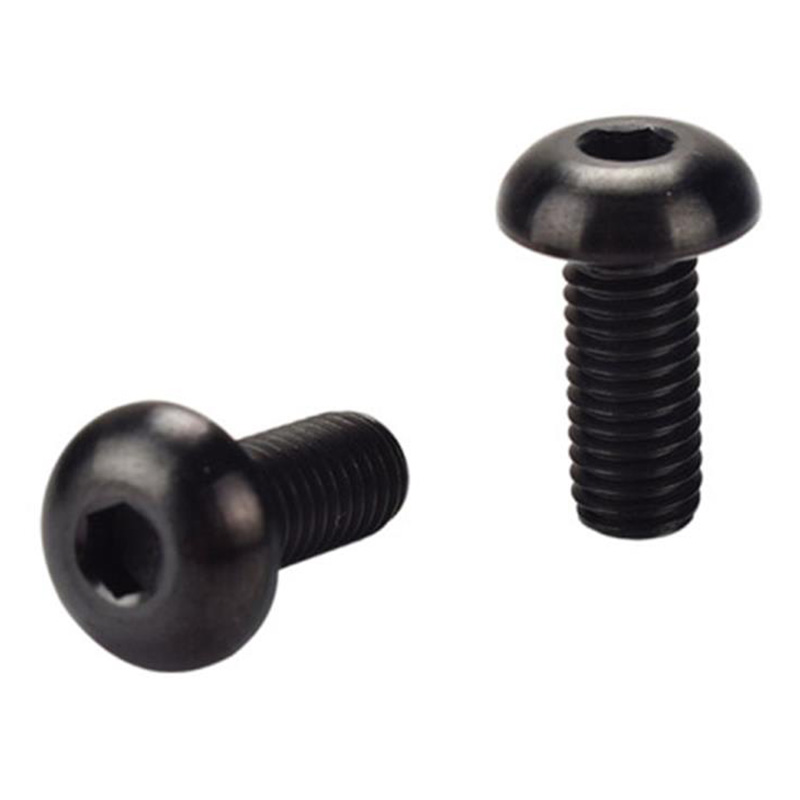
.jpg "Customized color button head torx titanium alloy screw")
.jpg "Customized half-round head hexagon socket titanium alloy screw")
.jpg "DIN912 hex socket cup head with washer titanium screws for bicycle")
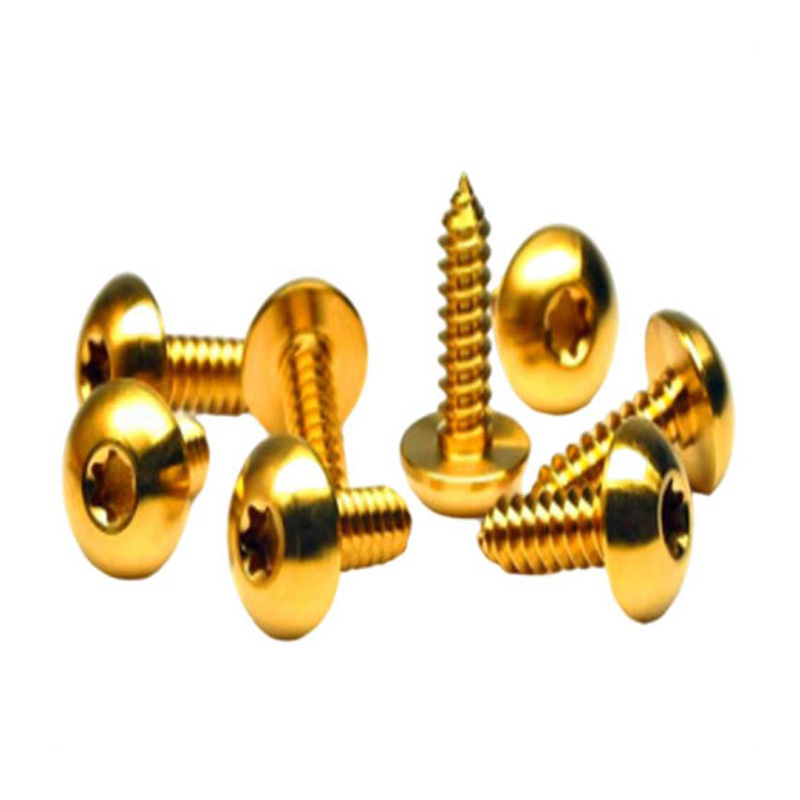
.jpg "Gr5 Titanium Ti6AL4V bolts screws fasteners for motorcycles")
-1.jpg "High Quality Titanium screw M5x10 GR5 TC4 Ti-6al-4v for bicycle")
.jpg "Hot Sale M5 titanium self-tapping screw for wood furniture")