Industry knowledge
Hole Tolerance and Fit Classification for Clevis Pin Flat Head Rivets — Why Clearance Fit Is Not Always the Right Choice
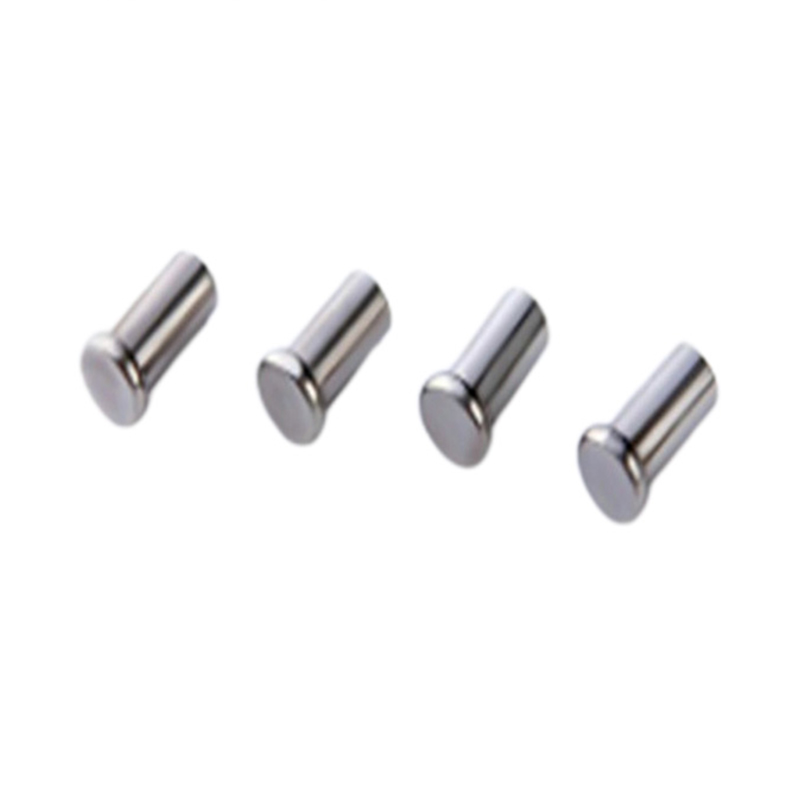
A clevis pin flat head rivet with a cross hole combines two mechanical functions in a single part: the rivet body transfers shear load between joined members by bearing against the hole walls, while the cross hole at the tail end accepts a cotter pin, split pin, or clip that retains the assembly axially. The fit between the rivet shank and its mating holes in the clevis and fork must be selected with both functions in mind — a fit optimized purely for easy assembly will compromise shear load distribution, while a fit optimized purely for load transfer makes installation impractical and prevents the slight angular articulation that clevis joints are specifically designed to permit.
ISO 286-1 fit classifications used in clevis pin applications divide into three practical zones. A clearance fit (H8/f7 or H9/d9) allows free rotation and easy insertion, making it the default for pivot and hinge applications where continuous articulation is expected. A transition fit (H7/k6 or H7/m6) produces near-zero clearance with occasional interference, appropriate when the joint must carry shear without lateral play but still be disassembled for maintenance. An interference fit (H7/p6 or tighter) locks the pin permanently in the clevis ear — used when the rivet is not intended for removal and load transfer must be maximized. Selecting a clearance fit in a structural shear application because it is easier to install introduces fretting wear between the pin and hole wall: the small cyclical sliding motion under load gradually erodes both surfaces, enlarging the hole and reducing the effective bearing area by 20–40% over service life.
The cross hole position adds a further tolerance constraint that does not exist in standard solid rivets. The hole must be located within a specific axial distance from the tail end to ensure the retaining pin clears the mating part's face when installed. A cross hole positioned too close to the tail chamfer reduces the net section at the weakest point of the rivet; too far inward, and the cotter pin cannot be inserted after assembly. Suzhou Anzhikou Hardware Technology Co., Ltd. produces clevis pin flat head rivets with cross hole position tolerances held by CNC equipment to within ±0.05 mm of specified axial location, ensuring retaining pin function is confirmed dimensionally before shipment rather than discovered during assembly.
Rivet Bearing Stress Versus Sheet Tear-Out — Which Failure Mode Controls Your Joint Design
Riveted joint design involves two competing failure modes that must both be checked independently: bearing failure of the rivet shank against the hole wall, and tear-out (or shear-out) failure of the sheet material between the rivet hole and the edge of the part. Which mode governs depends on the ratio of edge distance to hole diameter, the relative strengths of the rivet and sheet material, and whether the rivet is in single or double shear. Designing to one criterion while ignoring the other produces joints that fail at loads well below the intended design point.
Bearing stress in the rivet is calculated as the applied shear force divided by the projected bearing area (shank diameter × sheet thickness). For a steel rivet in an aluminum sheet, bearing failure of the aluminum sheet almost always governs before rivet shank yielding — the aluminum's bearing yield strength (typically 380–480 MPa for 6061-T6) is reached well before the steel rivet deforms. In this material combination, increasing rivet diameter is more effective at reducing bearing stress than increasing rivet material strength, because the projected area scales with diameter while the material strength difference is already large.
Tear-out failure occurs when the sheet material between the hole edge and the part edge shears along two parallel planes. The minimum edge distance to prevent tear-out is typically 1.5× the hole diameter for aluminum alloys and 1.25× for steel, per aerospace riveting standards (such as MIL-HDBK-5 and EN 9347). Below these thresholds, the joint tear-out strength drops non-linearly — halving the edge distance from 1.5D to 0.75D can reduce tear-out strength by up to 65%, not 50%, because of stress concentration effects at the hole boundary. A practical design check compares bearing allowable stress against tear-out allowable for the actual edge distance, and dimensions the joint to the lower of the two values.
For clevis pin flat head rivets specifically, the flat head geometry affects how bearing load is distributed across the sheet thickness. A flat (countersunk) head distributes load more uniformly through the grip length than a protruding head in applications where the head is flush with the panel surface, but it also removes material from the shank at the countersink depth — reducing the effective shear area at the head-shank junction. This shear area reduction must be accounted for in single-shear joints where the load transfer plane coincides with the countersink zone.
Material Pairing Strategy for Rivets in Dissimilar Metal Assemblies
Galvanic corrosion between a rivet and its mating sheet material is a long-term structural risk that receives inadequate attention at the design stage. Unlike bolted joints, rivets cannot be periodically removed and recoated — corrosion product buildup at the rivet-sheet interface is a permanent accumulation that expands the rivet hole, introduces tensile hoop stress in the surrounding sheet, and ultimately causes the characteristic "smoking rivet" failure visible as white oxide streaks radiating from rivet holes in aluminum structures. The galvanic potential difference between the rivet and sheet must be managed from the outset, not treated as a maintenance issue.
The following table summarizes commonly used rivet-to-sheet material pairings, their galvanic compatibility, and the recommended mitigation where the pairing is necessary for mechanical reasons:
| Rivet Material |
Sheet Material |
Galvanic Potential Diff. |
Corrosion Risk |
Recommended Mitigation |
| Aluminum 2117-T4 |
Aluminum 2024-T3 |
<0.05 V |
Very Low |
None required |
| Stainless Steel 304 |
Aluminum 6061 |
0.5 – 0.8 V |
High (Al sacrificed) |
Aluminum sleeve or zinc chromate primer |
| Carbon Steel (zinc-plated) |
Carbon Steel |
<0.1 V |
Low |
Consistent coating on both parts |
| Brass (CuZn39Pb3) |
Steel |
0.3 – 0.5 V |
Moderate (steel sacrificed) |
Isolation washer or sealant at interface |
| Copper |
Aluminum |
0.8 – 1.2 V |
Very High (Al rapidly sacrificed) |
Avoid — use aluminum or SS rivet instead |
Galvanic compatibility and mitigation strategies for common rivet-to-sheet material pairings
An important nuance is that area ratio amplifies galvanic damage. A small rivet (anode) in contact with a large sheet (cathode) corrodes far more rapidly than the reverse — the small anode area concentrates corrosion current. This is why using a steel rivet in a copper or stainless sheet is less damaging than the reverse, even when the potential difference is identical. For custom rivet assemblies where material pairings are dictated by structural or conductivity requirements rather than galvanic preference, Anzhikou's production team works with customers to specify compatible surface treatments that interrupt the electrochemical path without compromising the mechanical interface.
Cold-Heading Process Variables That Determine Rivet Head Integrity in High-Volume Production
Rivet head cracking, incomplete head formation, and head-to-shank concentricity errors are the three most common cold-heading defects in rivet production, and all three originate in controllable process variables rather than material quality. Understanding these variables helps procurement engineers write meaningful incoming inspection criteria and evaluate whether a supplier's process capability is adequate for the application — rather than relying solely on final dimensional checks that catch defects only after they are produced.
Head cracking occurs when the wire stock's ductility is insufficient for the degree of deformation imposed by the heading die. The upsetting ratio — the ratio of the original wire diameter to the head diameter — determines how much plastic strain the material must sustain. For a flat head rivet with a head diameter 2.5× the shank diameter, the surface strain at the head perimeter during forming exceeds 150%. Materials with low reduction-in-area (RA) values, or wire that has been work-hardened by improper drawing, cannot accommodate this strain without cracking at the head periphery. Specifying wire with minimum RA of 60% for brass and 65% for steel rivets is a practical incoming material control that correlates directly with heading yield rates.
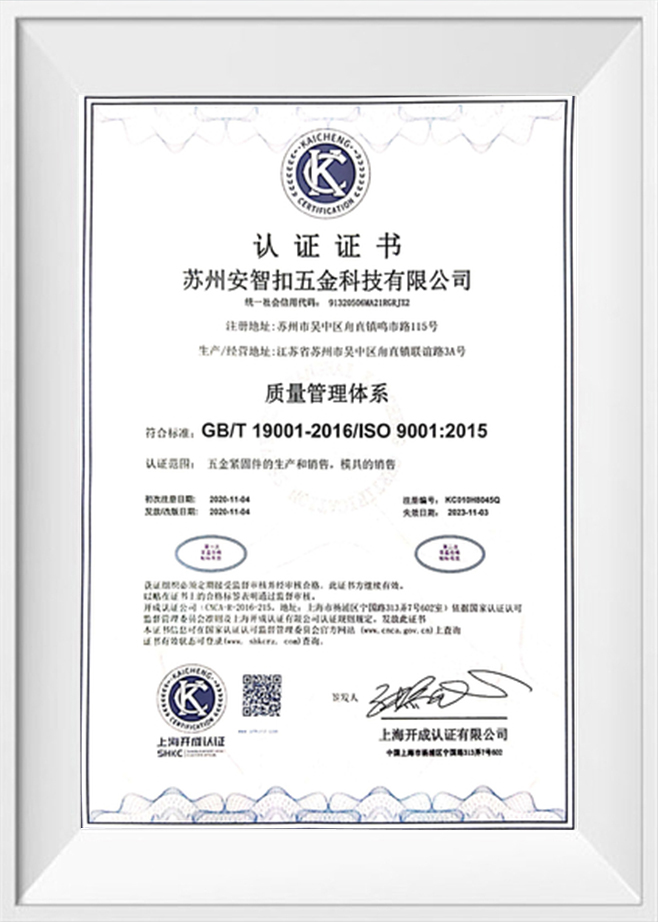
Head-to-shank concentricity is controlled by die alignment and wire feed consistency. A misaligned heading punch shifts the head center relative to the shank axis, producing an eccentric head that creates uneven bearing pressure against the countersink when installed. For flat head rivets, even a 0.1 mm eccentricity causes the head to rock in the countersink rather than seat flush, leaving a gap on one side that allows fretting motion and eventual fatigue crack initiation at the countersink edge. Concentricity tolerances tighter than 0.08 mm TIR (total indicator runout) between head and shank are achievable with modern cold-heading equipment but require regular die wear monitoring — a process control step that Suzhou Anzhikou Hardware Technology Co., Ltd. integrates as a scheduled maintenance interval across its fleet of more than 200 precision machines, supporting the dimensional consistency that its ISO 9001:2015 certification requires across export batches shipped to 40 countries worldwide.
For clevis pin flat head rivets with cross holes, an additional process variable is the timing and method of cross hole drilling relative to head formation. Drilling after heading allows the cross hole to be positioned relative to the formed head geometry — the correct sequence for applications where head-to-hole axial distance is a functional requirement. Drilling before heading risks distorting the hole geometry during the heading operation if the hole falls within the deformation zone. The deformation boundary — the axial distance from the head face within which material flow occurs during upsetting — is approximately 1.5× to 2× the shank diameter for standard upsetting ratios, and the cross hole must be positioned outside this zone if pre-heading drilling is used.

 English
 Español
.jpg "High quality DIN1444 Clevis Pin Flat Head Rivet With Hole")
.jpg "Stainless Steel Double side Rivet for leather belt")
.jpg "Factory price Aluminum blind rivet")