Industry knowledge
Why eccentric screws demand more than standard tolerances
Unlike conventional fasteners, eccentric screws are defined by a deliberately offset shaft or head geometry. This offset creates a cam action that translates rotational force into linear clamping or adjustment motion. Standard tolerance grades (like 6g for thread pitch) often fail to ensure consistent eccentric throw, leading to uneven wear or jamming. At Suzhou Anzhikou Hardware Technology Co., Ltd., we’ve learned that controlling concentricity deviation within 0.02mm is critical—any more and the cam timing drifts; any less and the eccentric effect disappears.
Key parameters we monitor for every eccentric screw batch:
- Eccentric offset value (typical range: 0.1mm–1.5mm depending on application)
- Surface hardness uniformity — minimum HV 450 for wear resistance
- Thread runout relative to the eccentric axis
We’ve seen buyers specify “eccentric screws” without defining the offset direction or required angular accuracy. That often results in parts that technically meet a drawing but fail in assembly. Always clarify: fixed eccentricity or adjustable? Clockwise or counterclockwise cam profile? We include these in our non-standard screw customizations.
Three hidden failure modes in eccentric screw assemblies
Even when materials and dimensions are correct, eccentric screws can fail in ways that standard fasteners don’t. Based on our 20 years of industrial production and development experience, here are the most overlooked issues:
1. Progressive radial slippage
Because the load vector rotates during each cycle, the mating hole can elongate gradually. This turns a precision eccentric adjustment into a loose fit. Solution? Specify through-hardened screws rather than case-hardened ones when cycle life exceeds 10,000 operations.
2. Thread galling in stainless steel eccentric designs
The off-axis torque increases thread flank pressure. For 304 or 316 stainless, this often causes cold welding. Our recommendation: use a lubricated coating or switch to 410 stainless with lower nickel content.
3. Misinterpretation of breakaway torque
With eccentric screws, breakaway torque is not the same as prevailing torque. The eccentric lobe creates a wedging effect. Measuring torque at the driver tip underestimates actual clamp load by 15–30%. We help customers define proper validation methods using our in-house testing equipment.
As a manufacturer, we always share these insights upfront. It’s why buyers in 40 countries worldwide trust Anzhikou Hardware — we flag issues before they become field failures.
Cost vs. performance: selecting eccentric screw materials wisely
Not every eccentric screw needs premium alloy steel. But over‑specifying or under‑specifying both hurt your bottom line. The table below compares common material choices for eccentric fasteners based on actual failure data from our production and customer returns.
Comparison of eccentric screw materials — based on 20 years of non-standard screw customization data
| Material |
Wear resistance (cycles) |
Corrosion risk |
Relative cost |
Best application |
| C10E / 1010 carbon steel |
5k–10k |
High (needs coating) |
Low |
Dry indoor adjustment mechanisms |
| SCM435 (chrome-moly) |
20k–50k |
Moderate (zinc plating sufficient) |
Medium |
High-cycle automation cams |
| 304 stainless steel |
8k–15k |
Low |
Medium-high |
Food or medical equipment (gall risk) |
| Nitrided 42CrMo4 |
50k+ |
Low (if sealed) |
High |
Heavy-duty indexing & positioning |
We’ve seen OEMs pay 3x more for titanium eccentric screws when SCM435 with proper heat treatment would have outperformed it. At Anzhikou Hardware, we optimize both cost and speed — our engineering team of 10 technical staff helps you match the material to the real load spectrum, not just the drawing.
How to specify eccentric screws for adjustable locking mechanisms
One of the most practical yet misunderstood applications is the eccentric screw used as a locking element — for example, in panel clamps, tooling fixtures, or orthopedic device adjustments. The screw does not just fasten; it creates a variable normal force through eccentric rotation.
To ensure reliable locking without loosening, your specification must include three non-obvious details:
- The locking angle range — typically 30° to 180° of rotation. Beyond this, the eccentric may self-release.
- Surface texture under the head — a smooth eccentric head might slip; micro-serrated or knurled underhead patterns improve friction but complicate cold forming.
- Counterface hardness — if the mating plate is softer than HRC 30, the eccentric will embed over time, losing preload.
Our factory, spanning 2000 square meters, runs more than 200 sets of precision equipment from Taiwan and Japan. This allows us to produce eccentric screws with external diameters as small as 0.6mm and lengths down to 0.6mm — including custom locking geometries. We promise quality and delivery time because we control cold heading and thread rolling in-house, not just assembly.
Bottom line: A well-specified eccentric screw reduces warranty claims from loosening failures. An under-specified one creates hidden assembly rework. We’ve been helping customers navigate these details for two decades — reach out with your application sketch, and we’ll propose the exact offset, material, and head treatment.

 English
 Español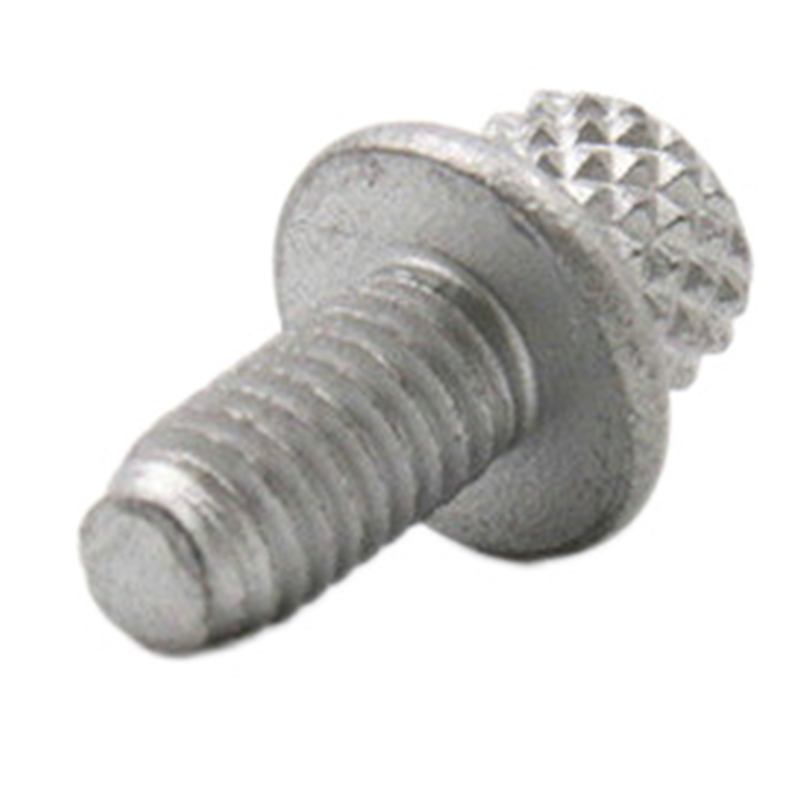
.jpg "New design Stainless Steel 304 A2-70 Eccentric Screw")
.jpg "New design stainless steel hex head step eccentric screw")
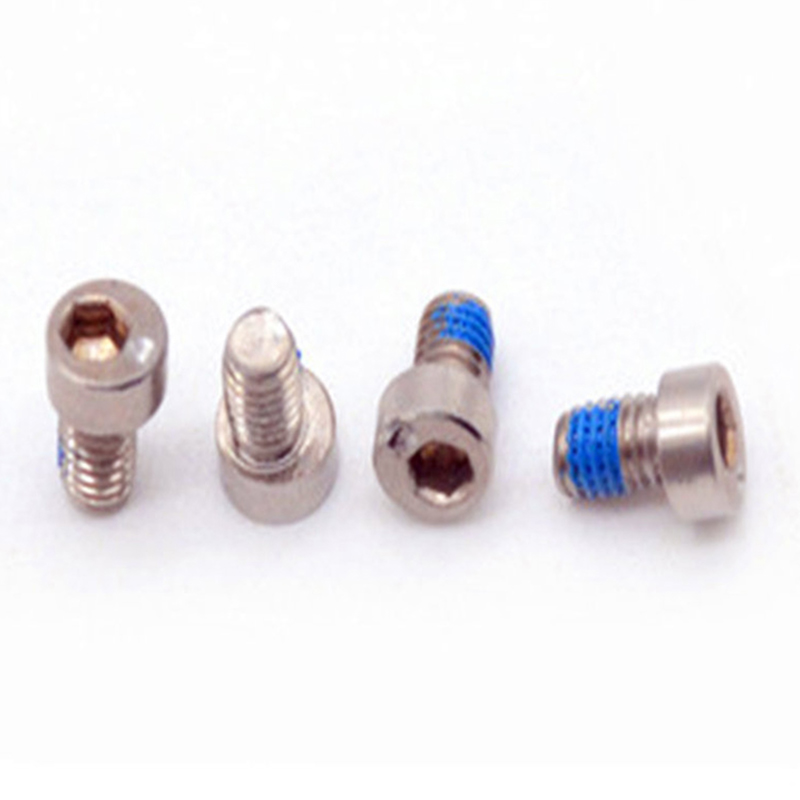
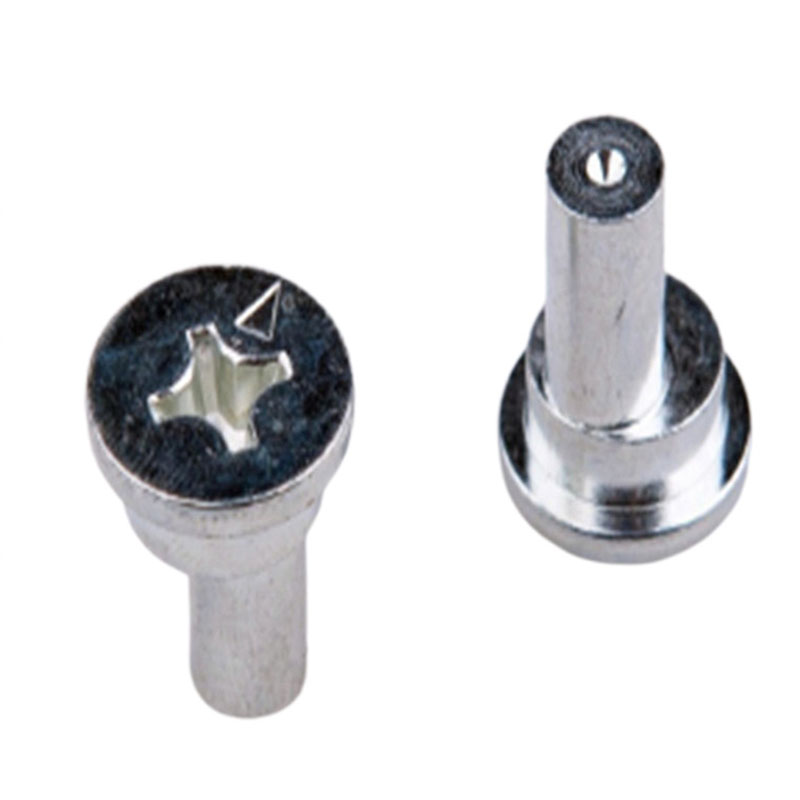
.jpg "Set of cross drive furniture fitting cam lock eccentric screw")