Industry knowledge
Brass Alloy Selection for Precision Micro Screws: Navigating C36000 vs. C26000
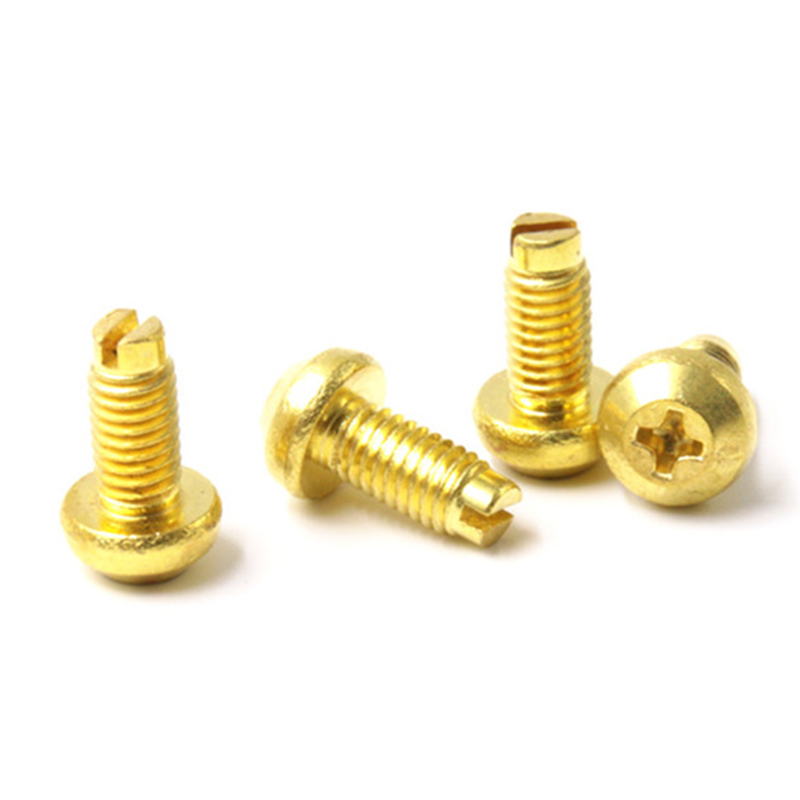
The mechanical behavior of brass screws shifts dramatically depending on whether the base alloy is free-machining brass (C36000) or cartridge brass (C26000). Suzhou Anzhikou Hardware Technology Co., Ltd. manufactures cross micro mini machine screws in both alloys, with C36000 containing 35.5% zinc and 3% lead content that provides exceptional chip-breaking characteristics during cold heading. The lead forms discrete particles within the brass matrix, reducing tool wear on the company's Taiwan-imported cold heading dies by approximately 40% compared to lead-free alternatives. However, this same lead content renders C36000 non-compliant with RoHS and REACH regulations for applications involving drinking water contact or children's products.
C26000 cartridge brass, with 30% zinc and no intentional lead addition, offers superior cold workability and corrosion resistance but demands modified tooling geometries. Anzhikou Hardware's engineering team of 10 technicians with 20 years of industry experience has developed proprietary die radii specifically for C26000 micro screws down to 0.6mm external diameter. The lower zinc content increases ductility, allowing deeper head formations without cracking, yet the absence of lead creates continuous chip streams that can clog thread-rolling dies if coolant flow rates fall below 8 liters per minute. For European medical device exports—one of the 40 countries and areas served by the company—C26000 with traceability certificates has become the default specification despite its 15% higher material cost.
Mechanical Property Comparison at Micro Scales
| Alloy |
Tensile Strength (MPa) |
Yield Strength (MPa) |
Elongation (%) |
Typical Headability Limit |
| C36000 (H04) |
410 |
310 |
18 |
Head height 0.65× diameter |
| C26000 (H02) |
385 |
275 |
28 |
Head height 0.80× diameter |
| C26000 (H04) |
450 |
380 |
12 |
Head height 0.55× diameter |
The H04 temper designation indicates hard-drawn material, which Anzhikou Hardware specifies for cross micro mini machine screws requiring high thread strength. However, the reduced elongation at this temper demands slower cold heading stroke rates—typically 120 strokes per minute versus 180 for H02—to prevent circumferential cracking at the head-shank junction. The company's 2000-square-meter facility houses more than 200 sets of precision equipment capable of modulating these parameters through servo-controlled feeders synchronized with the heading press.
Cross Recess Geometry in Sub-Millimeter Brass Screws: Manufacturing Constraints
Forming a functional Phillips cross recess in brass screws below M1.2 presents unique challenges that steel screw manufacturers rarely encounter. Brass yields at approximately one-third the pressure of carbon steel, meaning the punch tool that stamps the recess must penetrate deeply enough to create adequate driver engagement without displacing material that would thin the surrounding head wall. Suzhou Anzhikou Hardware Technology Co., Ltd. has resolved this through stepped punch geometries: the initial forming stage creates a shallow guide depression using a 90-degree included angle punch, followed by a second station that deepens the recess to 60% of head height using a 50-degree included angle punch.
Recess Quality Indicators for Micro Brass Fasteners
- Wing width consistency: On an M1.0 brass screw, the four wings of the cross recess must measure 0.22mm ±0.02mm. Variation beyond this tolerance causes the Phillips #000 driver to seat preferentially on two wings, concentrating torque and deforming the recess into an oval shape within three installation cycles.
- Bottom fillet radius: A radius below 0.05mm at the intersection of the four wings creates stress concentration points where the brass crystalline structure fractures under torsional load. Anzhikou Hardware's CNC-machined punches maintain this radius within 0.03 to 0.05mm through diamond-like carbon coatings that reduce brass adhesion.
- Surface burnishing: The recess walls must exhibit a mirror finish with Ra below 0.4μm. Rough surfaces increase driver friction, requiring 20 to 30% higher torque for the same seating force and accelerating driver tip wear in automated assembly equipment.
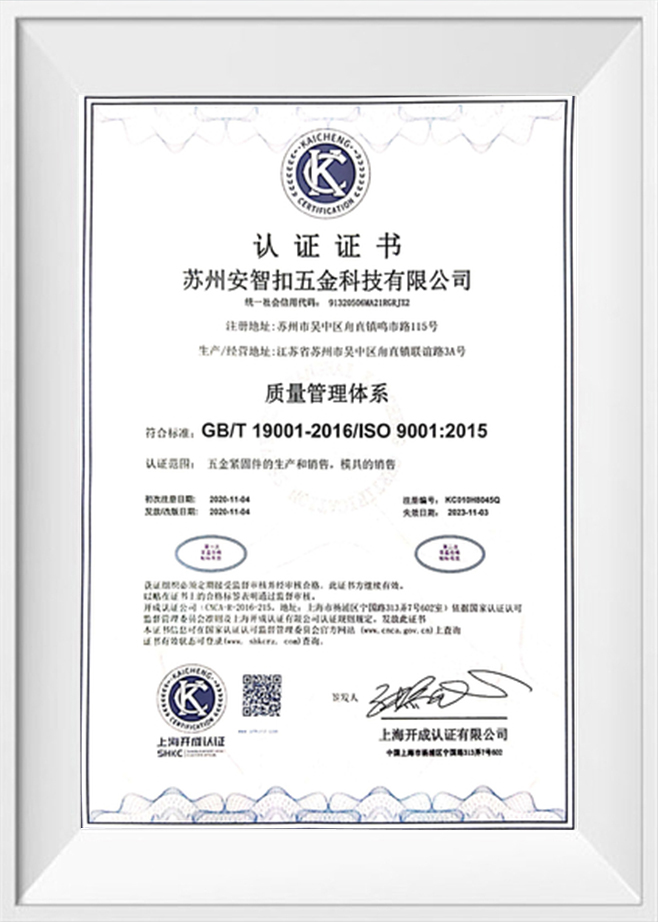
The ISO9001:2015 certified quality system at Anzhikou Hardware includes optical comparator inspection of every 500th piece during production runs. For export orders to Japanese electronics manufacturers—where cross micro mini machine screws secure camera module housings—this sampling frequency increases to every 200th piece, with full dimensional reports including recess depth, wing angle, and surface roughness measurements.
Galling Prevention When Threading Brass into Dissimilar Metals
Brass screws threaded into stainless steel or aluminum housings are susceptible to galling, a form of adhesive wear where microscopic fragments of brass cold-weld to the mating thread surface and progressively build up until the joint seizes entirely. This phenomenon accelerates at micro scales because the thread flank contact pressure increases inversely with thread pitch. Suzhou Anzhikou Hardware Technology Co., Ltd. addresses galling through three complementary strategies tailored to the specific mating material identified by the customer during the non-standard screw customization process.
Material-Specific Galling Mitigation Approaches
| Mating Material |
Galling Risk Level |
Recommended Brass Screw Modification |
Installation Torque Reduction |
| Stainless Steel 304 |
Critical |
Teflon-impregnated nickel underplate (2μm) |
25% |
| Aluminum 6061-T6 |
High |
Reduced thread pitch diameter (-0.03mm) |
15% |
| Titanium Grade 2 |
Severe |
Silver flash coating (0.1μm) + wax lubrication |
35% |
| Brass C36000 |
Moderate |
Standard finish acceptable |
0% |
For brass screws threading into stainless steel—a common scenario in marine instrumentation where corrosion resistance is paramount—the Teflon-impregnated nickel underplate creates a shear layer that prevents direct brass-to-steel contact. Anzhikou Hardware applies this coating through a proprietary barrel process that maintains coating uniformity even on threads as fine as M0.8×0.2mm. The 25% torque reduction recommendation reflects the decreased friction coefficient; installers using torque-controlled drivers must recalibrate settings to avoid over-compression of gaskets or cracking of plastic housings.
Thermal Expansion Differential Management in Brass Micro Screw Assemblies
Brass exhibits a coefficient of thermal expansion (CTE) of 19.9 × 10⁻⁶/°C, significantly higher than steel (11.7 × 10⁻⁶/°C) and moderately higher than aluminum (23.6 × 10⁻⁶/°C). In cross micro mini machine screws securing components that experience temperature cycling—such as LED heat sinks, automotive sensors, or outdoor electronics enclosures—this differential generates internal stresses that can loosen the joint or fracture the screw. Suzhou Anzhikou Hardware Technology Co., Ltd. calculates these effects during the customization process, particularly for non-standard screws where standard torque tables assume isothermal conditions.
Design Calculations for Temperature-Cycled Joints
Consider a brass M1.6 screw securing an aluminum bracket to a steel base plate across a temperature swing from -20°C to 80°C. The brass screw attempts to expand 0.012mm more than the steel base over a 10mm engaged length. If the joint is rigid, this differential creates compressive stress in the screw. Anzhikou Hardware's engineering analysis recommends the following compensatory measures:
- Increased engaged length: Extending thread engagement from 3mm to 5mm distributes the thermal stress across more thread flanks, reducing peak shear stress by 40%. The company's thread-rolling wire equipment can produce extended thread lengths on micro screws without compromising runout tolerance.
- Belleville washer integration: Specifying a conical spring washer under the screw head accommodates 0.05 to 0.15mm of thermal expansion differential while maintaining minimum clamping load. Anzhikou Hardware offers brass screws with pre-assembled washers through its anti-loosing production line, eliminating secondary handling.
- Reduced initial torque: Decreasing installation torque by 20% from standard values leaves residual elastic capacity in the screw to absorb thermal expansion without yielding. For C26000 brass screws, this typically means reducing from 0.25 N·m to 0.20 N·m for M1.6 sizes.
The 200-plus precision machines at Anzhikou Hardware's facility include environmental test chambers capable of simulating -40°C to 150°C cycles on assembled test specimens. This capability validates thermal expansion calculations before production commitment, a service particularly valued by automotive Tier 1 suppliers in the company's export portfolio across 40 countries and areas.
Surface Oxidation and Patina Development in Architectural Brass Screw Applications
Untreated brass screws develop a characteristic patina when exposed to atmospheric sulfur compounds, transitioning from bright gold through reddish-brown to deep green verdigris over months or years. While often desirable on heritage hardware and decorative fixtures, this natural oxidation is unacceptable in precision instruments where dimensional stability and electrical conductivity must be preserved. Suzhou Anzhikou Hardware Technology Co., Ltd. offers controlled surface treatments that either arrest the patination process or accelerate it to a stable endpoint before installation.
Surface Treatment Options for Brass Micro Screws
For electronics applications where brass screws provide EMI shielding continuity, Anzhikou Hardware applies a 3 to 5 micron tin coating through immersion plating. Tin maintains solderability and electrical contact resistance below 1 milliohm while preventing the sulfide film that would otherwise increase contact resistance by orders of magnitude. The immersion process avoids the hydrogen embrittlement risk associated with electrolytic plating, critical for micro screws where cross-sectional area is already minimal.
Architectural applications requiring immediate antique appearance receive a chemical oxidation treatment followed by lacquer sealing. The oxidation bath, operated at 60°C for 8 to 12 minutes, produces a uniform brown-black conversion coating approximately 0.5 microns thick. A subsequent clear acrylic lacquer layer of 8 to 12 microns locks this color state, preventing further natural patination for 5 to 7 years in outdoor environments. Anzhikou Hardware's 20 years of experience in non-standard screw customization includes color matching to heritage hardware samples, with the company's quality testing equipment verifying coating adhesion through cross-hatch testing per ASTM D3359.
For marine environments where brass screws secure hardware on yachts or coastal structures, the company recommends silicon bronze (C65500) rather than standard brass alloys. Silicon bronze contains 3% silicon and 1% manganese, eliminating zinc entirely and thereby preventing dezincification—the selective leaching of zinc that leaves porous copper capable of retaining only 30% of original strength. Though silicon bronze requires slower cold heading speeds (80 strokes per minute versus 150 for C36000), Anzhikou Hardware's servo-controlled equipment accommodates this material for critical fastener orders where failure would compromise safety.

 English
 Español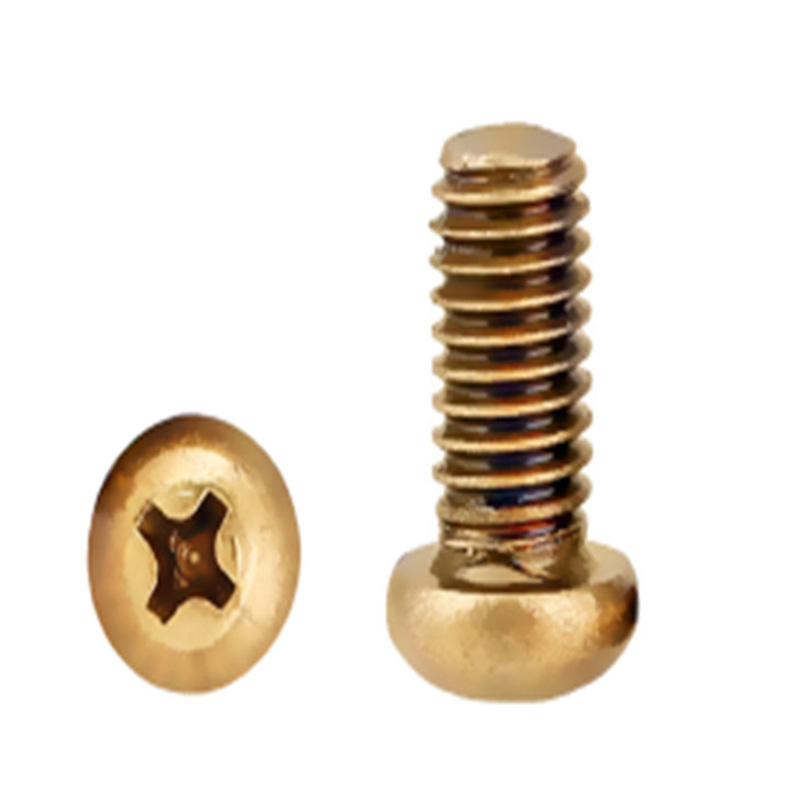
.jpg "DIN84 M4 Brass Cheese Head Slotted Machine Screw")
.png "Customized m1 solid brass cross recessed pan head micro screws")
.jpg "M2 golden color brass round head machine micro screws")
.png "M4 countersunk head full thread brass torx head screw")
.jpg "Custom m4 countersunk head cross antique brass machine screw")