Industry knowledge
Working Load Limit Derating Under Angular Loading — The Most Misunderstood Aspect of Eye Bolt Specification
Every eye bolt catalogue lists a Working Load Limit (WLL) — but that value applies exclusively to in-line axial loading, meaning the load acts directly along the shank axis with the eye oriented perpendicular to the load direction. In practice, rigging and lifting configurations rarely achieve perfect axial alignment, and the WLL degrades rapidly as the load angle deviates from vertical. This derating is not a safety margin buffer — it is a structural necessity driven by the bending stress introduced at the shank-to-eye transition zone, which is the highest-stress location in the entire fastener under off-axis loading.
ASME B30.26 and equivalent European standards (EN 1677-1) publish derating factors that must be applied to the rated WLL based on the angle between the load direction and the eye bolt shank axis. The derating is non-linear and steeper than most users expect:
| Load Angle from Shank Axis |
WLL Retention Factor |
Effective WLL (example: 1,000 kg rated) |
Failure Risk if Ignored |
| 0° (pure axial) |
100% |
1,000 kg |
Baseline — no derating |
| 15° |
65% |
650 kg |
Significant — often overlooked in field rigging |
| 30° |
35% |
350 kg |
High — requires shouldered design or swivel type |
| 45° |
25% |
250 kg |
Critical — plain eye bolts should not be used |
| 90° (perpendicular) |
Not permitted |
0 kg |
Catastrophic bending at shank root |
WLL derating factors for plain eye bolts under off-axis loading per ASME B30.26 guidelines
The solution for applications requiring angular loading is the shoulder (or collar) eye bolt, where a machined flange at the base of the shank transfers the bending moment into the mating surface rather than concentrating it at the thread-shank junction. Shoulder eye bolts maintain a higher WLL at angles up to 45° and are the correct specification for multi-leg sling configurations where load angle cannot be controlled. Plain eye bolts without a shoulder should only be specified for straight vertical lifts where geometry can be guaranteed — a condition that is less common in field use than catalogue photography suggests.
Stainless Steel Grade Selection for Eye Bolts — 304 vs. 316 vs. Duplex in Corrosive Service
Stainless steel eye bolts are frequently specified for outdoor, marine, and chemical environments on the basis that "stainless steel is corrosion resistant" — without distinguishing between grades whose actual corrosion performance in specific environments differs by an order of magnitude. The three grades most relevant to eye bolt applications each have a distinct corrosion resistance profile that determines service life under specific exposure conditions, and selecting the wrong grade leads to either premature pitting failure or unnecessary cost.
Grade 304 (1.4301 / 18-8)
The most widely available and cost-effective stainless grade, 304 provides good atmospheric corrosion resistance and is appropriate for indoor industrial environments, food processing equipment, and freshwater exposure. Its critical limitation is susceptibility to chloride-induced pitting corrosion — in coastal environments with salt spray concentrations above 200 mg/m²/day, 304 stainless steel eye bolts develop pitting within 12–18 months, typically at the thread root where surface finish is rougher and the passive layer is more easily disrupted. The thread root is also the highest-stress location in the fastener, meaning that pitting there directly reduces fatigue life rather than being a superficial surface effect.
Grade 316 (1.4401 / 316 Marine)
The addition of 2–3% molybdenum in 316 raises the critical pitting temperature in chloride environments from approximately 15°C (for 304) to above 30°C, and increases the critical chloride concentration threshold by a factor of 3–5×. This makes 316 the appropriate choice for marine hardware, boat rigging, dock fittings, and coastal architectural applications. It is not immune to pitting — in crevice situations such as where the eye bolt shank passes through a deck fitting and is held against a dissimilar metal under sustained wetness, crevice corrosion of 316 remains a risk — but in open atmospheric marine exposure it provides substantially longer maintenance-free service life than 304.
Duplex 2205 (1.4462)
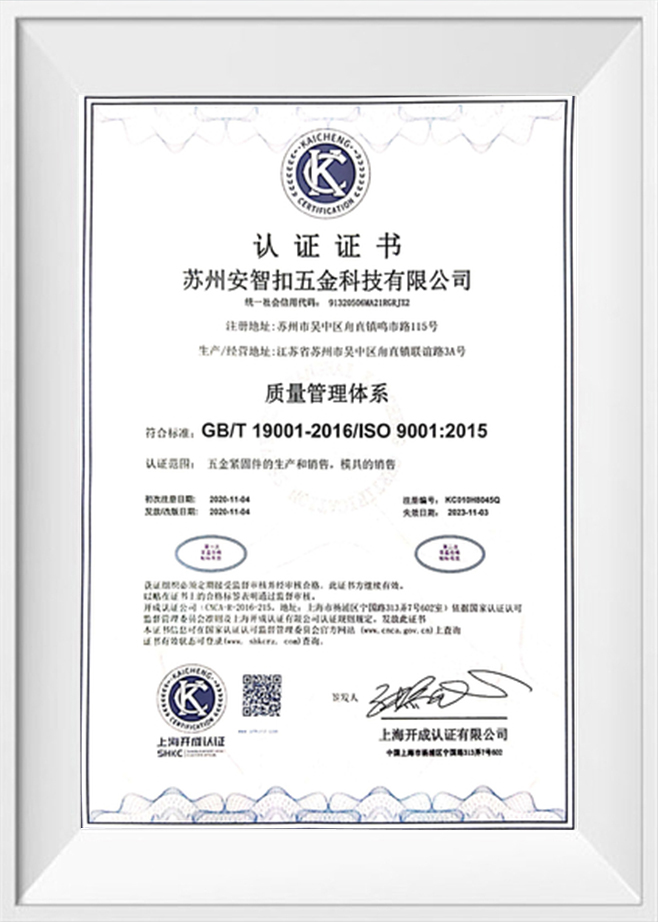
Duplex stainless offers a pitting resistance equivalent number (PREN) of approximately 35, compared to 25 for 316 and 18 for 304, combined with a tensile strength of 620–780 MPa versus 515–690 MPa for 316. For eye bolts in offshore, chemical plant, or high-chloride industrial environments where both corrosion resistance and load capacity are constrained, duplex allows a smaller fastener diameter to carry the same WLL with greater corrosion safety margin. The trade-off is cost (typically 1.5–2× the price of 316) and reduced machinability — duplex work-hardens rapidly during threading, requiring sharper tooling and lower cutting speeds than austenitic grades. Suzhou Anzhikou Hardware Technology Co., Ltd. produces stainless steel eye bolts across all three grades, with material certification traceable to heat lot and incoming chemical composition verification as part of its ISO 9001:2015 quality management process.
Thread Engagement Depth and Mating Surface Requirements for Eye Bolts in Structural Applications
An eye bolt generates its lifting capacity through the thread engagement between its shank and the tapped hole or nut it is installed into — and the adequacy of that engagement depends entirely on the tapped material's shear strength and the length of thread in contact. A stainless steel eye bolt rated at 500 kg axial WLL achieves that rating only when installed to a minimum engagement depth into a steel structure of appropriate strength class. Installed into cast aluminum, soft bronze, or a blind tapped hole with insufficient depth, the same eye bolt can strip its mating threads at a fraction of the rated load — with no external indication of the reduced capacity.
Minimum thread engagement recommendations for eye bolts installed in structural applications depend on both the bolt material and the tapped material strength. The general guidance from structural fastener standards is as follows:
- Steel tapped into steel (matching strength class): minimum engagement of 1.0× bolt diameter; this is the baseline from which all other materials are extrapolated upward
- Stainless steel eye bolt into aluminum structure: minimum 1.5× bolt diameter, with a helical thread insert (Helicoil or equivalent) strongly recommended to prevent the aluminum threads from galling against the stainless shank during installation
- Into cast iron or grey iron: minimum 2.0× bolt diameter due to cast iron's low tensile and shear strength; grey iron's brittle fracture mode means thread stripping occurs suddenly without prior elongation warning
- Into wood or composite timber: eye bolts should never rely on direct thread engagement into wood for lifting applications; a through-bolt with washer and nut on the reverse face is the minimum acceptable configuration, with a backup plate distributing load across a larger bearing area
The mating surface condition at the base of the eye bolt shank also affects load distribution. A shoulder eye bolt requires full contact between its flange face and the mounting surface to transfer the bending component of angled loads. A gap between the shoulder and surface — caused by a non-perpendicular tapped hole, a surface obstruction, or inadequate thread engagement — means the shoulder cannot perform its load-redistributing function, and the fastener behaves structurally as a plain eye bolt regardless of its shoulder geometry. Verifying surface flatness and perpendicularity at installation is a required step that is frequently omitted from field installation instructions.
Fatigue Failure in Stainless Steel Eye Bolts — Why Static WLL Does Not Predict Cyclic Service Life
Eye bolts used in dynamic lifting applications — hoists, cranes, vibrating machinery anchor points, or repeated pick-and-place operations — experience cyclic loading that accumulates fatigue damage at a rate entirely unrelated to the static WLL. A stainless steel eye bolt that carries its full rated static load without visible distress can develop a fatigue crack at the shank-to-eye transition within thousands of load cycles at loads well below 50% of WLL, depending on the stress concentration factor at that geometry and the stress ratio of the loading cycle. Fatigue cracks in stainless steel grow without significant plastic deformation and provide little visual warning before fracture — making fatigue the dominant undetected failure mode in cyclic eye bolt applications.
The shank-to-eye transition radius is the primary geometric variable that controls fatigue life. A small transition radius — common in eye bolts where the eye is welded or swaged to the shank rather than forged integrally — acts as a stress concentration that amplifies the local cyclic stress by a factor (Kt) of 2.5–4.0× compared to a generously radiused forged transition. For a 316 stainless steel eye bolt with a smooth bar endurance limit of approximately 200 MPa, a Kt of 3.0 reduces the effective fatigue limit at the transition to approximately 67 MPa — meaning that cyclic loads exceeding 67 MPa at the root cross-section will cause eventual fatigue failure regardless of the load's relationship to static WLL.
Several practical measures directly improve eye bolt fatigue performance in dynamic service:
- Specify forged rather than fabricated eye bolts for cyclic applications — forging produces a continuous grain flow from shank to eye and allows the transition radius to be optimized in the die, whereas welded or pressed constructions introduce heat-affected zones and abrupt geometry changes that are fatigue initiation sites
- Establish inspection intervals based on cycle count rather than calendar time — an eye bolt making 20 lifts per day accumulates more fatigue damage in one month than the same bolt making 2 lifts per week over a year; cycle-based inspection schedules reflect actual damage accumulation
- Apply magnetic particle or dye penetrant inspection at the shank-to-eye transition and thread runout zones — these are the two locations where fatigue cracks initiate in over 90% of documented eye bolt fatigue failures, and surface inspection methods can detect cracks of 0.5 mm depth before propagation to critical size
- Derate WLL by 25–50% for cyclic applications involving more than 10,000 load cycles over the design life — this conservative approach reduces the stress range at the critical cross-section and extends fatigue life disproportionately, since fatigue life scales with approximately the cube of the stress range reduction
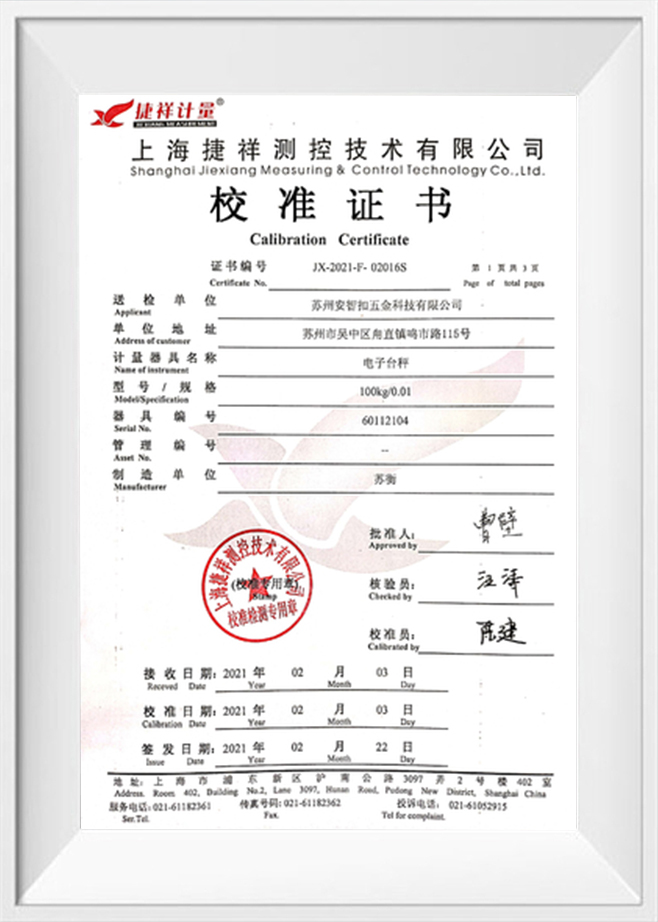
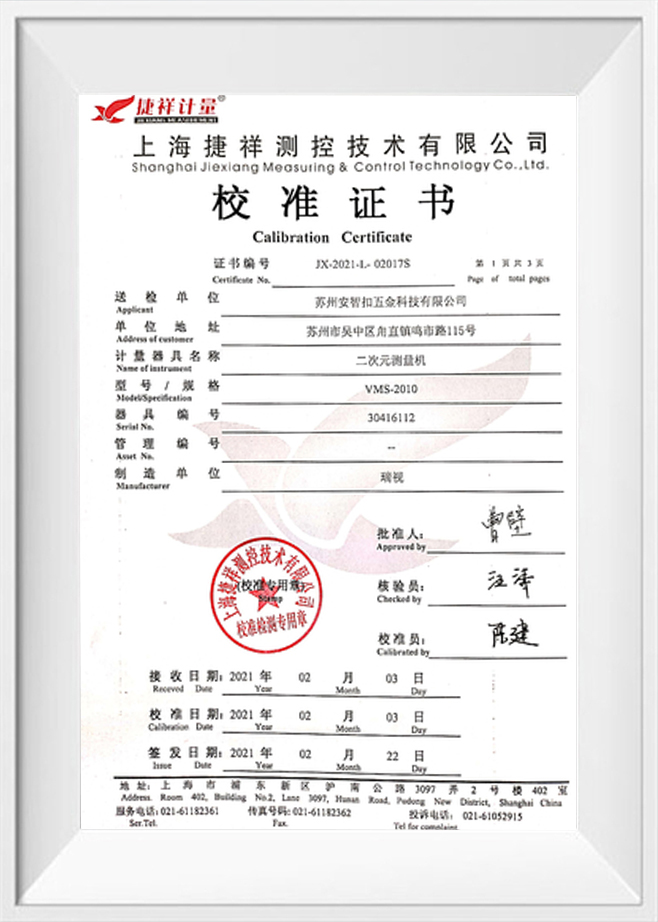
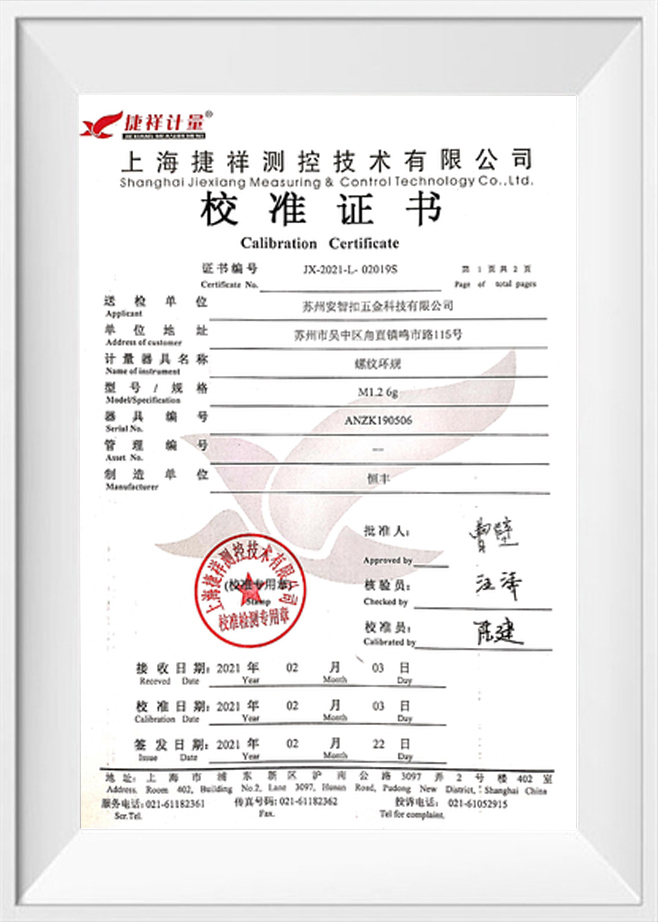
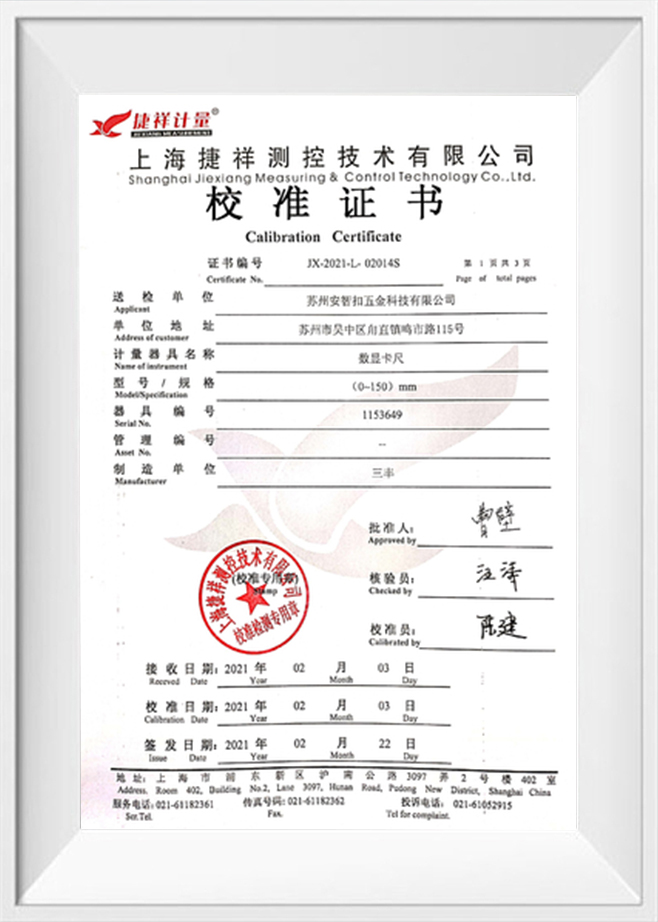
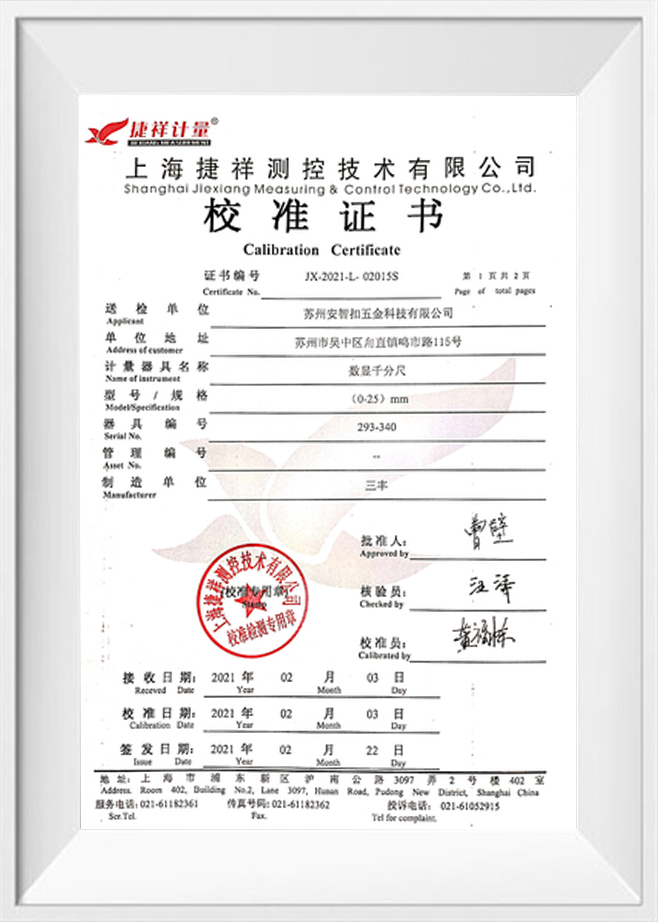
For customers requiring stainless steel eye bolts with documented dimensional and material conformance for safety-critical cyclic applications, Suzhou Anzhikou Hardware Technology Co., Ltd. provides full traceability documentation from raw material to finished product, supported by its ISO 9001:2015 certified quality system and a complete range of in-house testing equipment — enabling export customers across 40 countries to meet the incoming inspection and traceability requirements of their own regulatory frameworks without sourcing supplementary third-party certification.

 English
 Español
.jpg "Non standard customized stainless steel eye bolt")
.jpg "M10 stainless steel lifting ring eye screw")