Telephone: +86-0512-65028068
Content
Captive panel screws are a category of fasteners specifically engineered to remain permanently attached to a panel, enclosure, or housing even when fully disengaged from the mating thread. Unlike standard screws that can be removed entirely and easily lost, captive panel screws are mechanically retained within a clinch nut, grommet, or specially designed housing that holds the screw in place throughout the product's service life. This retained design is achieved through a shoulder, retaining ring, or collar on the screw shank that prevents the screw from passing completely through its retaining element.
The fundamental working principle is straightforward: the screw is installed into a retainer that is pressed, clinched, or otherwise fixed into the panel material. When the screw is turned to disengage, it backs out only until the retaining feature catches on the retainer — keeping the screw captive. When re-engagement is needed, the screw is simply driven forward again into the mating thread without any need to handle a loose fastener. This mechanism dramatically accelerates assembly and maintenance workflows, especially in confined spaces or vertical mounting orientations where dropped screws are a serious operational hazard.
The captive panel screw category encompasses several distinct designs, each suited to different panel thicknesses, load requirements, and installation methods. Choosing the wrong type can result in poor retention, panel damage, or inadequate clamping force, so understanding the distinctions between types is essential for engineers and procurement professionals alike.
Clinch-type captive panel screws use a separate clinch nut or standoff that is pressed into a punched hole in the panel using a press tool. The clinch nut's knurled or serrated shank displaces panel material during installation, creating a permanent, flush, and torque-resistant anchorage. The screw itself is then inserted through the clinch nut and retained by a shoulder or washer. These are the most common type in sheet metal enclosures and are available in both metric and unified thread standards across a wide range of thread sizes from M2 to M8 and beyond.
Spring-loaded variants incorporate a compression spring between the screw head and the retaining washer. When the screw is disengaged, the spring pushes the screw head outward, making it visually and tactilely obvious that the fastener is open. When driven to close, the spring compresses and maintains positive pressure, helping to prevent loosening under vibration. These are particularly popular in aerospace, defense electronics, and telecommunications equipment where access panels must be opened and closed repeatedly during field maintenance.
For thicker panels or applications where clinching is not feasible, weld-in or press-in retainers provide alternative installation methods. Weld-in types are resistance-welded or stud-welded directly to the panel surface, creating an extremely strong retention point suitable for heavy-duty industrial enclosures. Press-in types rely on interference fit into a pre-drilled hole, making them suitable for plastic panels and composite materials where clinching would crack the substrate.
Quarter-turn captive panel screws engage and disengage with just a 90-degree rotation. They use a cam or bayonet mechanism rather than conventional threading, making them exceptionally fast to operate — a single quarter turn locks or unlocks the panel. This type is widely used in rack-mount server equipment, industrial control cabinets, and automotive access panels where tool-free or rapid-access operation is a design requirement.
Captive panel screws are manufactured in a broad range of materials to suit different environmental and mechanical demands. Selecting the correct material combination for both the screw and its retainer is just as important as selecting the correct thread size and head style.
| Material | Typical Finish | Best Application |
| Carbon Steel | Zinc plated, black oxide | General indoor industrial use |
| Stainless Steel 303/316 | Passivated | Marine, food processing, outdoor enclosures |
| Aluminum | Anodized | Aerospace, lightweight enclosures |
| Brass | Natural or nickel plated | Electronics, EMI-sensitive assemblies |
| Nylon / Plastic | Natural | Non-conductive, corrosive chemical environments |
For electronics enclosures in particular, the combination of a stainless steel screw with a brass clinch nut is a common pairing that balances corrosion resistance, thread durability, and electrical conductivity. In coastal or offshore environments, 316 stainless steel is strongly preferred over 303 due to its higher molybdenum content and superior resistance to chloride-induced pitting corrosion.
The drive style of a captive panel screw determines what tool is required for installation and disengagement, which in turn affects how quickly technicians can access a panel and whether tool-free operation is possible. Manufacturers offer captive panel screws in nearly every standard drive configuration, and the correct choice depends heavily on the operational environment and required security level.
Correct specification requires capturing at least six key parameters. Missing any one of these can result in ordering a fastener that is dimensionally correct but functionally wrong for the application. Engineers working from a design drawing should always verify these parameters against both the panel material properties and the mating component's thread specification before finalizing a purchase order.
Even the highest-quality captive panel screw will underperform if installed incorrectly. The installation of the retaining element — whether a clinch nut, weld nut, or press-in insert — is the step that most commonly introduces defects. For clinch-type retainers, the hole diameter in the panel must be held to the tolerance specified by the manufacturer, typically within ±0.05 mm. An oversized hole will result in a loose clinch with insufficient pull-out and torque-out strength, while an undersized hole may crack thin panels or cause the retainer to sit proud of the surface.
The press force used to install clinch retainers should be set using the manufacturer's recommended force range and verified with a calibrated press. Over-pressing can deform the panel material around the clinch zone, distorting flatness and causing misalignment with mating components. Under-pressing leaves the retainer insufficiently anchored. For high-volume production lines, statistical process control on clinch installation force is a worthwhile investment that prevents field failures caused by installation variation.
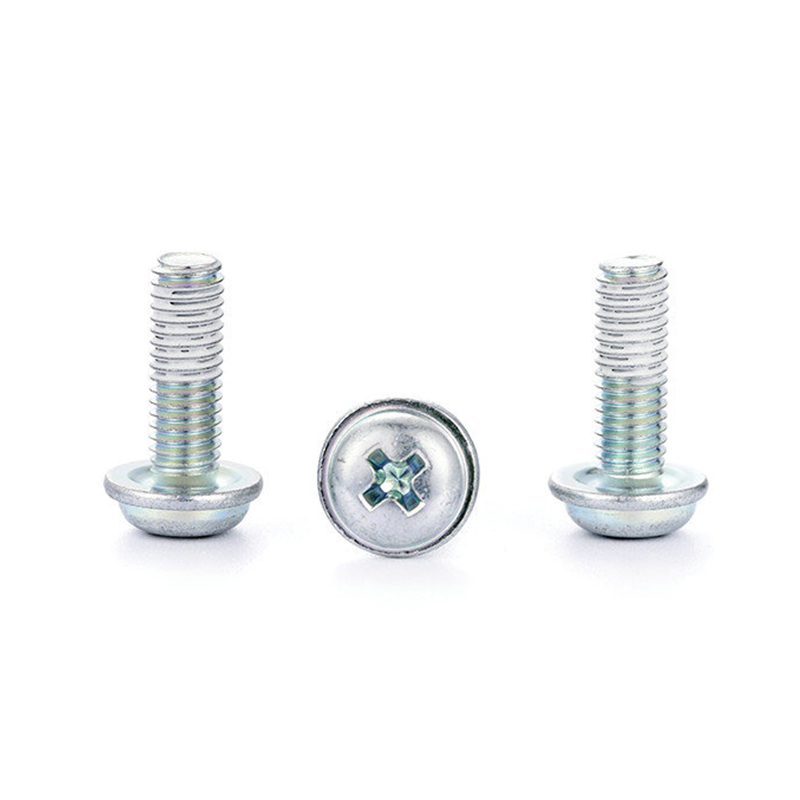
After installation of the retainer, the screw itself should be inserted and tested for smooth captive travel — the screw should move in and out freely without binding but should be firmly stopped at both the fully engaged and fully retracted positions. Any roughness, excessive play, or failure to stop cleanly at the retracted position indicates a problem with either the screw or the retainer that should be investigated before the assembly leaves the production floor.
Captive panel screws appear across a remarkably wide range of industries because the core problems they solve — lost fasteners, slow panel access, and assembly errors — are universal. In telecommunications, they are used on the access panels of base station equipment and data center switches, where technicians must open and close panels rapidly during network maintenance without risking loose hardware falling into adjacent live equipment. In automotive manufacturing, captive fasteners are specified for underhood access covers, interior trim panels, and battery enclosures in electric vehicles, where serviceability over the vehicle's lifetime is a regulatory and customer satisfaction requirement.
Medical device manufacturers rely heavily on captive panel screws for equipment housings that must be cleaned and sterilized frequently. The retained screw eliminates the risk of a loose fastener contaminating a sterile field. Defense and aerospace contractors specify captive panel screws for avionics bays, ground support equipment, and vehicle armor panels, where environmental extremes and mission-critical reliability demands the absolute certainty that a maintenance technician cannot accidentally leave a fastener behind inside sensitive equipment. Across all these industries, the investment in captive panel screws pays dividends in reduced assembly time, lower warranty claims, and improved serviceability over the product's complete lifecycle.
CONTACT DETAILS

Address:NO. 248-2 Changhongbei Road, Luzhi Town, Wu zhong District,Suzhou City, Jiangsu Province,China.
TEL:+86-13913588597
PRODUCTS
MOBILE TERMINAL




 English
 Español
.jpg "Hot Sale M5 titanium self-tapping screw for wood furniture")
.jpg "M3 M4 M5 M6 M8 M10 GR2 GR5 torx head Titanium screws for bicycle")
.jpg "Thin flat head solid brass double side rivets for leather")
.jpg "DIN912 hex socket cup head with washer titanium screws for bicycle")
.jpg "Gr5 Titanium Ti6AL4V bolts screws fasteners for motorcycles")
-1.jpg "High Quality Titanium screw M5x10 GR5 TC4 Ti-6al-4v for bicycle")