Telephone: +86-0512-65028068
Content
Few parts on a vehicle receive less thought than the four small screws holding the tag in place, right up until a plate goes missing, buzzes at highway speed, or refuses to come loose when you actually want it off. We build fasteners for a living, and plate hardware still comes up in almost every conversation with body shops, dealers and fleet managers. This guide gathers what we have learned about auto tag screws: how they are sized, which heads and finishes survive real roads, and when a tamper-resistant design is worth the extra money.
"Tag" is simply the North American word for a license plate, so auto tag screws are the fasteners that hold a registration plate to its bracket, frame or recess. In other markets the same parts are sold as number plate screws, plate bolts or registration fasteners, and the specification rarely changes with the name.
One vehicle often uses three or four different screws at once. Two fix the plate to a plastic or steel bracket, two more fix the bracket or a dealer frame to the body, and occasionally a shorter screw handles a light surround, a gasket or an anti-rattle pad. That small assembly has to cope with constant vibration, road spray, winter salt and occasional contact with a pressure washer, which is why material and drive choice matter more than the screw's size might suggest.
Thread mismatch is behind most failed plate installs. European and Asian vehicles typically use metric machine screws, with M5 x 0.8 and M4 x 0.7 the most common, while many North American trucks and older models take #10-32, #14 or 1/4"-20. A screw that threads in half a turn and then binds is almost always the wrong pitch, not a damaged hole.
Where the plate mounts into a plastic bumper insert or a nylon retainer, a self-tapping or thread-forming screw is the correct choice, because these screws cut or form their own thread in the plastic and can be replaced without stripping the hole. Where the vehicle provides a threaded insert, a nut-sert or a captive nut, use a machine screw with the exact pitch.
Length deserves the same attention. Most plate screws run 10 mm to 16 mm under the head, and 2 mm of extra length is enough to bottom out in a blind boss, crack a plastic panel or foul a bracket behind the bumper. If the original screw is lost, measure the remaining one with calipers or take a rubbing of the hole rather than guessing.
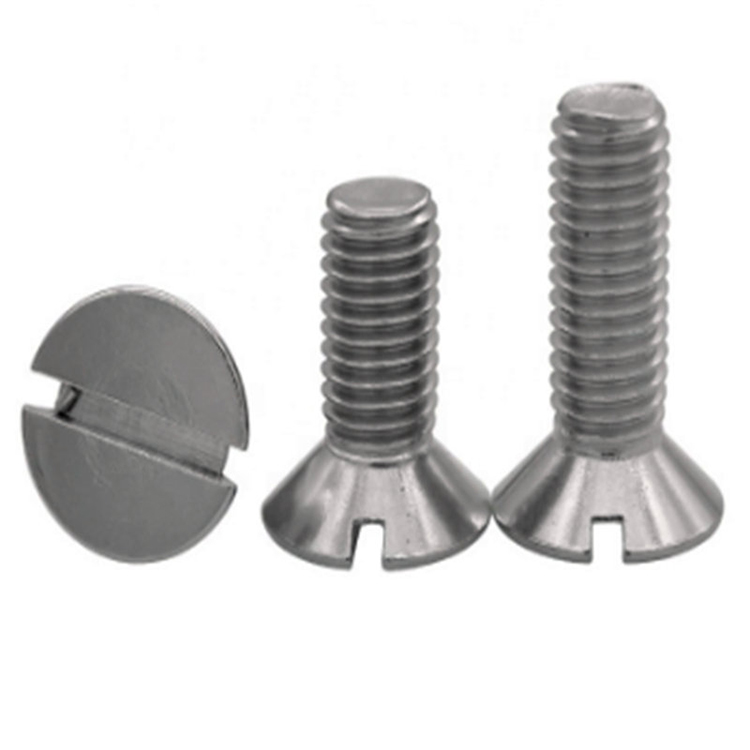
A pan head or washer head gives the widest contact patch and is the safest choice for a plastic plate frame. Countersunk heads sit flush in metal frames and brackets, but they concentrate load and can split thin plastic if over-tightened. Hex heads are easy to grip but tend to look out of place on a passenger car and can catch on car-wash brushes.
The drive matters just as much. Phillips remains the default because every toolbox has the bit, yet Torx and hex socket drives transmit torque more cleanly and suffer far less cam-out on small stainless screws. On a plate that may come off at the roadside, a drive the owner can actually operate is a genuine usability feature.
The table below summarizes the families we see specified most often, and where each one tends to be the right answer.
| Screw family | Typical thread | Common drive | Where it fits best |
|---|---|---|---|
| Machine screw | M5 x 0.8, #10-32 | Phillips, Torx | Threaded insert or captive nut in the body |
| Self-tapping screw | M5, M6, #14 | Cross recess, Torx | Plastic bumper insert or nylon retainer |
| Countersunk machine screw | M4, M5 | Slotted, Phillips | Flush mounting in a metal frame |
| Security machine screw | M4, M5 | Pin-Torx, snake eye, pentagon | Plates exposed to theft or tampering |
| Anti-loosening screw | M5, M6 | Hex socket, Torx | Brackets that shake loose over time |
Stainless steel is the sensible default. A2 (304) handles normal road use, while A4 (316) is the better pick for coastal areas and heavy de-icing salt. Carbon steel with zinc or zinc-nickel plating is cheaper and perfectly serviceable, but plating wears at the drive recess once a screw has been removed a few times, and that bare spot is where corrosion starts.
On aluminium body panels and aluminium frames, stainless fasteners can trigger galvanic corrosion if moisture sits between the two metals. A dry-film lubricant, a nylon washer or a plated steel screw reduces the risk and keeps the joint easy to dismantle years later. Black oxide and anodized aluminium finishes look sharp on dark plates and frames, though they offer little corrosion protection on their own.
Plates are stolen for a reason: they are easy to remove and valuable to someone else. A security drive removes that convenience. Pin-Torx, snake eye, pentagon, tri-groove and one-way slotted heads all require a matching bit or key, and a thief without the right tool will usually move on to an easier target.
The practical downside is that the owner needs that key too, so buy two bits and keep one in the glovebox. It is also worth checking local regulations before fitting anything that cannot be removed by a roadside recovery service; some regions require plates to be detachable with standard tools.
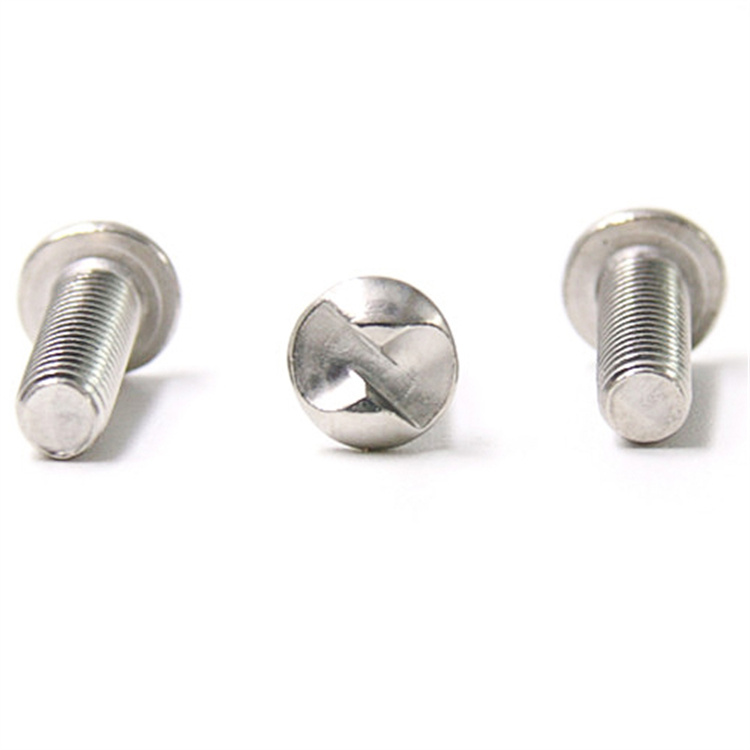 Custom Stainless M5 Security Screw for Number PlatesA customized stainless M5 security screw with special tamper-resistant head for number plates, intended to make casual removal harder when a keyed bit is used.View Product →
For most passenger vehicles, a stainless M5 security screw with a special head covers the requirement without introducing a maintenance headache. If the plate sits inside a recessed pocket, a low-profile head variant keeps the drive accessible while staying clear of the frame.
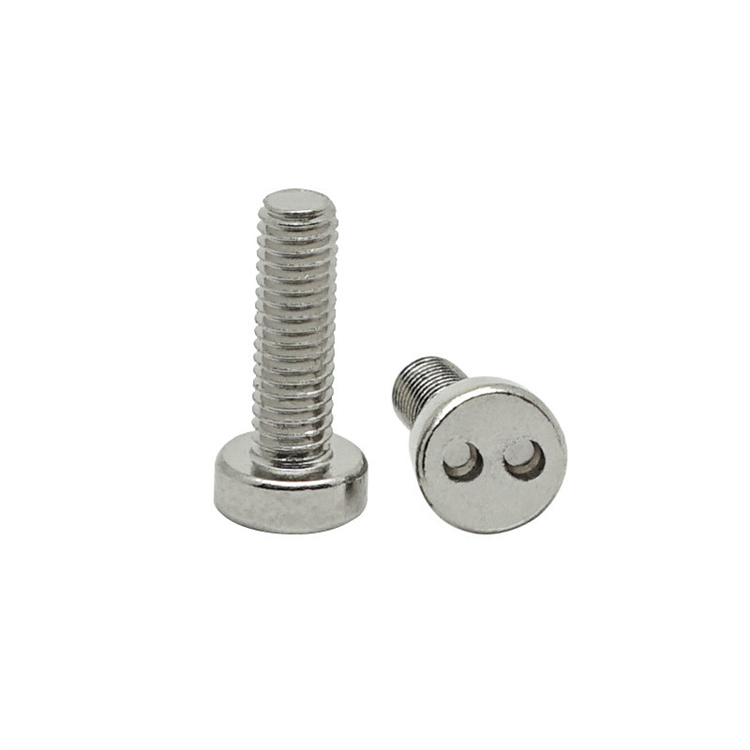 M4 Stainless Pan Head Snake-Eye Security ScrewTamper-resistant M4 pan-head screw with snake-eye drive, offered in stainless steel and other materials for security-sensitive fastening where standard tools should not fit.View Product →
A plate at speed behaves like a small signboard in a wind tunnel. Vibration works screws loose gradually, and once one backs out far enough the remaining three carry a heavier load and follow quickly. Friction alone is rarely enough on a thin steel bracket.
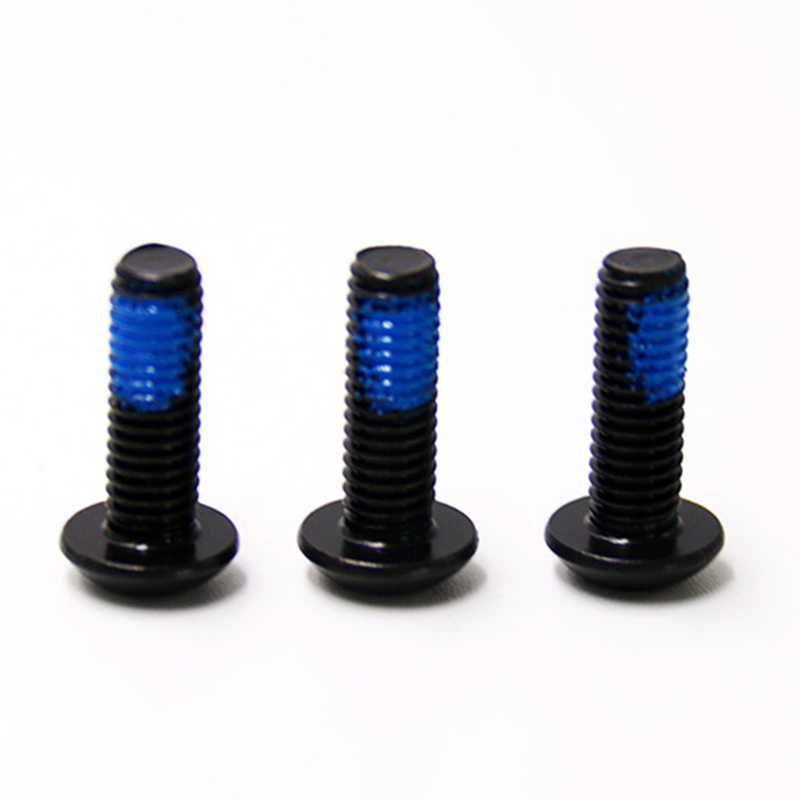 Grade 10.9 M5 Button Head Nylon Patch ScrewA Grade 10.9 M5 button-head carbon steel screw with a nylon patch locking feature for small fastening joints where vibration can loosen hardware.View Product →
Torque still matters. On M5 hardware, 2 N·m to 3 N·m is enough for a plate bracket; going harder strips plastic inserts and shears small stainless screws. A hand driver with a light final turn is safer than a powered tool on these small sizes.
Before ordering, run through the points below. It takes two minutes and prevents almost every wrong-part order we see.
Standard plate screws cover most vehicles, but frames, fleet branding plates and aftermarket mounts often need something specific: a particular head diameter, a longer shoulder, a colored anodized finish or a security drive that matches an existing key. That is normal OEM territory, and it starts with a drawing or a sample rather than a catalogue number.
Our own work sits in precision screws from M0.6 upward, produced on cold-heading, thread-rolling and CNC equipment, including the tooling that forms the thread in the first place. You can read more about how custom projects run on the OEM page and about the factory and equipment on the about page.
Auto tag screws look trivial and behave like engineering parts, because that is exactly what they are. Match the thread to the hole, pick a finish that survives your winters, and decide early whether the plate should be hard to remove or easy to service. Get those three right and the screws will disappear into the background, which is the best thing a fastener can do.
CONTACT DETAILS

Address:NO. 248-2 Changhongbei Road, Luzhi Town, Wu zhong District,Suzhou City, Jiangsu Province,China.
TEL:+86-13913588597
PRODUCTS
MOBILE TERMINAL




 English
 Español