Telephone: +86-0512-65028068
Content
Tamper-resistant Torx screws are the quiet workhorses behind a lot of hardware you are not meant to open. From the outside they look like an ordinary six-lobe fastener, but drop a pin into the centre of the recess and the screw stops being a job for a standard Torx key. That single change is why these screws turn up in meter covers, access panels, licence plates, vending equipment, battery trays, outdoor cabinets and consumer electronics where the maker would prefer the case stayed closed.
We make fasteners like these most weeks, and the questions we hear rarely start with "what is it". They start with "will it actually stop someone" and "can you make it in the size I need". Both are fair questions. This guide walks through drive styles, materials, finishes and tolerances — the details that decide whether a security screw does its job or simply inconveniences the person assembling it.
A standard Torx recess — formally the hexalobular socket described in ISO 10664 — uses six rounded lobes to transfer torque with very little cam-out. That is why it became the default drive for machine assembly: the driver stays seated, the head survives high torque, and the bit lasts. The same geometry, unfortunately, also means anyone with a common bit set can open the joint in seconds.
Tamper resistance is added by changing what the tool has to look like, not by making the screw stronger. There are three approaches worth knowing.
The recess keeps its six-lobe shape but gains a small cylindrical pin in the centre. A normal Torx bit cannot seat, because the pin blocks it. The matching driver has a drilled hole through its tip. This is the most common "security Torx" on the market, available from roughly T5 upward, and it is the version most people picture when they search for tamper-resistant Torx screws.
Small electronics often use a five-lobe recess instead of six. The lobes are shallower and the driver is less common in a household toolbox, so the practical deterrent is decent at micro sizes such as M1 to M2. Torx Plus is a different animal — broader lobes and an offset geometry that improves torque transfer — but it is an engineering upgrade rather than a security feature, since the bits are easy to buy.
Some applications cannot use a recess at all, so the tamper-resistant feature moves to the outside: an external Torx-style head with a collar, or a Torx recess combined with a five-sided or heptagonal body so that gripping the head with pliers does not help. These are usually custom items, and they are where a conversation with a manufacturer pays off.
The table below compares the drive styles we are asked about most often. Read the deterrent column honestly: any bit that is sold openly is a deterrent, not a lock. What these screws really do is raise the effort and make casual removal obvious.
| Drive style | Tool required | Practical deterrent | Common applications |
|---|---|---|---|
| Pin-in-Torx (security Torx) | Torx bit with centre hole | Moderate | Access covers, electronics, licence plates, instruments |
| Five-lobe (plum blossom) | Matching five-lobe driver | Moderate to high at micro sizes | Phone and laptop cases, watches, small enclosures |
| Torx Plus | Torx Plus driver | Low | Automotive and industrial assembly |
| Snake-eye / spanner | Twin-pin spanner | High | Public fixtures, bathroom fittings, elevator panels |
| Tri-groove | Tri-groove socket | High | Vending machines, utility cabinets |
| One-way slotted | Flat blade for tightening only | High for removal | Signage, seating, one-time assembly |
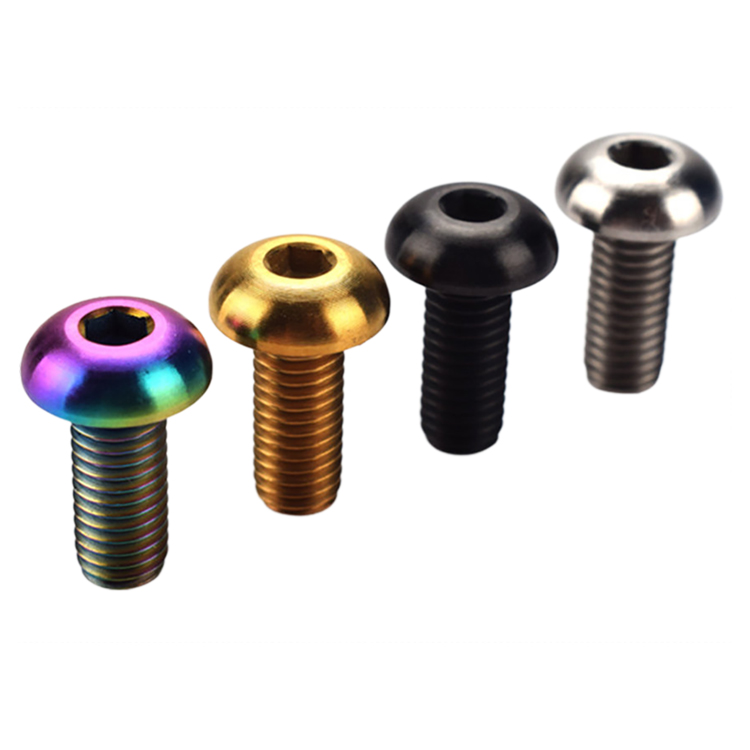
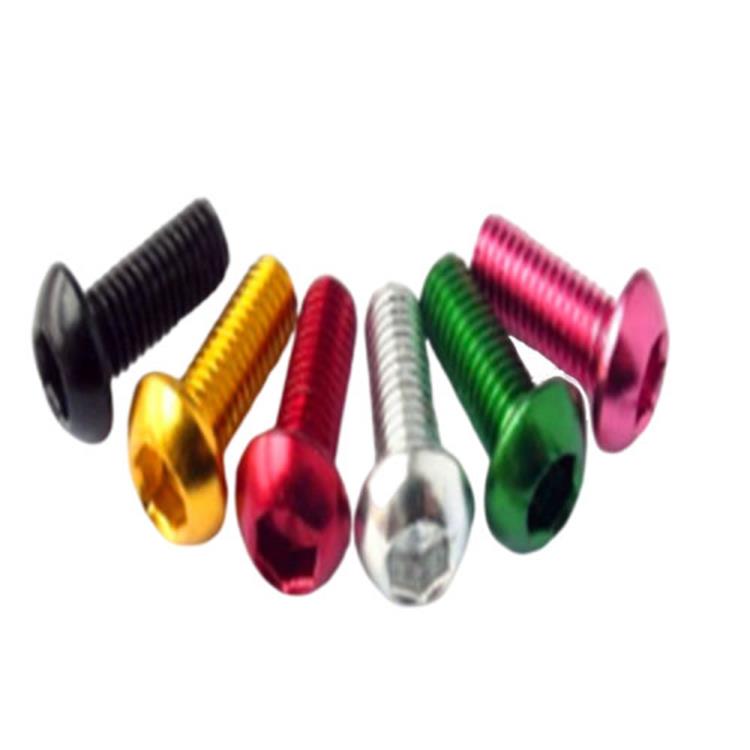
A security screw is usually installed once and then left outdoors, in a machine, or inside a sealed product. That makes corrosion resistance more important than it looks. Stainless steel grades 304 and 316 (A2 and A4) cover most outdoor and wash-down cases; zinc-plated carbon steel handles indoor work at a lower cost; titanium suits applications where weight or salt exposure matters; brass and anodised aluminium are common where the fastener is visible.
Finishes do double duty. Black oxide and zinc-nickel look purposeful and resist finger marks, while thread-locking elements — a nylon patch, a pre-applied adhesive, or a sealing O-ring groove — stop vibration from undoing what the pin-in-Torx head was protecting. For panels that must stay watertight, a sealing coating or O-ring is often specified alongside the security drive.
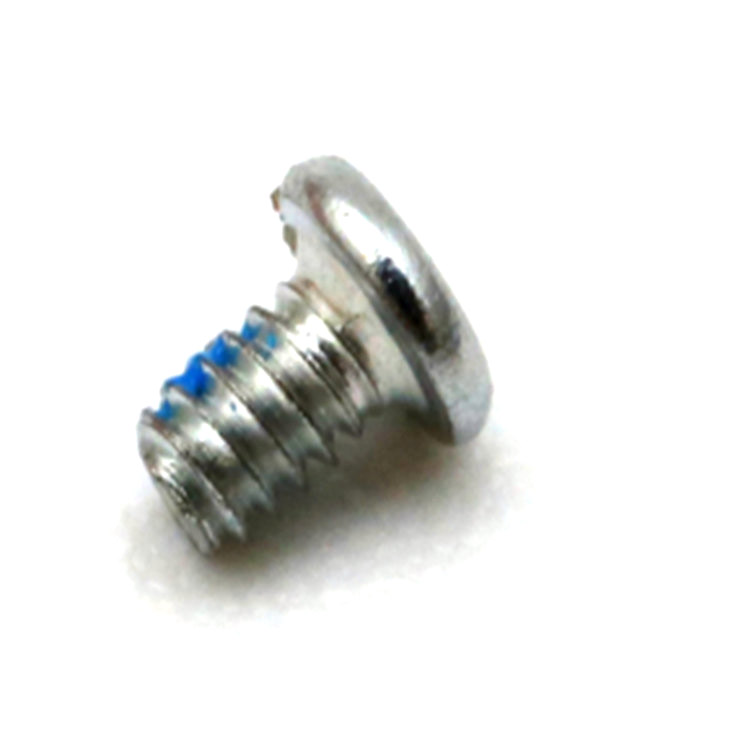 Round Head Torx Screws with Nylon PatchReview customizable round-head Torx locking screws with a nylon patch, material and finish options, and anti-loosening design suited to vibration-prone assemblies.View Product →
Two things we check before quoting: whether the pin diameter still leaves enough wall thickness in a small head, and whether the chosen finish can be applied without filling the recess. A pin-in-Torx screw with a partially filled socket is worse than useless — it fails at the first service visit.
Across the enquiries we handle, five application families come up again and again:
In each case the screw is one layer of a broader design. It works best when paired with a recessed or shielded head, a thread-locking element and a housing that offers nothing for pliers to grip.
If you are writing a specification or a purchase drawing, these are the fields that matter most. Getting them right the first time saves a sample round.
 #6-32 Black Torx Pan Head Security ScrewsTamper-resistant #6-32 pan-head security screws with a black Torx plum-blossom drive, customizable in material, finish, and size for doors, windows, and equipment.View Product →
For anything below M2, expect to discuss tooling as well as the screw itself. The smaller the head, the less room there is for a centre pin, and the more the recess geometry has to be tuned to the driver.
Off-the-shelf security Torx screws cover a lot of ground, but they rarely match a design exactly. Lengths, head profiles, pin diameters and materials are usually where a standard part stops fitting. This is the point where our custom fastener programme tends to start — with a drawing, an application description, and a conversation about what the joint actually has to survive.
Because our workshop handles cold heading, thread rolling, CNC machining and anti-loosening processes in-house, a custom security screw usually means adjusting an existing tool rather than starting from nothing. Our plant covers around 2,000 square metres with more than 200 imported precision machines, which is why micro sizes down to M0.6 and M0.8 are practical rather than theoretical. You can read more about how we work if you want the background before sending a drawing.
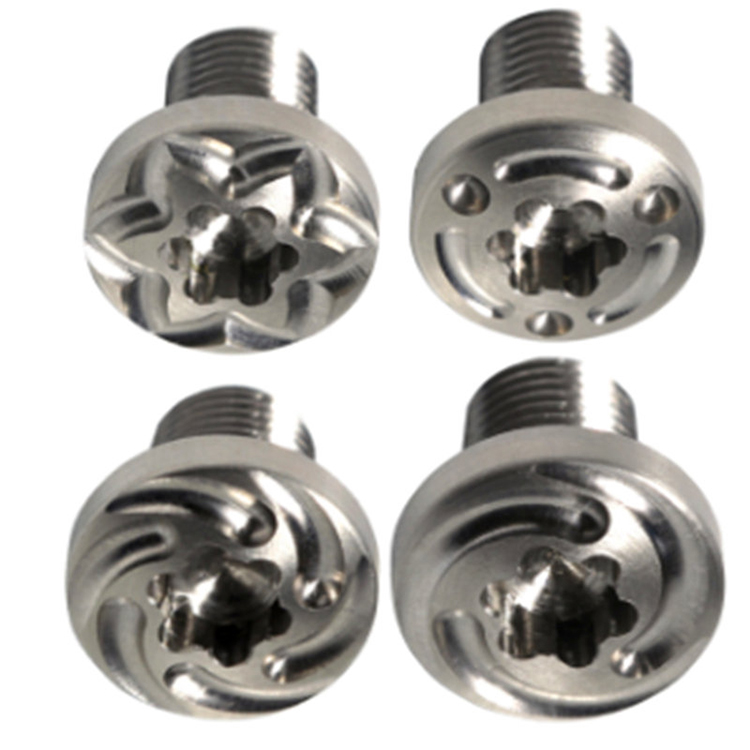 Custom Stainless Steel Torx ScrewsNon-standard Torx drive screws made to order in stainless steel or other materials, with customizable dimensions, standards, and finishes for tailored security-fastener projects.View Product →
Three questions are worth asking any supplier early. First, can they produce the matching driver or bit, or at least confirm the exact recess geometry so your assembly line is not guessing. Second, how is the pin formed — machined, headed or inserted — because that affects both cost and how the head behaves under torque. Third, what sample lead time looks like, since a security screw usually needs a physical trial in the actual housing before anyone commits to volume.
None of this is complicated, but the details compound. A pin-in-Torx screw with the right material, a clean recess and a locking element will quietly do its job for years. The same screw with a filled socket, a soft head or a pin that interferes with the driver will end up as a complaint. If you are weighing up options for a project and want a second opinion on the drive style, size or finish, send over the drawing and we will tell you honestly what will work — and what we would change.
CONTACT DETAILS

Address:NO. 248-2 Changhongbei Road, Luzhi Town, Wu zhong District,Suzhou City, Jiangsu Province,China.
TEL:+86-13913588597
PRODUCTS
MOBILE TERMINAL




 English
 Español