Industry knowledge
Self Tapping vs. Self Drilling Screws — Where the Functional Difference Actually Matters
The terms "self tapping" and "self drilling" are routinely used interchangeably in procurement, yet they describe fundamentally different mechanical processes. A self tapping screw requires a pre-drilled pilot hole; it then cuts or forms its own thread within that hole as it is driven. A self drilling screw — identifiable by its drill-point tip (also called a Tek point) — combines drilling and thread-forming in a single operation, eliminating the pilot hole step entirely. Confusing the two in a bill of materials leads to either stripped threads (self drilling screw driven into a pre-drilled hole that is already the final diameter) or broken fasteners (self tapping screw attempted in unprepared material without a pilot).
The practical boundary between the two types is largely defined by substrate and production volume. In high-throughput metal fabrication — HVAC ductwork, steel framing, electrical enclosures — self drilling screws reduce cycle time significantly because they remove a dedicated drilling station from the assembly sequence. In applications where substrate hardness exceeds the drill-point's capability (typically materials above HRC 35–40, or steel thicker than 12 mm), the drill point dulls before penetrating, making self tapping screws with pre-drilled holes the correct choice. Suzhou Anzhikou Hardware Technology Co., Ltd. produces both types with thread-rolling and cold-heading equipment capable of holding the tight tip geometry tolerances that determine whether a drill point cuts cleanly or deflects.
Thread Form Selection for Self Tapping Screws in Metal vs. Plastic Substrates
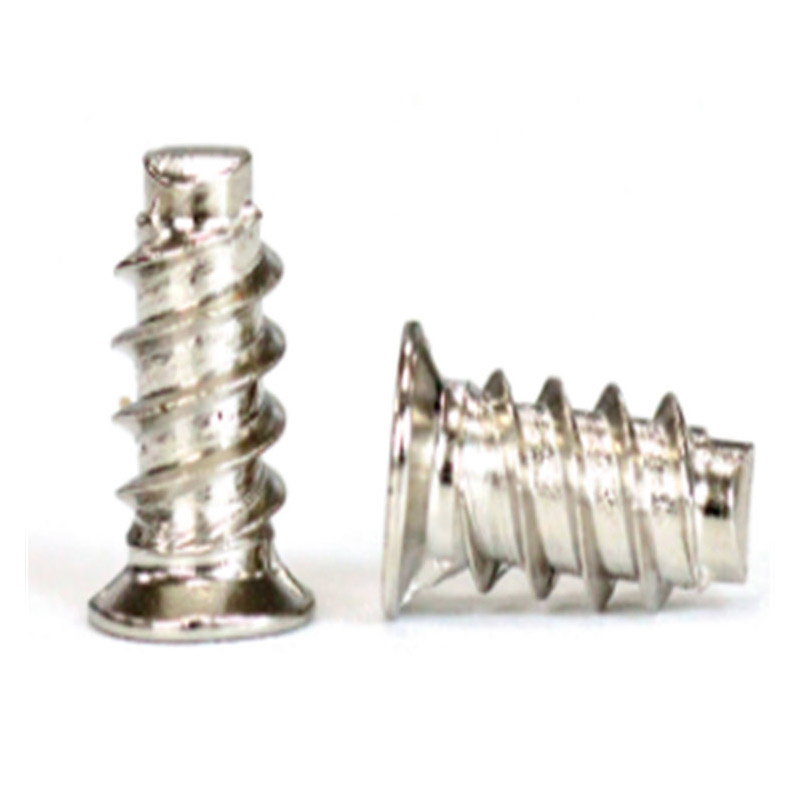
Not all self tapping screws are geometrically equivalent. The thread form — pitch, flank angle, and root radius — determines whether the fastener cuts material away (thread-cutting type) or displaces it outward (thread-forming type), and this distinction has real consequences for joint strength and long-term retention.
Thread-Cutting Types (Swarf-Producing)
Types BT, D, and F feature cutting slots or notches that remove material as the screw advances. These are used in harder plastics (acetal, nylon, glass-filled composites), die-cast metals, and brittle materials where displacement would crack the substrate. The generated swarf must have somewhere to evacuate — in blind holes, incomplete evacuation causes hydraulic pressure buildup that can split housings. Screw length selection must account for this: the cutting flutes need to clear the full engaged thread depth before the tip bottoms out.
Thread-Forming Types (Swarf-Free)
Types B and AB displace rather than cut, work-hardening the mating material as threads are formed. This produces a stronger thread engagement because the displaced material is compacted around the screw flanks rather than removed. They are preferred in soft metals (aluminum, copper, zinc die-cast) and thermoplastics where the material has sufficient ductility to flow without cracking. Drive torque is higher than thread-cutting types — typically 30–50% more — so matching the screw to the available installation torque is a necessary design check, not an afterthought.
For customers with cross-substrate assembly requirements, Anzhikou's engineering team — with over 20 years of fastener production experience — routinely assists in specifying the correct thread form combination to avoid redesign after tooling is committed.
Wood Screw Thread Geometry and Why Pilot Hole Diameter Is Not Optional
Wood screws occupy a distinct category from sheet metal or machine screws because wood is an anisotropic, moisture-variable material — its behavior perpendicular to the grain differs dramatically from parallel-to-grain behavior, and its density changes with moisture content. Modern wood screws address this with deep, widely spaced threads (high thread-to-shank ratio), a sharp gimlet or Type-17 auger tip, and a coarse pitch optimized to maximize pull-out resistance in the axial direction rather than radial clamping force.
Despite the prevalence of "no pre-drill needed" marketing claims, pilot holes remain functionally important in the following situations:
- Hardwoods (oak, maple, teak, ipe) with Janka hardness above 1,200 lbf — driving without a pilot generates radial splitting stress that exceeds the wood's transverse tensile strength before the screw reaches full depth
- Within 2–3 screw diameters of any end grain or edge — grain runout dramatically reduces the material's ability to resist wedging forces
- Engineered wood panels (MDF, particleboard) thinner than 12 mm — face delamination is common without a shank-diameter pilot in the top layer
- Any application where consistent head-seating depth matters — pilot holes allow controlled countersink depth without relying on variable wood density to stop the drive
The recommended pilot hole diameter for the shank portion is typically 90% of the shank diameter in softwoods and 100% in hardwoods. The thread-engagement portion uses a smaller pilot (typically 70% of the outer thread diameter), which allows the threads to grip while preventing splitting. Using a single drill size for both zones — a common shortcut — compromises either the thread bite or the split resistance.
Surface Coating Selection for Self Drilling and Self Tapping Screws in Outdoor and Corrosive Environments
Coating choice for self drilling and self tapping screws is constrained in a way that solid fasteners are not: the drill point and thread-forming geometry must remain dimensionally intact after coating. Thick platings that would be acceptable on a bolt can fill the cutting notches of a thread-cutting self tapper or round the drill tip of a Tek screw, causing immediate functional failure. This dimensional sensitivity makes coating selection a precision decision, not a commodity one.
| Coating Type |
Typical Thickness |
Salt Spray (hrs) |
Tip Geometry Risk |
Typical Application |
| Bright Zinc Plating |
5–8 µm |
72–120 |
Low |
Indoor, light-duty |
| Yellow Dichromate Zinc |
5–8 µm |
200–300 |
Low |
General outdoor |
| Mechanical Zinc (Sherardizing) |
15–25 µm |
500–700 |
Medium — requires tolerance check |
Construction, roofing |
| Geomet / Dacromet |
4–8 µm |
720–1,000+ |
Very Low |
Automotive, marine, solar |
| Hot-Dip Galvanizing |
45–85 µm |
1,000+ |
High — not suitable for drill-point screws |
Structural bolts only |
Coating options for self tapping and self drilling screws with corrosion and geometry considerations
For wood screws used in treated lumber (ACQ or CA treated), standard zinc plating is inadequate — the copper-based preservatives accelerate galvanic corrosion of zinc coatings, leading to premature staining and structural weakening. Hot-dipped galvanized, stainless steel (304 or 316), or polymer-coated screws are the compliant choices in these environments, and building codes in many export markets now mandate this. Suzhou Anzhikou Hardware Technology Co., Ltd. works with customers across 40 countries to align coating specifications with regional code requirements and end-use environment, ensuring that surface treatment decisions are made before production rather than after field complaints.

 English
 Español
.jpg "Stainless steel m4 socket allen umbrella head wood screw")
.jpg "DIN7981 cross recessed point end tapping titanium pan head screw")
.jpg "M3 din7500 carbon steel pan head torx thread forming screw")
.jpg "Black big flat head cross recessed self tapping scews")
.jpg "Black zinc countersunk head cross flat end self tapping screw")
.jpg "Blue white zinc double side wood screws")
.jpg "DIN 7981 m3 stainless steel pan head cross self drilling screw")
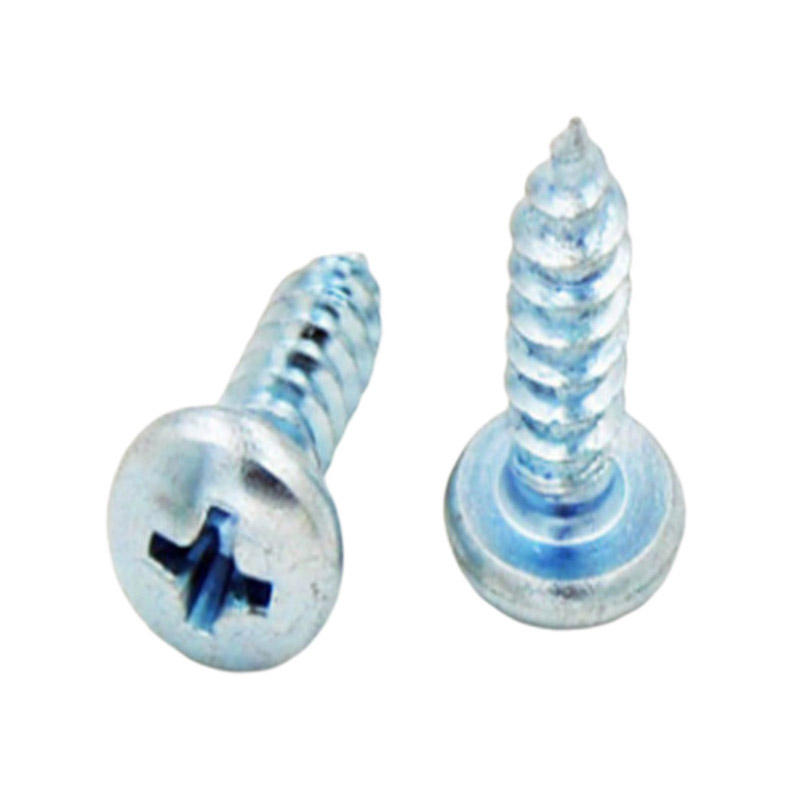
.jpg "DIN7981 pan head cross recessed self drilling screw")
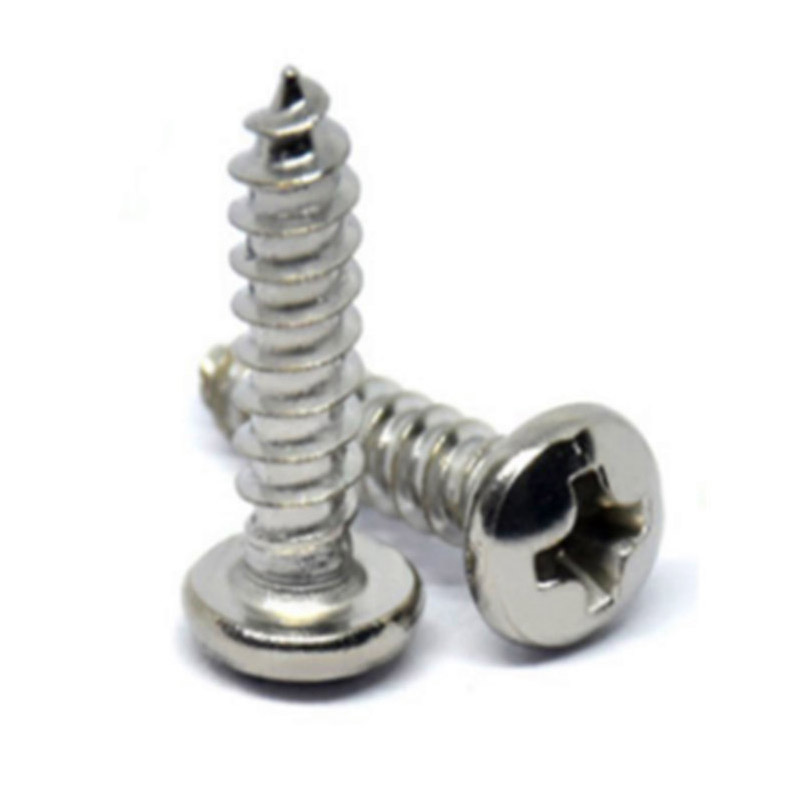
.jpg "Solid brass double side wood screws")